

1 Cent – Danish West Indies
United States
Context
Year: 1913
Country: United States 
Issuer: Danish West Indies
Ruler: Christian X
Currency:
(1849—1905)
Demonetized: Yes
Total mintage: 200,000
Material
References
KM: #Click to copy to clipboard83
Numista: #20170
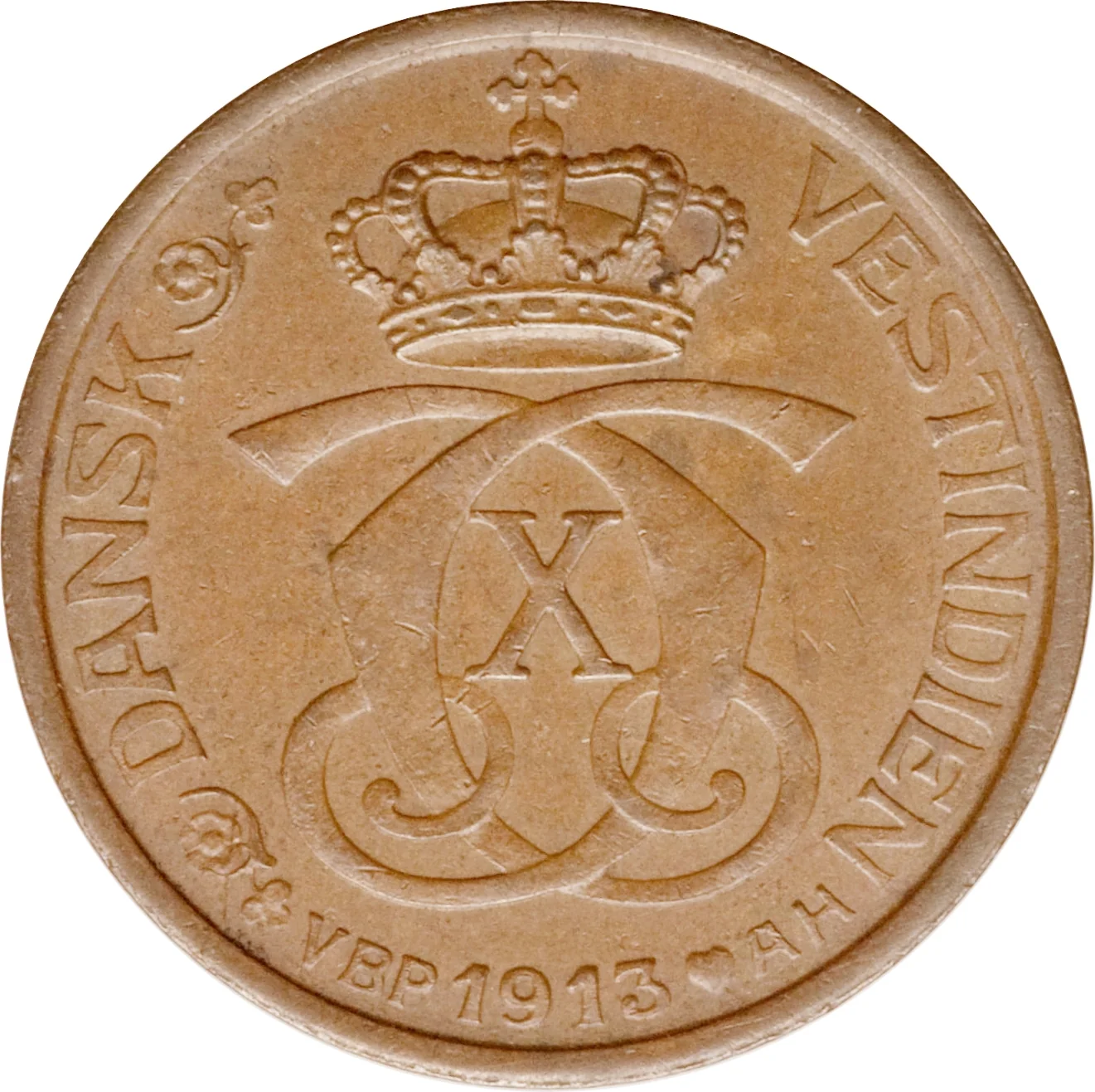
Obverse
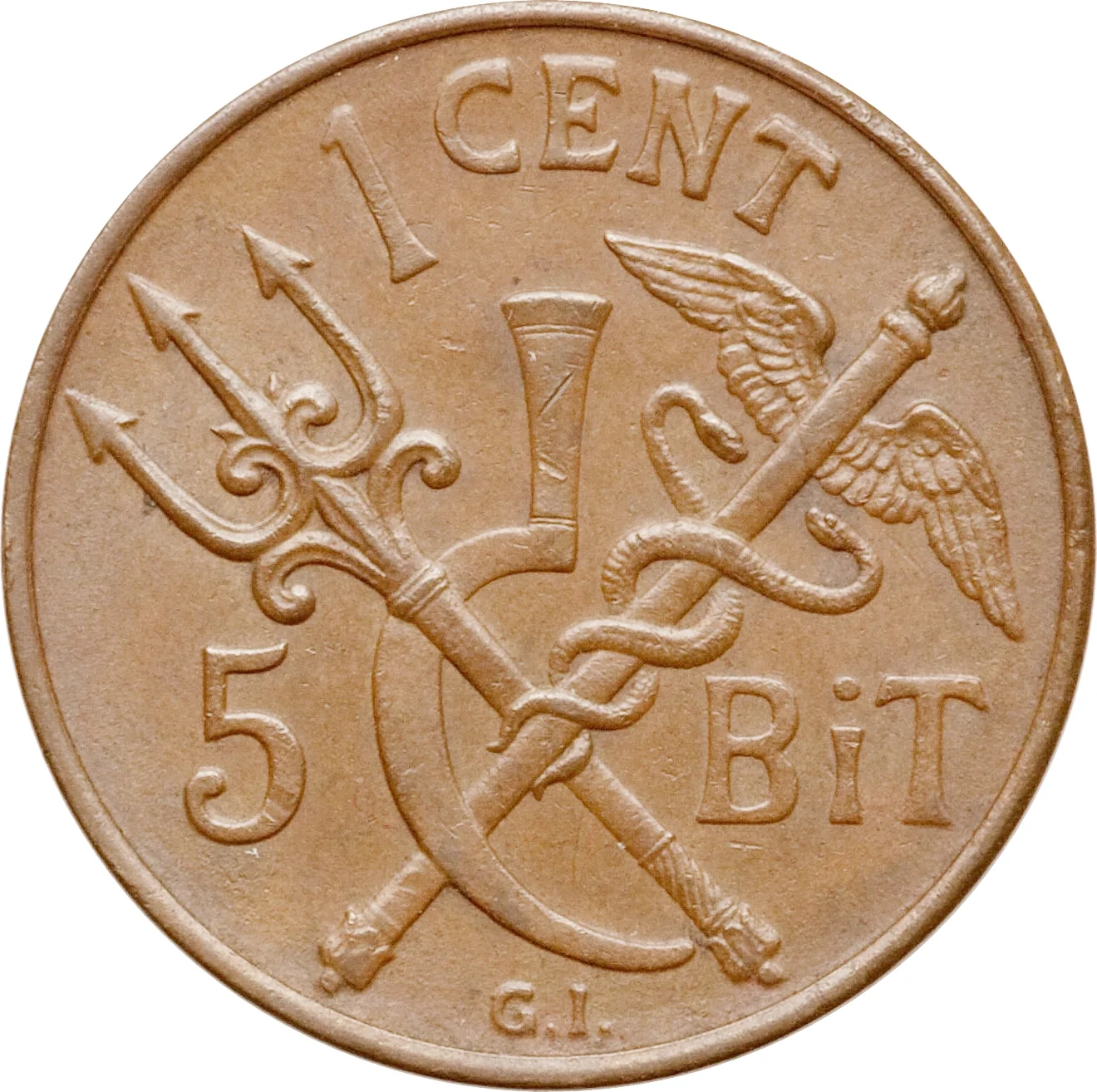
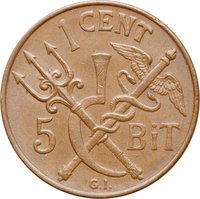
Reverse
Description:
Denomination
Inscription:
1 CENT
5 BiT
G.I.
5 BiT
G.I.
Translation:
1 CENT
5 BiT
G.I.
5 BiT
G.I.
Script: Latin
Language: English
Engraver: Gunnar Jensen
Edge
Plain
Mints
| Name | Mark |
|---|---|
| Royal Danish Mint | ❤ |
Mintings
| Year | Mint Mark | Mintage | Quality | Collection |
|---|---|---|---|---|
| 1913 | VBP♥AHGI | 200,000 |
Historical background
In 1913, the Danish West Indies (the islands of St. Thomas, St. John, and St. Croix) operated under a complex and somewhat chaotic multi-currency system, a common legacy of its history as a major Caribbean trading hub. The official currency was the Danish West Indian rigsdaler, divided into 100 cents, and it was the legal tender for government transactions and salaries. However, in everyday commerce, the dominant circulating medium was the United States dollar, a reflection of the colony's deep economic ties with its American neighbor.
This dollar dominance stemmed from decades of robust trade, as the islands served as a key coaling station for the U.S. Navy and American merchant marine. Furthermore, a significant portion of the local economy relied on remittances from islanders working in the U.S., and many businesses priced goods directly in dollars. The situation was further complicated by the persistent circulation of older Spanish and Mexican silver coins, like pesos and pieces of eight, which were valued by weight and acceptability in regional trade. British sovereigns and French francs also appeared, making the monetary landscape a mosaic of foreign coins.
This monetary fragmentation created practical challenges for merchants and residents, requiring constant awareness of exchange rates and values. The ambiguity was ultimately resolved by the islands' transfer from Denmark to the United States in 1917. Upon the formal handover, the U.S. dollar was declared the sole legal tender, swiftly ending the era of the Danish rigsdaler and simplifying the territory's currency system, which was renamed the U.S. Virgin Islands.
This dollar dominance stemmed from decades of robust trade, as the islands served as a key coaling station for the U.S. Navy and American merchant marine. Furthermore, a significant portion of the local economy relied on remittances from islanders working in the U.S., and many businesses priced goods directly in dollars. The situation was further complicated by the persistent circulation of older Spanish and Mexican silver coins, like pesos and pieces of eight, which were valued by weight and acceptability in regional trade. British sovereigns and French francs also appeared, making the monetary landscape a mosaic of foreign coins.
This monetary fragmentation created practical challenges for merchants and residents, requiring constant awareness of exchange rates and values. The ambiguity was ultimately resolved by the islands' transfer from Denmark to the United States in 1917. Upon the formal handover, the U.S. dollar was declared the sole legal tender, swiftly ending the era of the Danish rigsdaler and simplifying the territory's currency system, which was renamed the U.S. Virgin Islands.
🌟 Limited