

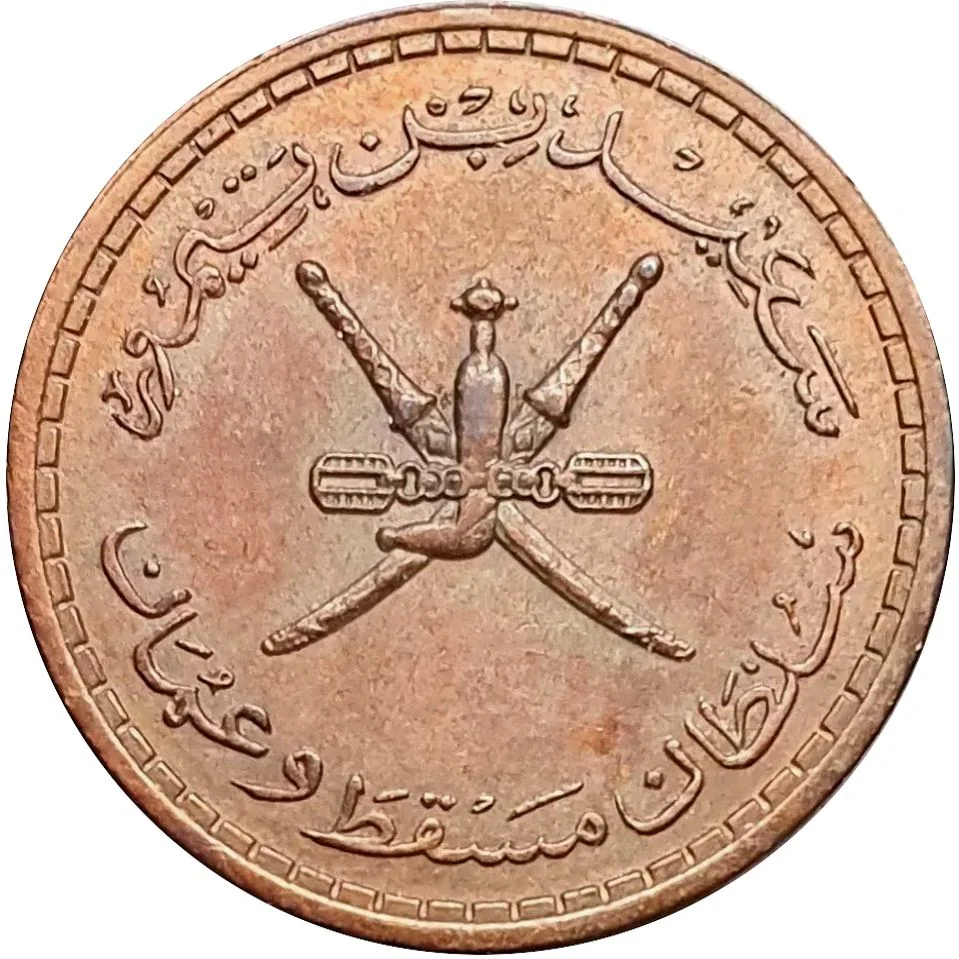
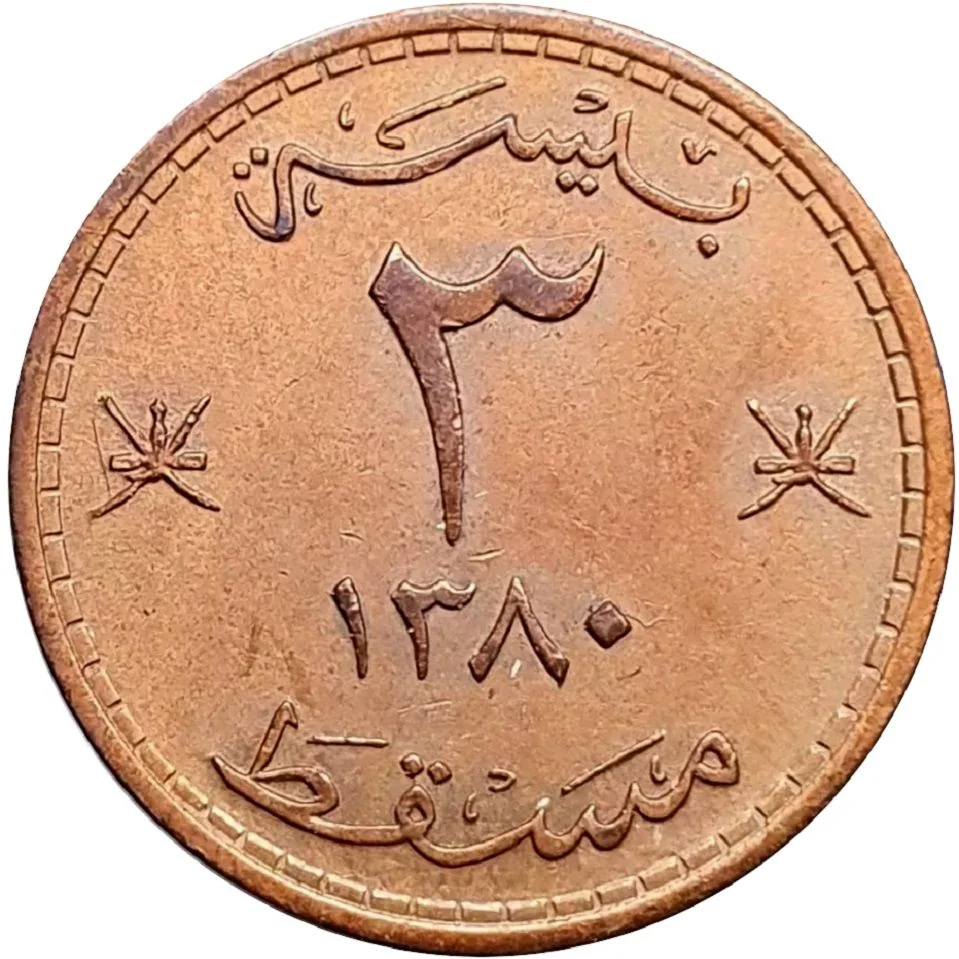
3 baisa – Muscat and Oman
Add to wishlist
Oman
Context
Year: 1961
Islamic (Hijri) Year:: 1380
Country: Oman
Issuer: Muscat and Oman
Ruler: Said bin Taimur
Currency:
(1946—1970)
Demonetized: Yes
Total mintage: 10,000,000
Material
References
KM: #
Numista: #20127
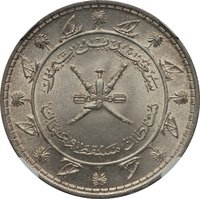
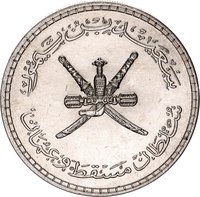
Obverse
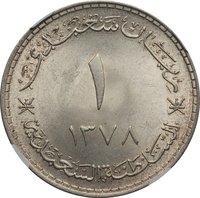
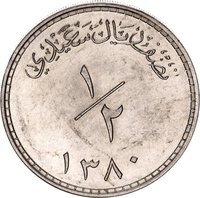
Reverse
Edge
Plain
Categories
| Symbols> Coat of Arms |
| Object> Cold weapons |
Mints
| Name | Mark |
|---|---|
| Royal Mint (Tower Hill) | — |
Mintings
| Year | Mint Mark | Mintage | Quality | Collection |
|---|---|---|---|---|
| 1961 | — | 10,000,000 | ||
| 1961 | — | — | Proof |
Historical background
In 1961, the currency situation in Muscat and Oman was a direct reflection of the Sultanate's complex political and economic relationships, both regional and international. The primary circulating currency was the Gulf Rupee (XPR), a special currency issued by the Reserve Bank of India for use in the Persian Gulf. This was not by Oman's sovereign choice, but a legacy of its deep historical trade ties with British India and the economic dominance of the rupee in Indian Ocean commerce. The Gulf Rupee was pegged to the British Pound Sterling, and its use facilitated the Sultanate's important trade in dates, fish, and limited oil exports, which were often routed through Bombay.
However, this system was on the brink of a significant transformation. The Gulf Rupee's stability was entirely dependent on Indian monetary policy, and in the late 1950s, India began to face severe balance of payments problems. Fearing a run on its foreign reserves from the Gulf, the Indian government was preparing to demonetize the Gulf Rupee, which it would do in 1966. While this full crisis was still a few years away, the underlying fragility was becoming apparent in 1961. Furthermore, the discovery and export of oil, which had begun in 1967, was not yet a reality, so the Sultanate's economy remained largely traditional and lacked a strong, independent monetary foundation.
Consequently, 1961 represents a pivotal pre-transition year. The old order of the Gulf Rupee was still in place, but its future was uncertain. Sultan Said bin Taimur's government, while conservative and resistant to rapid change, would have been aware of the looming currency issue. This period set the stage for the eventual introduction of a national currency, the Saidi Rial in 1970, pegged to the Pound Sterling and later the US Dollar, marking Oman's decisive move toward monetary sovereignty as the oil era dawned.
However, this system was on the brink of a significant transformation. The Gulf Rupee's stability was entirely dependent on Indian monetary policy, and in the late 1950s, India began to face severe balance of payments problems. Fearing a run on its foreign reserves from the Gulf, the Indian government was preparing to demonetize the Gulf Rupee, which it would do in 1966. While this full crisis was still a few years away, the underlying fragility was becoming apparent in 1961. Furthermore, the discovery and export of oil, which had begun in 1967, was not yet a reality, so the Sultanate's economy remained largely traditional and lacked a strong, independent monetary foundation.
Consequently, 1961 represents a pivotal pre-transition year. The old order of the Gulf Rupee was still in place, but its future was uncertain. Sultan Said bin Taimur's government, while conservative and resistant to rapid change, would have been aware of the looming currency issue. This period set the stage for the eventual introduction of a national currency, the Saidi Rial in 1970, pegged to the Pound Sterling and later the US Dollar, marking Oman's decisive move toward monetary sovereignty as the oil era dawned.
🌱 Fairly Common