

1 dinar – Yugoslavia
Add to wishlist
Context
Years: 1973–1981
Issuer: Yugoslavia
Issuing organization: National Bank of Yugoslavia
Period:
(1963—1992)
Currency:
(1966—1989)
Demonetization: 30 September 1988
Total mintage: 305,963,000
Material
References
KM: #
Numista: #2000
Value
Exchange value: 1 YUD
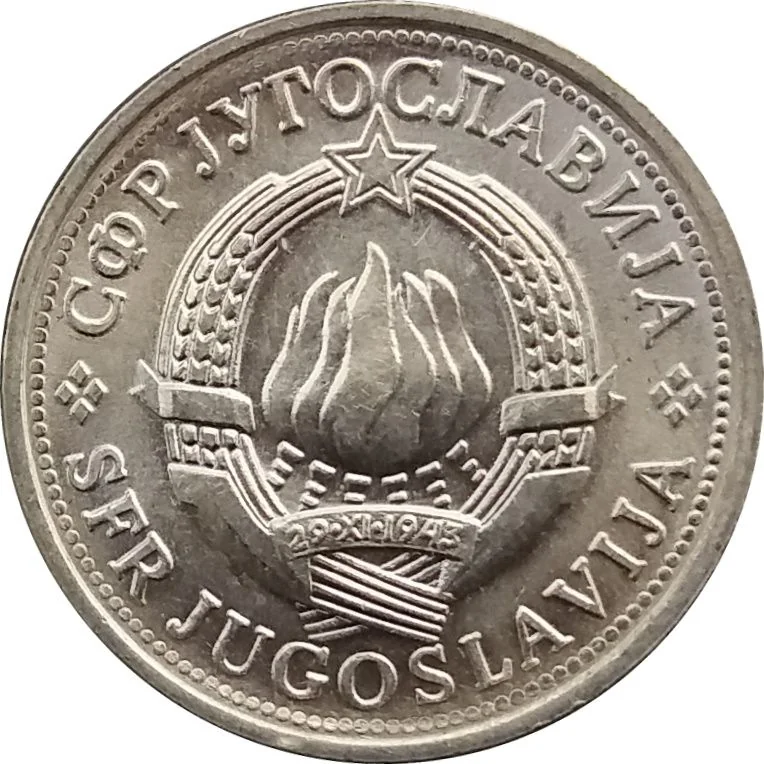
Obverse
Description:
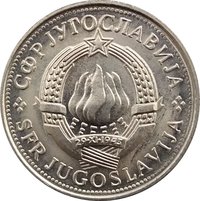
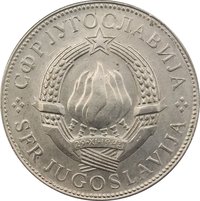
Yugoslav coat of arms.
Inscription:
СФР JУГОСЛАВИJА
29·XI·1943
SFR JUGOSLAVIJA
29·XI·1943
SFR JUGOSLAVIJA
Translation:
Socialist Federal Republic of Yugoslavia
29 November 1943
29 November 1943
Language: Serbian
Designer: Dragomir Mileusnić
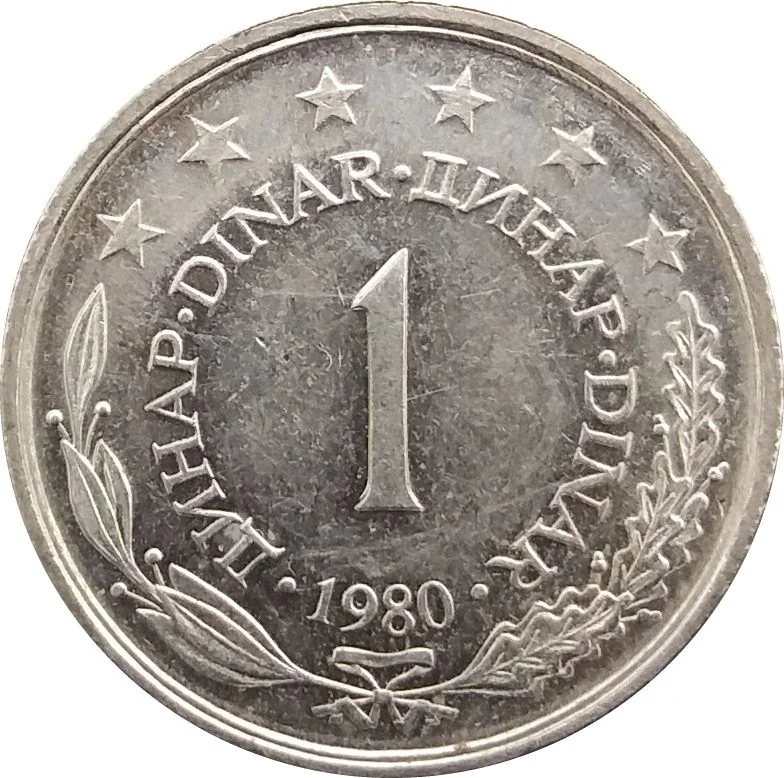
Reverse
Description:
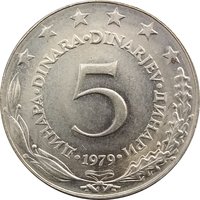
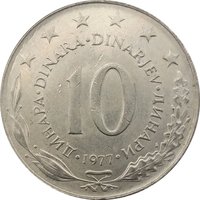
Wreath with six stars.
Inscription:
·ДИНАР·DINAR·ДИНАР·DINAR·
1
1980
1
1980
Translation:
DINAR DINAR DINAR DINAR
1
1980
1
1980
Designer: Dragomir Mileusnić
Edge
Reeded
Categories
| Symbols> Coat of Arms |
| Symbol> Wreath |
Mints
| Name | Mark |
|---|---|
| Belgrade | — |
Mintings
| Year | Mint Mark | Mintage | Quality | Collection |
|---|---|---|---|---|
| 1973 | — | 18,974,000 | ||
| 1974 | — | 42,724,000 | ||
| 1975 | — | 30,260,000 | ||
| 1976 | — | 21,849,000 | ||
| 1977 | — | — | Proof | |
| 1977 | — | — | ||
| 1978 | — | 35,032,000 | ||
| 1979 | — | 39,844,000 | ||
| 1980 | — | 60,630,000 | ||
| 1981 | — | 56,650,000 |
Historical background
In 1973, Yugoslavia's currency situation was characterized by a unique and complex system that reflected its socialist self-management model and non-aligned foreign policy. The country operated with a dual monetary system: the Yugoslav dinar (YUD) for domestic transactions and a "foreign exchange dinar" for international trade and tourism. This bifurcation was a tool to control the domestic economy while managing scarce foreign currency reserves, as Yugoslavia ran persistent trade deficits and relied heavily on foreign loans and remittances from its citizens working abroad (Gastarbeiter) in Western Europe.
The year 1973 was profoundly impacted by the global oil crisis following the Yom Kippur War. As a net importer of oil, Yugoslavia faced a sharp increase in its import bill, putting severe pressure on its balance of payments and foreign currency reserves. This external shock exacerbated existing inflationary pressures and highlighted the structural weaknesses of the economy, including inefficient industries and regional disparities. The government responded with administrative measures, including price controls and increased borrowing, but avoided a major devaluation of the official dinar, preferring to manage the economy through its intricate system of regulations and the separate foreign exchange market.
Ultimately, the currency arrangements of 1973 were a holding action within a broader context of growing economic instability. The system aimed to shield the domestic economy from global volatility and maintain the semblance of stability, but it could not resolve the fundamental contradictions between a decentralized, market-oriented socialism and centralized control over monetary policy. The pressures from the oil crisis foreshadowed the deeper economic crises and high inflation that would plague Yugoslavia in the following decades, leading to repeated devaluations and eventual monetary disintegration in the 1990s.
The year 1973 was profoundly impacted by the global oil crisis following the Yom Kippur War. As a net importer of oil, Yugoslavia faced a sharp increase in its import bill, putting severe pressure on its balance of payments and foreign currency reserves. This external shock exacerbated existing inflationary pressures and highlighted the structural weaknesses of the economy, including inefficient industries and regional disparities. The government responded with administrative measures, including price controls and increased borrowing, but avoided a major devaluation of the official dinar, preferring to manage the economy through its intricate system of regulations and the separate foreign exchange market.
Ultimately, the currency arrangements of 1973 were a holding action within a broader context of growing economic instability. The system aimed to shield the domestic economy from global volatility and maintain the semblance of stability, but it could not resolve the fundamental contradictions between a decentralized, market-oriented socialism and centralized control over monetary policy. The pressures from the oil crisis foreshadowed the deeper economic crises and high inflation that would plague Yugoslavia in the following decades, leading to repeated devaluations and eventual monetary disintegration in the 1990s.
🌱 Very Common