


10 dollars – Solomon Islands
Add to wishlist
Solomon Islands
Context
Material
Weight: 124.41 g
Silver Weight:: 124.29 g
Shape: Sculptural
Composition: 99.9% Silver
Magnetic: No
Alignment: Medal alignment
flip

References
Numista: #199741
Value
Exchange value: 10 SBD
Bullion value: $315.11
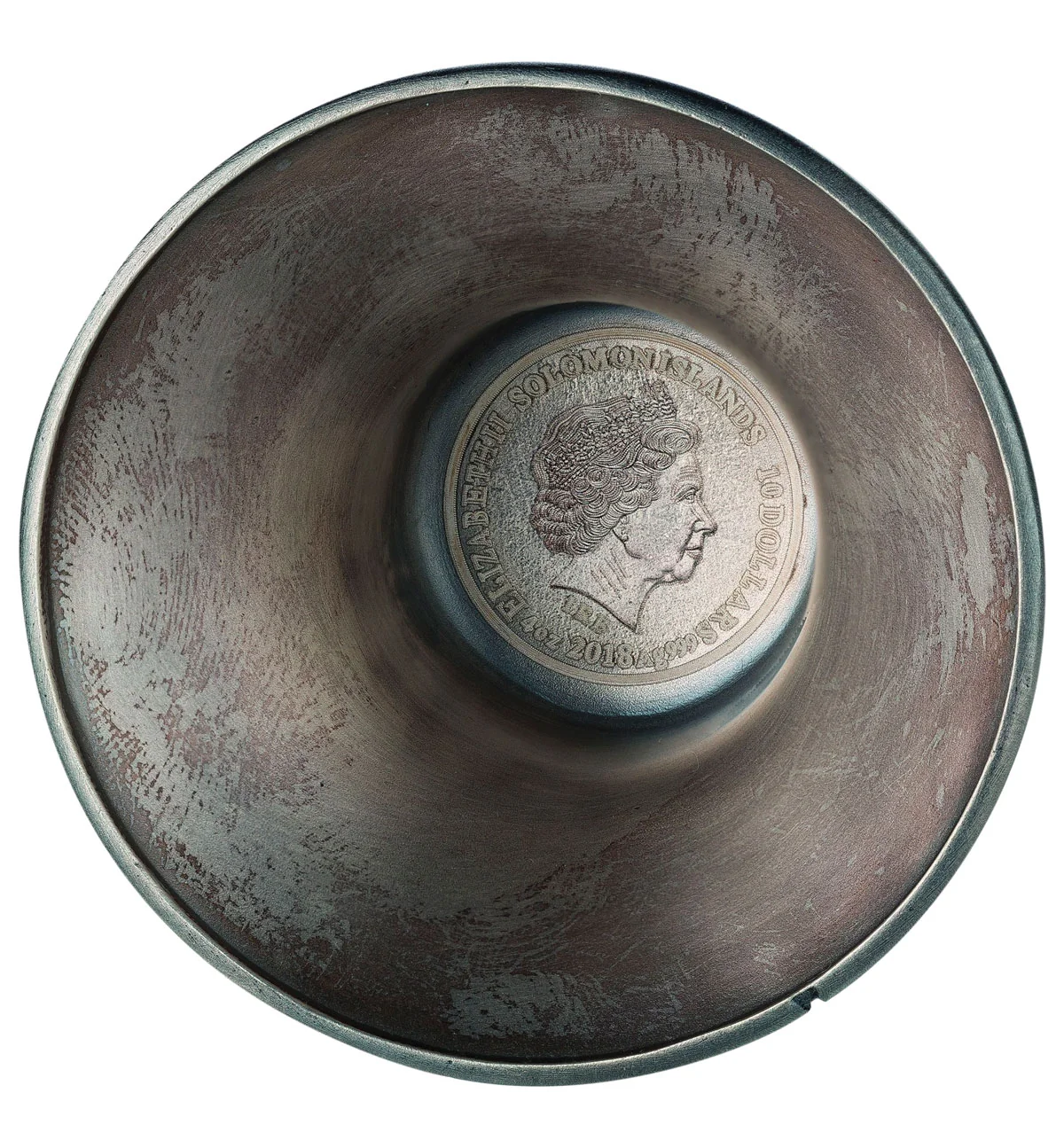
Obverse
Description:
Queen Elizabeth II facing right, crowned.
Inscription:
ELIZABETH II SOLOMON ISLANDS 10 DOLLARS
IRB
4oz 2018 Ag999
IRB
4oz 2018 Ag999
Translation:
ELIZABETH II SOLOMON ISLANDS 10 DOLLARS
IRB
4oz 2018 Ag999
IRB
4oz 2018 Ag999
Script: Latin
Language: English
Engraver: Ian Rank-Broadley
Reverse
Description:
3D model of the bell with all inscriptions, hanging loops, and the signature crack through the "MDCCLIII" (1753) casting date.
Inscription:
PROCLAIM LIBERTY THROUGHOUT ALL THE LAND UNTO ALL THE INHABITANTS THEREOF LEV. XXV. V X.
BY ORDER OF THE ASSEMBLY OF THE PROVINCE OF PENSYLVANIA FOR THE STATE HOUSE IN PHILADᴬ
PASS AND STOW
PHILADᴬ
MDCCLIII
BY ORDER OF THE ASSEMBLY OF THE PROVINCE OF PENSYLVANIA FOR THE STATE HOUSE IN PHILADᴬ
PASS AND STOW
PHILADᴬ
MDCCLIII
Translation:
PROCLAIM LIBERTY THROUGHOUT ALL THE LAND UNTO ALL THE INHABITANTS THEREOF LEV. XXV. V X.
BY ORDER OF THE ASSEMBLY OF THE PROVINCE OF PENSYLVANIA FOR THE STATE HOUSE IN PHILADᴀ
PASS AND STOW
PHILADᴀ
MDCCLIII
BY ORDER OF THE ASSEMBLY OF THE PROVINCE OF PENSYLVANIA FOR THE STATE HOUSE IN PHILADᴀ
PASS AND STOW
PHILADᴀ
MDCCLIII
Script: Latin
Language: English
Edge
©Power Coin
Mintings
| Year | Mint Mark | Mintage | Quality | Collection |
|---|---|---|---|---|
| 2018 | — | 1,776 |
Historical background
In 2018, the currency situation in Solomon Islands was characterized by stability and relative strength, underpinned by a managed float of the Solomon Islands dollar (SBD). The currency was pegged to a basket of currencies, heavily weighted towards the Australian dollar (AUD) and the US dollar (USD), which provided a buffer against volatility. This arrangement, managed by the Central Bank of Solomon Islands (CBSI), ensured predictable exchange rates crucial for an import-dependent economy, though it also limited independent monetary policy. The SBD maintained a stable exchange rate around 8.0 to 8.3 SBD per AUD throughout the year, fostering confidence for businesses and foreign investment.
Economically, the country's current account was under pressure due to a persistent trade deficit, with imports of fuel, machinery, and manufactured goods far exceeding exports of timber, fish, and agricultural products like copra and palm oil. This deficit was partially offset by substantial foreign aid, particularly from Australia, and remittances. However, the reliance on a few volatile commodity exports and the high cost of imports left the economy—and by extension the currency's stability—vulnerable to external shocks and global price fluctuations.
Looking forward, 2018 was a year of cautious optimism. Strong logging activity provided a short-term fiscal boost and foreign exchange inflows, but this was recognized as unsustainable due to dwindling forest resources. The government and CBSI were focused on broader economic challenges, including fostering diversification, improving revenue collection, and maintaining adequate foreign reserves to support the currency peg. The stability of the SBD in 2018 was thus seen as a platform needing to be bolstered by longer-term structural reforms to ensure resilience.
Economically, the country's current account was under pressure due to a persistent trade deficit, with imports of fuel, machinery, and manufactured goods far exceeding exports of timber, fish, and agricultural products like copra and palm oil. This deficit was partially offset by substantial foreign aid, particularly from Australia, and remittances. However, the reliance on a few volatile commodity exports and the high cost of imports left the economy—and by extension the currency's stability—vulnerable to external shocks and global price fluctuations.
Looking forward, 2018 was a year of cautious optimism. Strong logging activity provided a short-term fiscal boost and foreign exchange inflows, but this was recognized as unsustainable due to dwindling forest resources. The government and CBSI were focused on broader economic challenges, including fostering diversification, improving revenue collection, and maintaining adequate foreign reserves to support the currency peg. The stability of the SBD in 2018 was thus seen as a platform needing to be bolstered by longer-term structural reforms to ensure resilience.


✨ Legendary