

2 centesimi – Italy
Add to wishlist
Italy
Context
Years: 1903–1908
Issuer: Italy
Ruler: Vittorio Emanuele III
Currency:
(1861—2001)
Demonetized: Yes
Total mintage: 11,153,000
Material
References
KM: #
Numista: #10874
Value
Exchange value: 0.02 ITL
Obverse
Description:
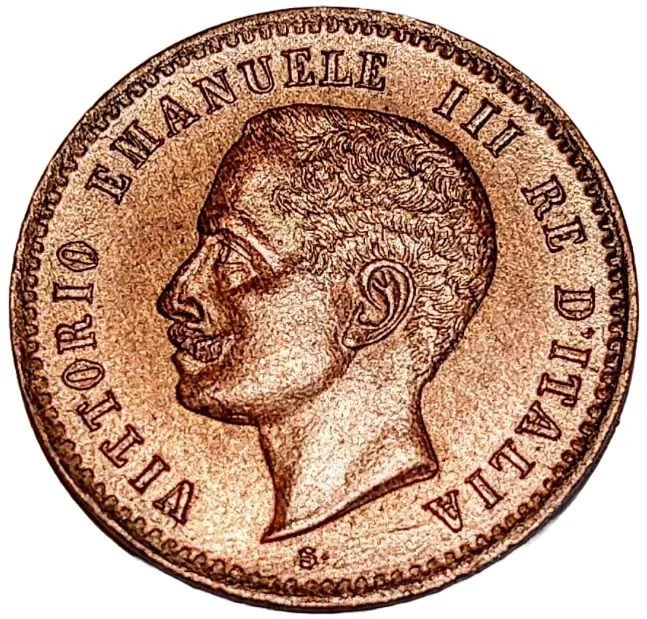
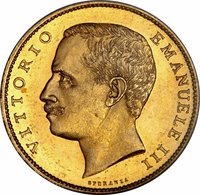
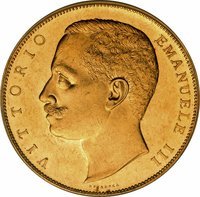
King Vittorio Emanuele III facing left, engraver's initial "S" below.
Inscription:
VITTORIO EMANUELE III RE D'ITALIA
S
S
Translation:
Victor Emmanuel III King of Italy
Script: Latin
Language: Italian
Engraver: Filippo Speranza
Reverse
Description:
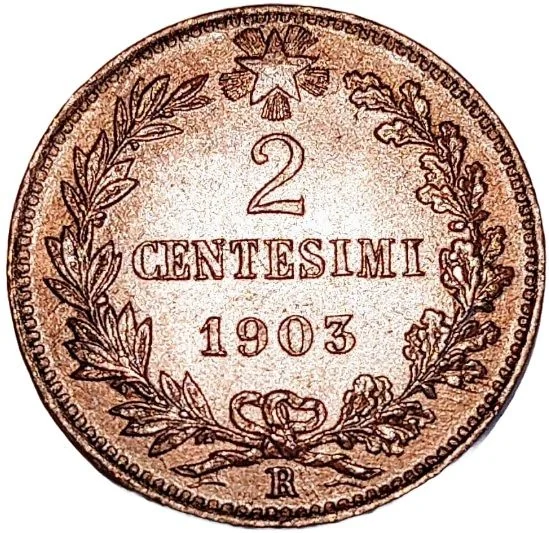
Value and date flanked by laurel and oak branches, beneath Italy's star and above the mint mark.
Inscription:
2
CENTESIMI
1908
R
CENTESIMI
1908
R
Script: Latin
Engraver: Filippo Speranza
Edge
Plain
Mints
| Name | Mark |
|---|---|
| Rome | R |
Mintings
Historical background
In 1903, Italy's currency situation was defined by its adherence to the Latin Monetary Union (LMU), a continental system it had co-founded in 1865. The country was officially on a bimetallic standard (gold and silver), but in practice, the lira was pegged to gold, aligning with major European powers like France. However, Italy's participation was fraught with difficulty. Decades of fiscal strain, heavy public debt, and excessive issuance of paper money had created a persistent gap between the theoretical value of the lira and its actual value in gold, a situation known as the "forced course" (corso forzoso). This meant that while the lira's value was legally defined, the government could not guarantee its free conversion into specie, undermining confidence.
The nation's finances were under significant pressure, marked by chronic budget deficits and a reliance on foreign loans. This economic fragility was exacerbated by a large circulation of banknotes issued by multiple banks of issue, which exceeded the limits agreed upon within the LMU. Consequently, Italian coinage, particularly silver coins, often circulated at a discount abroad, as international markets doubted Italy's ability to fully back its currency. Domestically, this period was one of deflation, following the financial crises of the 1890s, which increased the real burden of debt and contributed to social unrest.
Politically, the government, led by Prime Minister Giuseppe Zanardelli with Finance Minister Luigi Luzzatti, was actively seeking to normalize the currency situation. Their goal was to end the "forced course" and achieve full convertibility, thereby strengthening Italy's international financial standing and solidifying its place within the European gold standard. The period around 1903 was thus a transitional phase of preparation, involving efforts to consolidate public finances and build gold reserves, a process that would culminate successfully in the full resumption of gold convertibility in 1907.
The nation's finances were under significant pressure, marked by chronic budget deficits and a reliance on foreign loans. This economic fragility was exacerbated by a large circulation of banknotes issued by multiple banks of issue, which exceeded the limits agreed upon within the LMU. Consequently, Italian coinage, particularly silver coins, often circulated at a discount abroad, as international markets doubted Italy's ability to fully back its currency. Domestically, this period was one of deflation, following the financial crises of the 1890s, which increased the real burden of debt and contributed to social unrest.
Politically, the government, led by Prime Minister Giuseppe Zanardelli with Finance Minister Luigi Luzzatti, was actively seeking to normalize the currency situation. Their goal was to end the "forced course" and achieve full convertibility, thereby strengthening Italy's international financial standing and solidifying its place within the European gold standard. The period around 1903 was thus a transitional phase of preparation, involving efforts to consolidate public finances and build gold reserves, a process that would culminate successfully in the full resumption of gold convertibility in 1907.
🌱 Common