

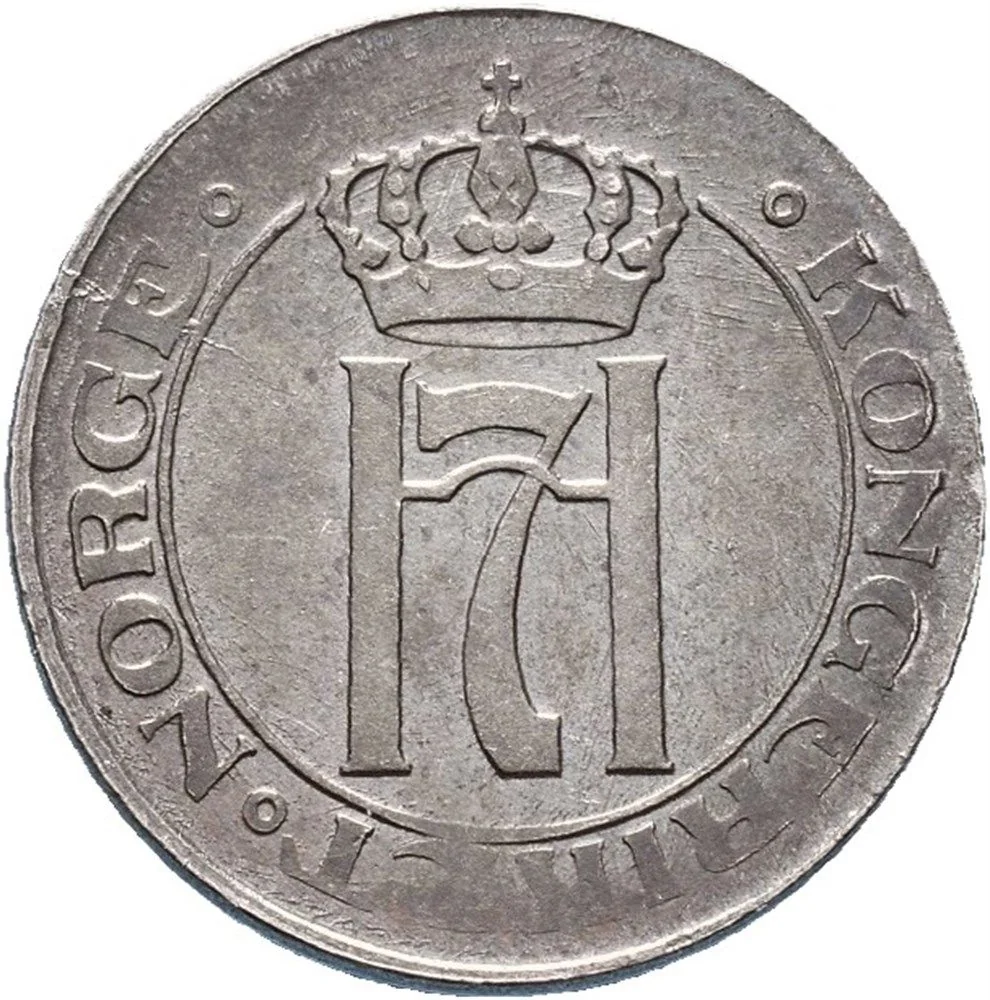
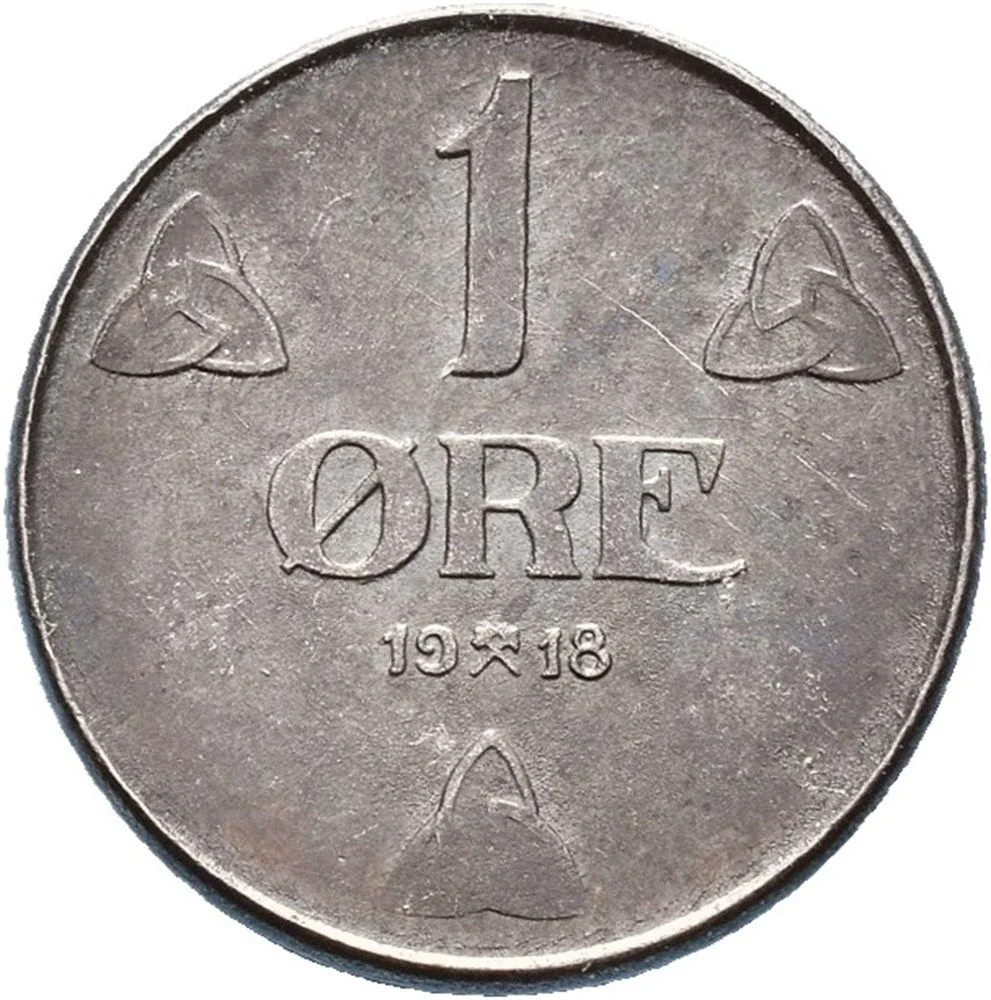
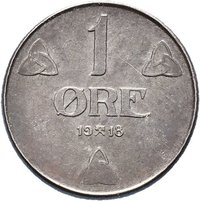
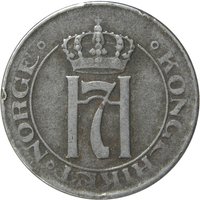
1 Øre – Norway
Norway
Context
Years: 1918–1921
Issuer: Norway 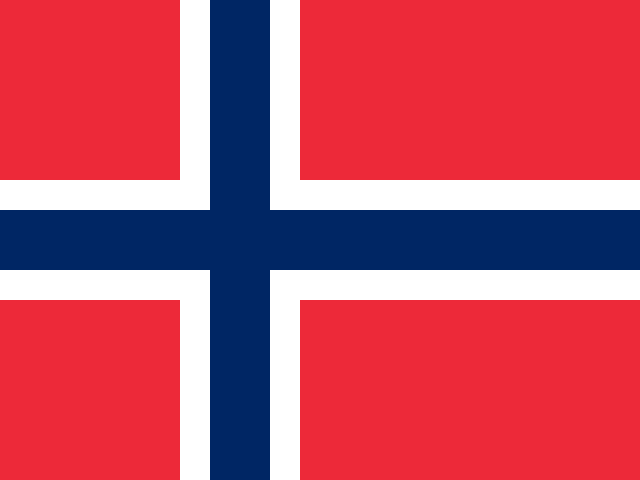
Ruler: Haakon VII
Currency:
(since 1875)
Demonetized: Yes
Total mintage: 25,645,000
Material
References
KM: #Click to copy to clipboard367a
Numista: #19873
Value
Exchange value: 0.01 NOK = $0.00
Obverse
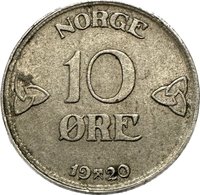
Reverse
Edge
Plain
Mints
| Name | Mark |
|---|---|
| Norwegian Mint | — |
Mintings
| Year | Mint Mark | Mintage | Quality | Collection |
|---|---|---|---|---|
| 1918 | — | 6,000,000 | ||
| 1919 | — | 12,930,000 | ||
| 1920 | — | 4,445,000 | ||
| 1921 | — | 2,270,000 |
Historical background
Norway entered 1918 with its currency, the krone, still adhering to the gold standard, a system it had suspended at the outbreak of World War I in 1914. This suspension was a necessary wartime measure, allowing the Norges Bank to issue currency more freely to finance essential imports and government spending without being constrained by its gold reserves. Consequently, the period from 1914 to 1918 saw a significant expansion of the money supply, which, combined with wartime shortages and disrupted trade, led to substantial inflation and a declining external value of the krone.
The situation was further complicated by Norway's heavy economic dependence on maritime trade, which was severely crippled by German U-boat warfare and Allied naval blockades. The loss of shipping and export revenues created a large balance of payments deficit, draining the country's foreign currency reserves and putting severe downward pressure on the krone's exchange rate. By 1918, the Norwegian krone was trading at a steep discount compared to its pre-war parity, particularly against stronger currencies like the US dollar and the British pound, reflecting both economic strain and a lack of confidence.
Domestically, this currency weakness exacerbated the cost-of-living crisis, as the prices of imported goods soared. The political and economic debate centered on the path forward: whether to return to the gold standard at the pre-war parity (which would require a painful deflation), devalue the currency to a new, lower parity, or maintain a managed paper currency. These difficult deliberations, set against a backdrop of post-war uncertainty and social unrest, would define Norwegian monetary policy throughout the 1920s.
The situation was further complicated by Norway's heavy economic dependence on maritime trade, which was severely crippled by German U-boat warfare and Allied naval blockades. The loss of shipping and export revenues created a large balance of payments deficit, draining the country's foreign currency reserves and putting severe downward pressure on the krone's exchange rate. By 1918, the Norwegian krone was trading at a steep discount compared to its pre-war parity, particularly against stronger currencies like the US dollar and the British pound, reflecting both economic strain and a lack of confidence.
Domestically, this currency weakness exacerbated the cost-of-living crisis, as the prices of imported goods soared. The political and economic debate centered on the path forward: whether to return to the gold standard at the pre-war parity (which would require a painful deflation), devalue the currency to a new, lower parity, or maintain a managed paper currency. These difficult deliberations, set against a backdrop of post-war uncertainty and social unrest, would define Norwegian monetary policy throughout the 1920s.
🌱 Common