

200 euro – Greece
Add to wishlist
Non-circulating coins
Commemoration: The Persian Wars
Greece
Obverse
Description:
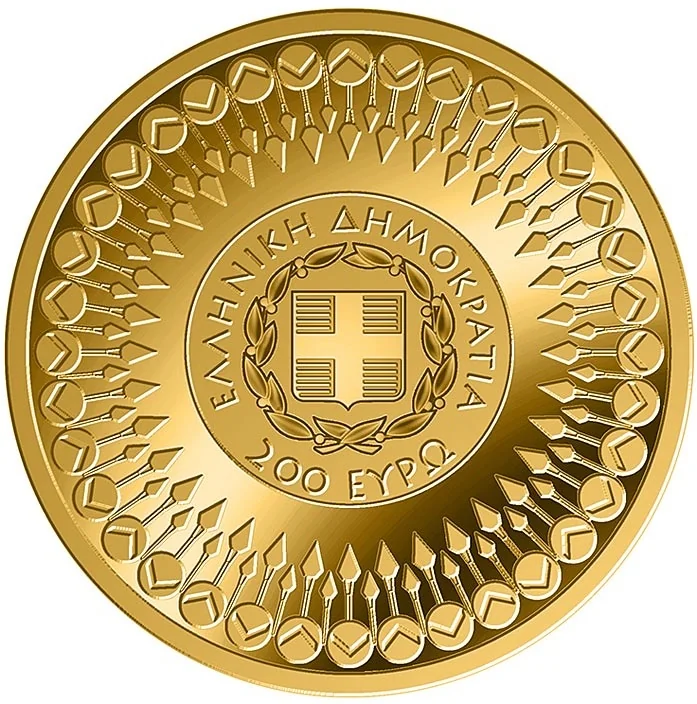
The design centers on the national Coat of Arms, encircled by lettering and bordered by spears and Laconian shields marked with "Λ".
Inscription:
ΕΛΛΗΝΙΚΗ ΔΗΜΟΚΡΑΤΙΑ
200 ΕΥΡΩ
200 ΕΥΡΩ
Translation:
HELLENIC REPUBLIC
200 EURO
200 EURO
Script: Greek
Language: Greek
Engraver: Geórgios Stamatópoulos
Reverse
Description:
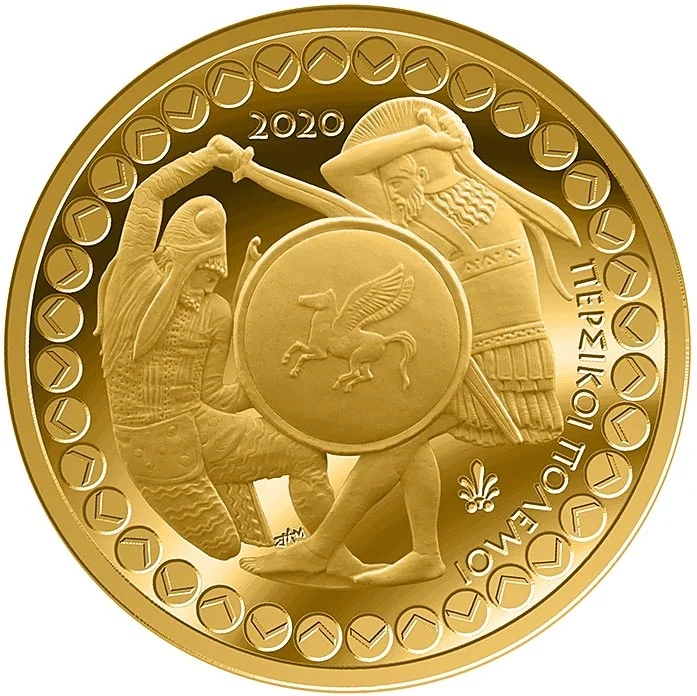
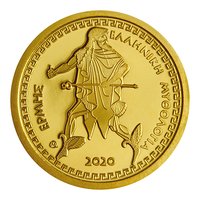
A Greek hoplite fights a Persian, with the mint’s palmette symbol, year, and engraver’s signature to the right. The design is encircled by Laconian shields marked “Λ,” honoring the Lacedaemonians’ role in the victory.
Inscription:
2020
ΠΕΡΣΙΚΟΙ ΠΟΛΕΜΟΙ
ΠΕΡΣΙΚΟΙ ΠΟΛΕΜΟΙ
Translation:
Persian Wars
Script: Greek
Language: Greek
Engraver: Geórgios Stamatópoulos
Edge
Plain
Categories
| Symbols> Coat of Arms |
| History> War |
Mints
| Name | Mark |
|---|---|
| National Mint of the Bank of Greece | — |
Mintings
| Year | Mint Mark | Mintage | Quality | Collection |
|---|---|---|---|---|
| 2020 | — | 750 | Proof |
Historical background
By 2020, Greece was in the final stages of a painful decade-long financial crisis that had reshaped its economy and society. The country had required three successive international bailouts from the European Union and the International Monetary Fund between 2010 and 2015, totalling over €260 billion, to avoid bankruptcy and a potential exit from the Eurozone. In return for this financial lifeline, Greece implemented severe austerity measures, including deep spending cuts, tax increases, and sweeping economic reforms. While these actions stabilized the public finances, they came at a high social cost, including a sharp contraction in GDP, soaring unemployment, and a significant decline in living standards.
The core currency situation remained defined by Greece's continued use of the euro. Despite intense speculation during the peak of the crisis about a possible "Grexit"—a forced return to a national currency like the drachma—the country remained firmly within the Eurozone. This membership provided monetary stability and prevented a catastrophic bank run and currency devaluation, but it also meant Greece could not devalue its currency to regain competitiveness. Instead, the burden of adjustment fell entirely on internal devaluation through wage and price cuts, a long and socially painful process. By 2020, the country had successfully exited its enhanced surveillance bailout program in 2018 and was financing itself through international bond markets once more, though its debt-to-GDP ratio remained the highest in the European Union.
The year 2020 presented a new and severe challenge with the onset of the COVID-19 pandemic. The global economic shock threatened to derail Greece's fragile recovery, leading to a sharp but temporary recession. In response, the European Union activated unprecedented support mechanisms, most notably the €750 billion NextGenerationEU recovery fund. Greece was set to receive a substantial share of these grants and loans, offering a critical opportunity to invest in digital and green transitions rather than merely managing debt. Thus, the currency narrative shifted from pure survival within the euro to leveraging EU solidarity for a post-pandemic recovery, all while managing a daunting public debt burden under the euro's constrained monetary framework.
The core currency situation remained defined by Greece's continued use of the euro. Despite intense speculation during the peak of the crisis about a possible "Grexit"—a forced return to a national currency like the drachma—the country remained firmly within the Eurozone. This membership provided monetary stability and prevented a catastrophic bank run and currency devaluation, but it also meant Greece could not devalue its currency to regain competitiveness. Instead, the burden of adjustment fell entirely on internal devaluation through wage and price cuts, a long and socially painful process. By 2020, the country had successfully exited its enhanced surveillance bailout program in 2018 and was financing itself through international bond markets once more, though its debt-to-GDP ratio remained the highest in the European Union.
The year 2020 presented a new and severe challenge with the onset of the COVID-19 pandemic. The global economic shock threatened to derail Greece's fragile recovery, leading to a sharp but temporary recession. In response, the European Union activated unprecedented support mechanisms, most notably the €750 billion NextGenerationEU recovery fund. Greece was set to receive a substantial share of these grants and loans, offering a critical opportunity to invest in digital and green transitions rather than merely managing debt. Thus, the currency narrative shifted from pure survival within the euro to leveraging EU solidarity for a post-pandemic recovery, all while managing a daunting public debt burden under the euro's constrained monetary framework.

💎 Extremely Rare