

5 leva (Khristo Botev's Death) – Bulgaria
Add to wishlist
Non-circulating coins
Commemoration: 100th Anniversary of the Death of Khristo Botev
Bulgaria
Obverse
Description:
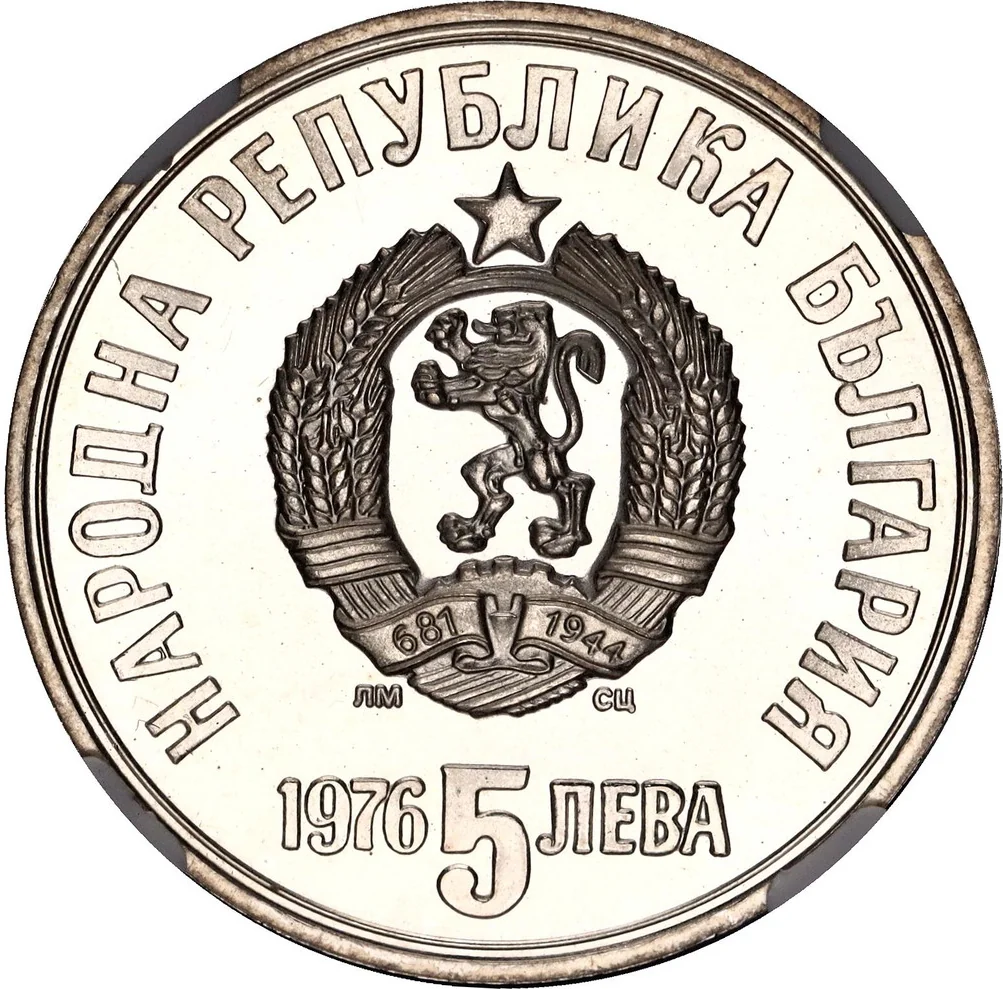
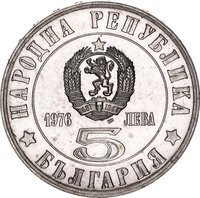
Coat of arms of Bulgaria. 1 lev, 1974.
Inscription:
НАРОДНА РЕПУБЛИКА БЪЛГАРИЯ
1976
5 ЛЕВА
1976
5 ЛЕВА
Translation:
PEOPLE'S REPUBLIC OF BULGARIA
1976
5 LEVA
1976
5 LEVA
Script: Cyrillic
Language: Bulgarian
Engravers: L. Marinova, S. Tzonovski
Reverse
Description:
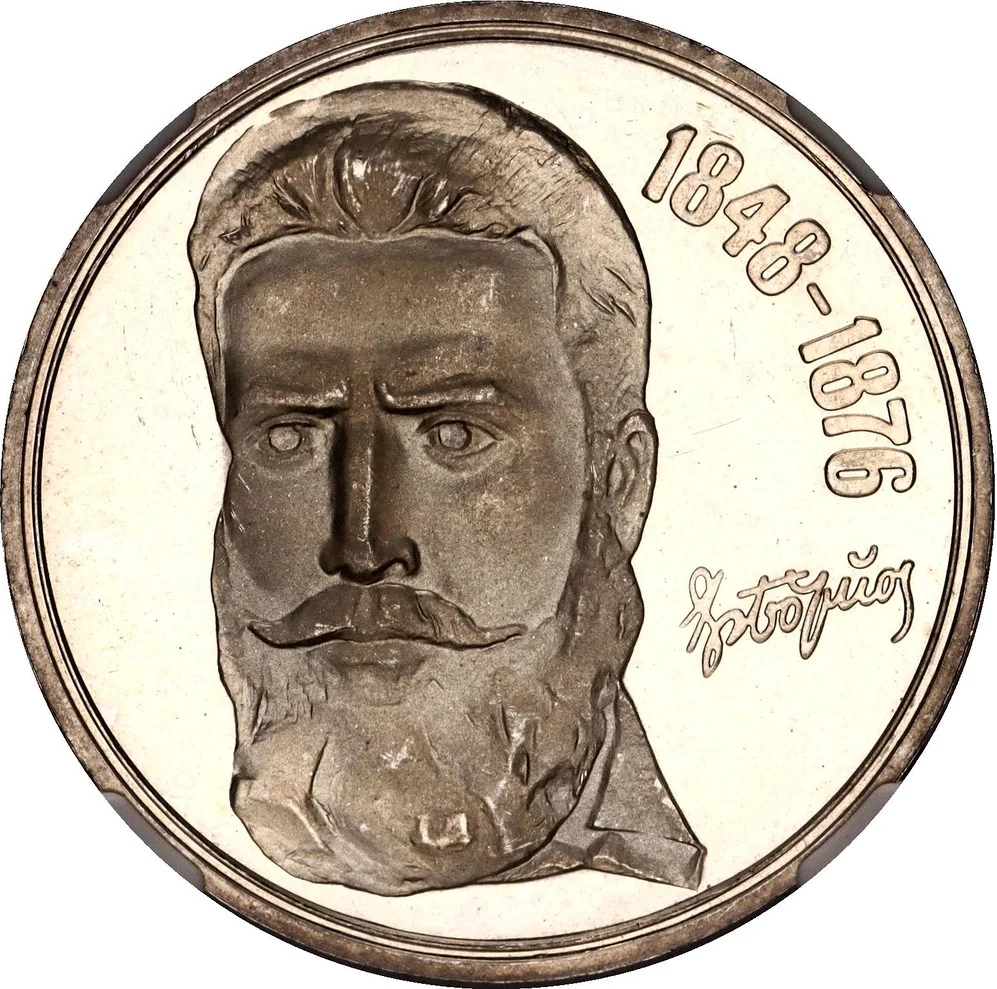
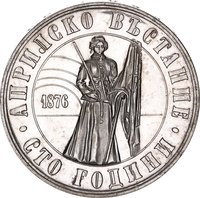
Portrait of revolutionary poet Khristo Botev.
Inscription:
1848-1876
Script: Cyrillic
Engravers: L. Marinova, S. Tzonovski
Edge
Inscription
Legend:
ТОЗ, КОЙТО ПАДНЕ В БОЙ ЗА СВОБОДА, ТОЙ НЕ УМИРА
Translation:
He who falls in battle for freedom, does not die.
Language: Bulgarian
Mints
| Name | Mark |
|---|---|
| Bulgarian Mint | — |
Mintings
| Year | Mint Mark | Mintage | Quality | Collection |
|---|---|---|---|---|
| 1976 | — | 196,660 | Proof |
Historical background
In 1976, Bulgaria operated under a strict centrally planned economy as a loyal member of the Soviet-led Council for Mutual Economic Assistance (COMECON). The official national currency was the Bulgarian Lev (BGN), but its function was heavily constrained. It existed primarily for domestic retail transactions and wages, while the state maintained absolute control over all monetary policy, prices, and foreign exchange. Internationally, the lev was a non-convertible currency, meaning it could not be freely traded for other currencies on global markets, reflecting Bulgaria's isolation from the Western financial system.
The country's international trade and currency reserves were dominated by the "transferable ruble," an artificial accounting unit used for settling transactions within the COMECON bloc. Trade with Western nations for vital technology and goods required hard currencies like US dollars or Deutsche Marks, which were in chronically short supply. To manage this, Bulgaria maintained a complex system of multiple exchange rates: an official, highly overvalued rate for state accounting, and a far less favorable effective rate used for limited tourist exchanges and foreign trade calculations, creating a significant disparity with black market rates.
For the average Bulgarian citizen in 1976, the currency situation meant a life largely insulated from international finance but constrained by state control. Access to foreign goods was limited to special "corecom" stores or the black market, where hard currency or barter was king. The state's focus on heavy industry and repayment of foreign debt, coupled with the inefficiencies of the planned economy, would lead to growing shortages and a gradual decline in the lev's real domestic purchasing power throughout the late 1970s and 1980s, setting the stage for future economic crises.
The country's international trade and currency reserves were dominated by the "transferable ruble," an artificial accounting unit used for settling transactions within the COMECON bloc. Trade with Western nations for vital technology and goods required hard currencies like US dollars or Deutsche Marks, which were in chronically short supply. To manage this, Bulgaria maintained a complex system of multiple exchange rates: an official, highly overvalued rate for state accounting, and a far less favorable effective rate used for limited tourist exchanges and foreign trade calculations, creating a significant disparity with black market rates.
For the average Bulgarian citizen in 1976, the currency situation meant a life largely insulated from international finance but constrained by state control. Access to foreign goods was limited to special "corecom" stores or the black market, where hard currency or barter was king. The state's focus on heavy industry and repayment of foreign debt, coupled with the inefficiencies of the planned economy, would lead to growing shortages and a gradual decline in the lev's real domestic purchasing power throughout the late 1970s and 1980s, setting the stage for future economic crises.
🌟 Limited