

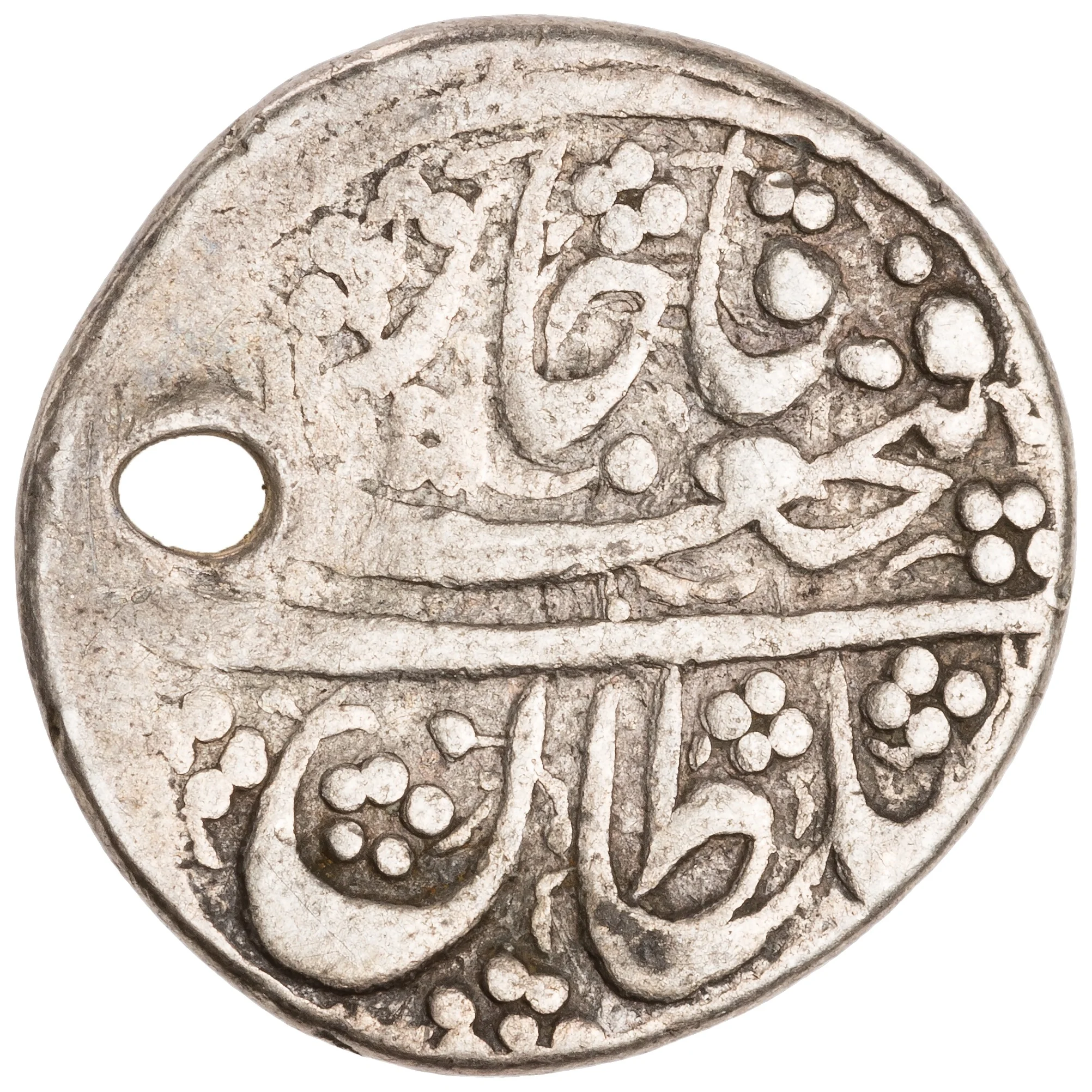
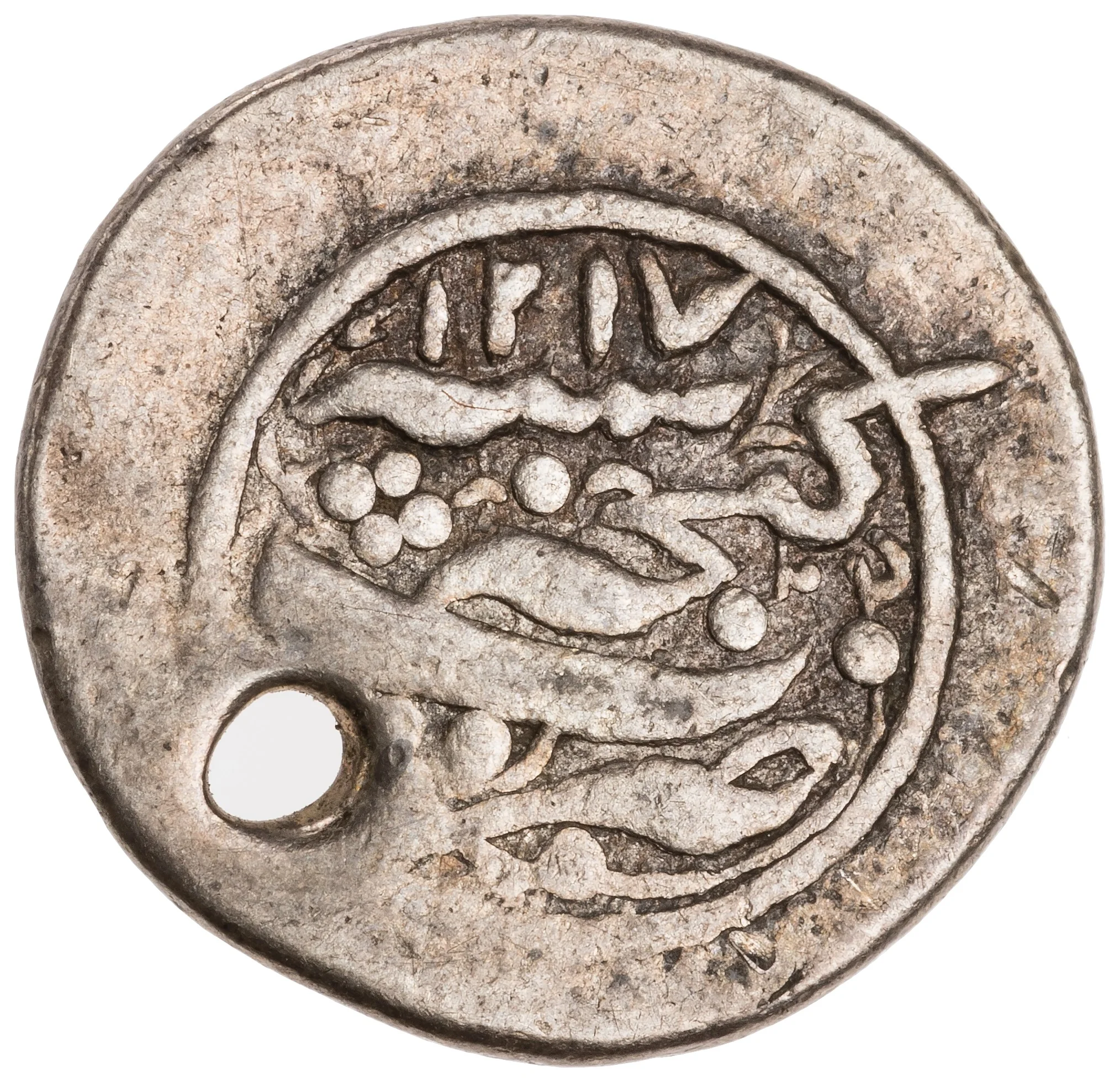
1 abbasi – Ganja Khanate
Add to wishlist
Context
Year: 1803
Islamic (Hijri) Year:: 1217
Country: Caucasia
Issuer: Ganja Khanate
Currency:
Demonetized: Yes
Material
Diameter: 24 mm
Weight: 3.08 g
Silver Weight:: 3.08 g
Shape: Irregular round
Composition: Silver
Standard: Gold tenth ounce
Magnetic: No
Technique: Hammered
References
Numista: #197886
Value
Bullion value: $7.87
Obverse
Reverse
Edge
Plain
Mints
| Name | Mark |
|---|---|
| Ganja | — |
Mintings
| Year | Mint Mark | Mintage | Quality | Collection |
|---|---|---|---|---|
| 1803 | — | — |
Historical background
In 1803, the Ganja Khanate, a semi-autonomous principality in the South Caucasus, operated within a complex and fragmented monetary system typical of the region's khanates following the collapse of centralized Persian authority. The primary circulating currency was the Persian silver abbasi and its subdivisions, reflecting the khanate's historical ties to the Qajar Empire. However, the monetary landscape was far from uniform; Russian silver rubles and copper coins, Ottoman piastres, and even Georgian and Armenian coins circulated alongside local issues, a result of Ganja's strategic position on trade routes and the increasing political pressure from its expanding neighbors, Russia and Persia.
This multiplicity of currencies created chronic instability. The value and acceptance of coins depended heavily on their silver content and the credibility of the issuing authority, leading to frequent discounting and confusion in commerce. Furthermore, the khanate's own capacity to mint coins was limited and inconsistent. While some local khans likely struck crude copper puls or silver coins bearing their names, these were not on a scale to unify the system. The real monetary power lay with external empires, making the economy vulnerable to shifts in their policies and the inflow or outflow of precious metals.
The situation in 1803 was particularly precarious as it fell on the eve of dramatic political change. Following the Russian Empire's formal annexation of eastern Georgia in 1801, Ganja became a direct target. In late 1803, Russian forces under General Pavel Tsitsianov were already advancing, and they would successfully storm Ganja in January 1804. Therefore, the currency chaos of that year was a direct symptom of the khanate's fading sovereignty, soon to be resolved not by internal reform but by forcible integration into the Russian imperial monetary system, which would impose the ruble as the standard.
This multiplicity of currencies created chronic instability. The value and acceptance of coins depended heavily on their silver content and the credibility of the issuing authority, leading to frequent discounting and confusion in commerce. Furthermore, the khanate's own capacity to mint coins was limited and inconsistent. While some local khans likely struck crude copper puls or silver coins bearing their names, these were not on a scale to unify the system. The real monetary power lay with external empires, making the economy vulnerable to shifts in their policies and the inflow or outflow of precious metals.
The situation in 1803 was particularly precarious as it fell on the eve of dramatic political change. Following the Russian Empire's formal annexation of eastern Georgia in 1801, Ganja became a direct target. In late 1803, Russian forces under General Pavel Tsitsianov were already advancing, and they would successfully storm Ganja in January 1804. Therefore, the currency chaos of that year was a direct symptom of the khanate's fading sovereignty, soon to be resolved not by internal reform but by forcible integration into the Russian imperial monetary system, which would impose the ruble as the standard.

✨ Legendary