Logo Title
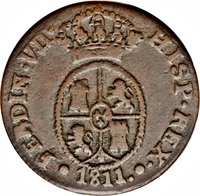
obverse
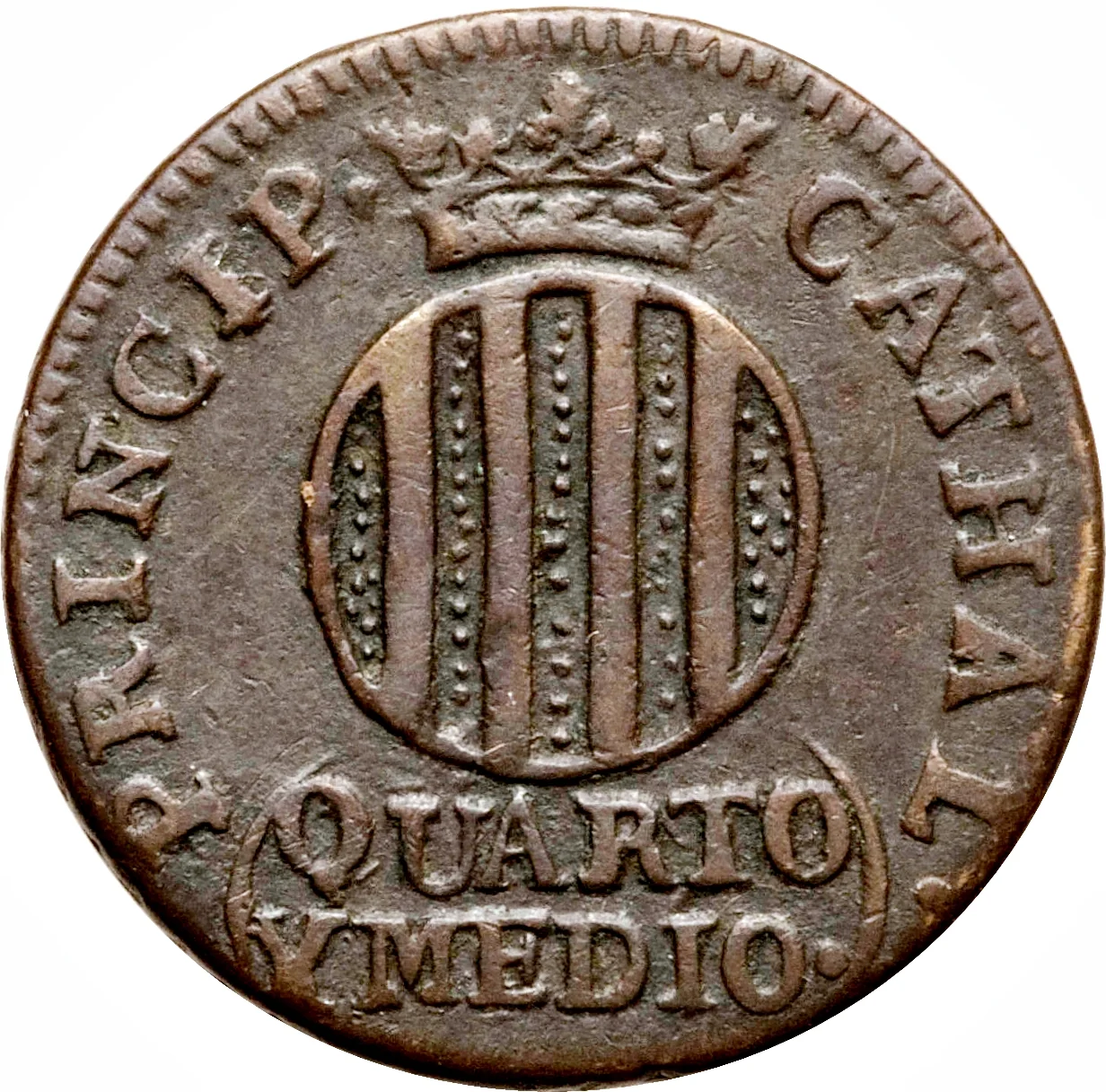
reverse
Heritage Auctions

1½ Quarts – Principality of Catalonia

Spain
Context
Years: 1811–1813
Country: Spain Country flag
Currency:
(1808—1850)
Demonetized: Yes
Material
Diameter: 21 mm
Weight: 3.5 g
Shape: Round
Composition: Copper
Magnetic: No
Technique: Milled
Alignment: Coin alignment
Obverse
OBVERSE ↑
flip
Reverse
REVERSE ↓
References
KM: #Click to copy to clipboard117
Numista: #19641

Obverse

Description:
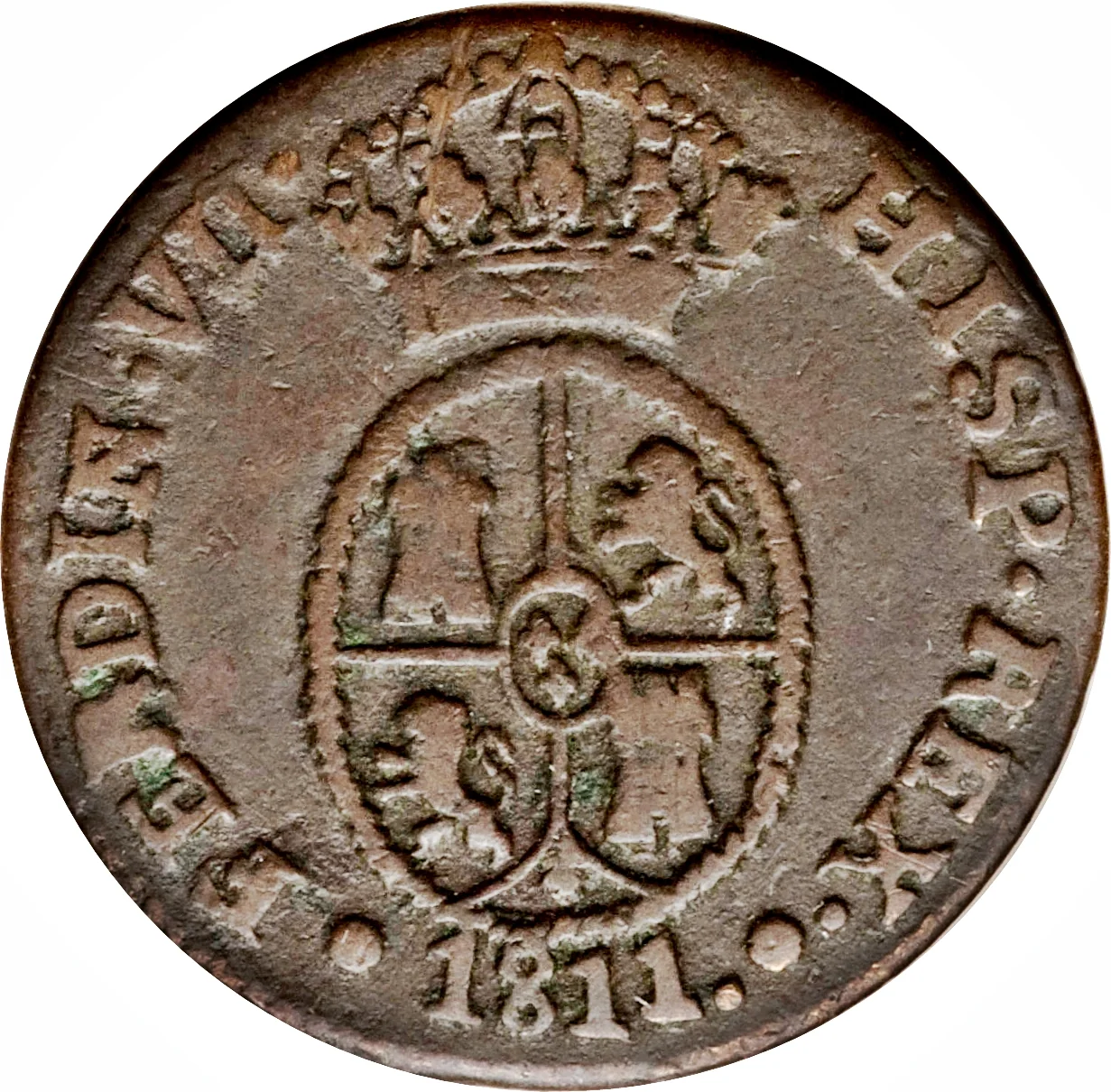
Spanish crowned oval coat of arms with legend and date.
Inscription:
FERDIN · VII · HISP · REX ·

1811.
Translation:
FERDINAND VII, KING OF SPAIN,

1811.
Script: Latin
Language: Latin

Reverse

Description:
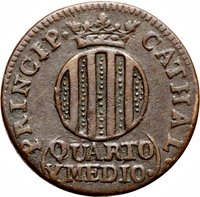
Crowned Catalan coat of arms above value, surrounded by legend.
Inscription:
PRINCIP· CATHAL ·

QUARTO

Y MEDIO·
Translation:
Prince Cathal

Fourth

and a half.
Script: Latin
Languages: Latin, Spanish

Edge

Categories

Symbols> Coat of Arms


Mintings

YearMint MarkMintageQualityCollection
1811
1813

Historical background

In 1811, the Principality of Catalonia was a warzone, deeply entangled in the Peninsular War (1808-1814). Following Napoleon's invasion of Spain, French imperial forces had occupied Barcelona and much of the coastal region since 1808, while Spanish regular and Catalan miquelet guerrilla forces contested the interior and mountains. This political and military fracture led to a severe and chaotic currency situation. Two competing authorities issued money: the French-imposed government in Barcelona circulated Napoleonic francs and specially minted Catalan sous, while the Spanish resistance loyal to the Cádiz Cortes issued traditional Spanish reales and pesos. The result was a fragmented monetary zone where the value and acceptance of currency depended entirely on which army controlled the territory.

The war devastated the local economy, leading to widespread hoarding of precious metal coins. This scarcity of sound money, combined with the enormous costs of sustaining armies, prompted both sides to issue vast quantities of low-value copper and billon (base metal) coinage to pay troops and suppliers. Furthermore, the French administration, struggling with logistics, resorted to issuing paper money, a concept still unfamiliar and deeply distrusted by the Catalan populace. Inflation ran rampant as this flood of weak currency chased scarce goods, exacerbated by rampant counterfeiting and the breakdown of traditional trade networks.

For the civilian population, this monetary chaos translated into daily hardship and uncertainty. The coexistence of multiple, unstable currencies made basic commerce a gamble, with merchants often refusing certain coins or demanding exorbitant premiums. Many communities retreated to barter or the use of clipped and worn Spanish coins from earlier reigns, which held residual trust. Ultimately, the currency situation of 1811 in Catalonia was not one of policy but of survival, reflecting the broader collapse of civil order and the brutal economic realities of a region torn between two warring powers.
Rare