

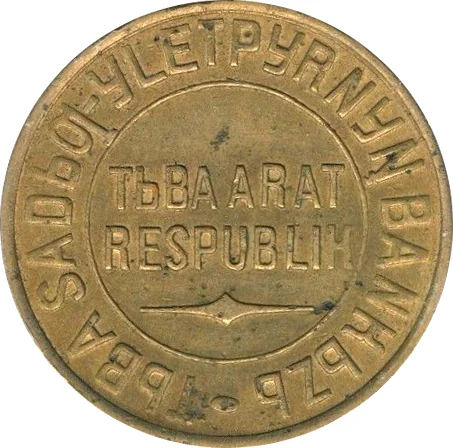
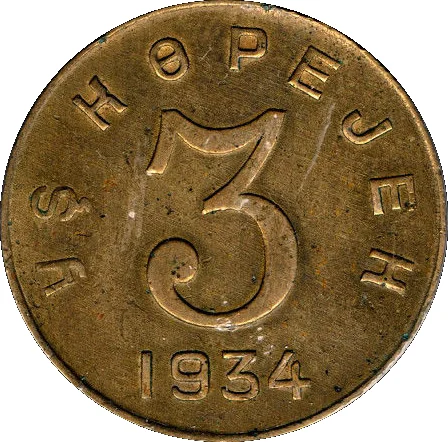
3 köpejek – Tannu Tuva
Add to wishlist
Russia
Context
Years: 1933–1934
Country: Russia
Issuer: Tannu Tuva
Period:
(1921—1941)
Currency:
(1933—1944)
Demonetization: 1 January 1945
Material
Diameter: 22 mm
Weight: 2.8 g
Shape: Round
Composition: Aluminium bronze
Magnetic: No
Technique: Milled
Alignment: Medal alignment
flip
References
KM: #
Numista: #19636
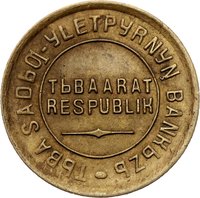
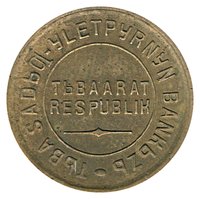
Obverse
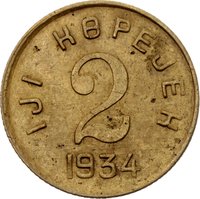
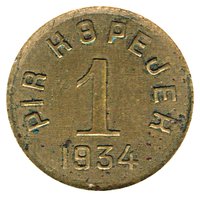
Reverse
Edge
Reeded
Mints
| Name | Mark |
|---|---|
| Saint Petersburg | — |
Mintings
| Year | Mint Mark | Mintage | Quality | Collection |
|---|---|---|---|---|
| 1933 | — | — | ||
| 1934 | — | — |
Historical background
In 1933, the currency situation in the Tuvan People's Republic reflected its unique political and economic position as a nominally independent state under de facto Soviet control. Having broken from Chinese rule in 1911 and become a Russian protectorate, Tuvan currency had long been tied to the Russian ruble. However, the chaotic aftermath of the Russian Revolution and Civil War saw a variety of monetary instruments circulate, including Tsarist rubles, "Kerensky" notes from the Provisional Government, and local scrip issued by Russian settlers and cooperatives, leading to significant instability and inflation.
To formalize its monetary system and assert symbolic sovereignty, the Tuvan government, heavily guided by Soviet advisors, introduced the national currency, the Aksha (Akşa), in 1933. It was pegged at par with the Soviet ruble, and the first series of banknotes, printed in the USSR, featured traditional Tuvan motifs and denominations in both Tuvan script and Russian. This move was part of a broader Soviet-led effort to integrate Tuvan economy into the Soviet sphere, standardize financial transactions, and displace the remaining Chinese and old Russian currency.
Despite its introduction, the Aksha's circulation and utility remained limited in the largely pastoral and subsistence-based Tuvan economy. Barter was still widespread, and the Soviet ruble continued to be widely used and trusted, especially for trade with the USSR, which dominated Tuvan exports like wool and livestock. Thus, the 1933 currency reform was less a transformative economic event and more a political project, creating a veneer of financial independence while cementing the country's practical dependence on Moscow, a prelude to its full annexation by the Soviet Union in 1944.
To formalize its monetary system and assert symbolic sovereignty, the Tuvan government, heavily guided by Soviet advisors, introduced the national currency, the Aksha (Akşa), in 1933. It was pegged at par with the Soviet ruble, and the first series of banknotes, printed in the USSR, featured traditional Tuvan motifs and denominations in both Tuvan script and Russian. This move was part of a broader Soviet-led effort to integrate Tuvan economy into the Soviet sphere, standardize financial transactions, and displace the remaining Chinese and old Russian currency.
Despite its introduction, the Aksha's circulation and utility remained limited in the largely pastoral and subsistence-based Tuvan economy. Barter was still widespread, and the Soviet ruble continued to be widely used and trusted, especially for trade with the USSR, which dominated Tuvan exports like wool and livestock. Thus, the 1933 currency reform was less a transformative economic event and more a political project, creating a veneer of financial independence while cementing the country's practical dependence on Moscow, a prelude to its full annexation by the Soviet Union in 1944.
💎 Very Rare