

500 meticais (Independence) – Mozambique
Add to wishlist
Non-circulating coins
Commemoration: 5th Anniversary of Independence
Mozambique
Context
Year: 1980
Issuer: Mozambique
Period:
(1975—1990)
Currency:
(1980—2006)
Demonetized: Yes
Total mintage: 5,000
Material
References
KM: #
Numista: #19609
Value
Exchange value: 500 MZM
Bullion value: $39.66
Obverse
Description:
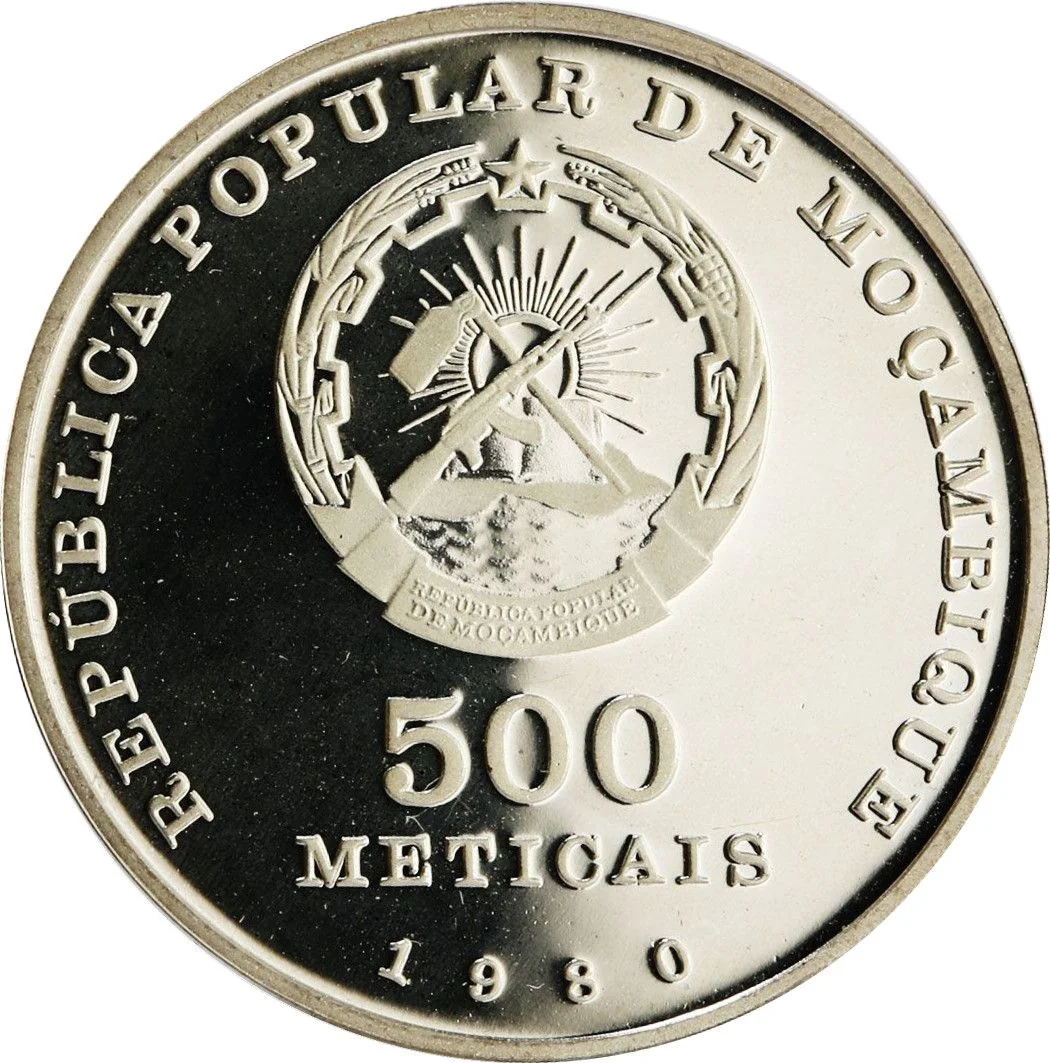
National arms above value and date.
Inscription:
REPÚBLICA POPULAR DE MOÇAMBIQUE
500
METICAIS
1980
500
METICAIS
1980
Translation:
PEOPLE'S REPUBLIC OF MOZAMBIQUE
500
METICAIS
1980
500
METICAIS
1980
Script: Latin
Language: Portuguese
Reverse
Description:
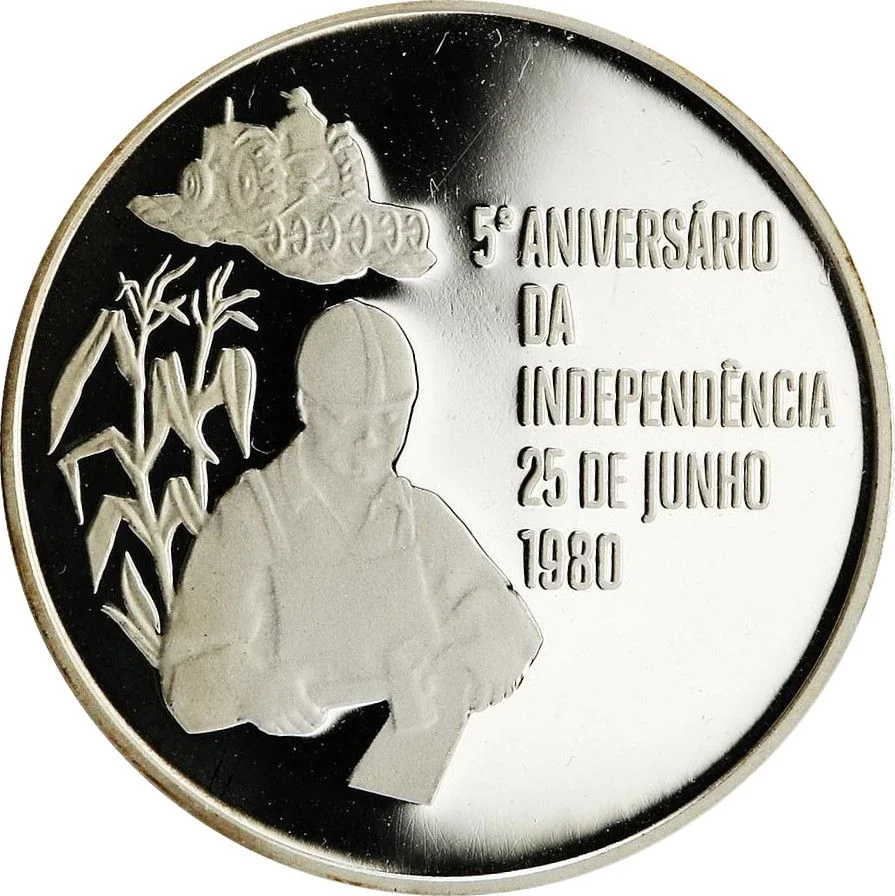
Cornfield with a small building.
Inscription:
5º ANIVERSÁRIO
DA
INDEPENDÊNCIA
25 DE JUNHO
1980
DA
INDEPENDÊNCIA
25 DE JUNHO
1980
Translation:
5th Anniversary
of
Independence
25th of June
1980
of
Independence
25th of June
1980
Script: Latin
Language: Portuguese
Edge
Mintings
| Year | Mint Mark | Mintage | Quality | Collection |
|---|---|---|---|---|
| 1980 | — | 5,000 | Proof |
Historical background
Following independence in 1975, Mozambique inherited the Portuguese colonial currency, the escudo, but swiftly moved to establish monetary sovereignty as a cornerstone of its new socialist identity. In 1980, the country introduced its own currency, the metical (MZM), replacing the escudo at par. This was a deeply symbolic act, named after a historic unit of gold weight used in pre-colonial trade, representing a deliberate break from the colonial past and an assertion of national economic control under the ruling FRELIMO government.
However, the economic backdrop for this launch was severely challenging. The country was engulfed in a devastating civil war (1977-1992) that crippled infrastructure, agricultural production, and trade. Simultaneously, the government's commitment to central planning and state-run industries, combined with the severe disruption of the war, led to widespread shortages, declining productivity, and a growing budget deficit. Consequently, while the metical was introduced at parity with the old escudo, it entered a reality of a command economy with fixed prices and exchange rates that bore little relation to its actual market value or the country's economic output.
Thus, in 1980, the Mozambican metical began its existence in a state of profound fragility. The official economy was characterized by scarcity and controlled prices, while a burgeoning black market for goods and foreign currency (especially the South African rand) quickly emerged to fill the gaps. This dual-system undermined the new currency's stability from the outset, planting the seeds for the severe devaluations and hyperinflation that would follow in the late 1980s, necessitating eventual economic liberalization.
However, the economic backdrop for this launch was severely challenging. The country was engulfed in a devastating civil war (1977-1992) that crippled infrastructure, agricultural production, and trade. Simultaneously, the government's commitment to central planning and state-run industries, combined with the severe disruption of the war, led to widespread shortages, declining productivity, and a growing budget deficit. Consequently, while the metical was introduced at parity with the old escudo, it entered a reality of a command economy with fixed prices and exchange rates that bore little relation to its actual market value or the country's economic output.
Thus, in 1980, the Mozambican metical began its existence in a state of profound fragility. The official economy was characterized by scarcity and controlled prices, while a burgeoning black market for goods and foreign currency (especially the South African rand) quickly emerged to fill the gaps. This dual-system undermined the new currency's stability from the outset, planting the seeds for the severe devaluations and hyperinflation that would follow in the late 1980s, necessitating eventual economic liberalization.

✨ Legendary