

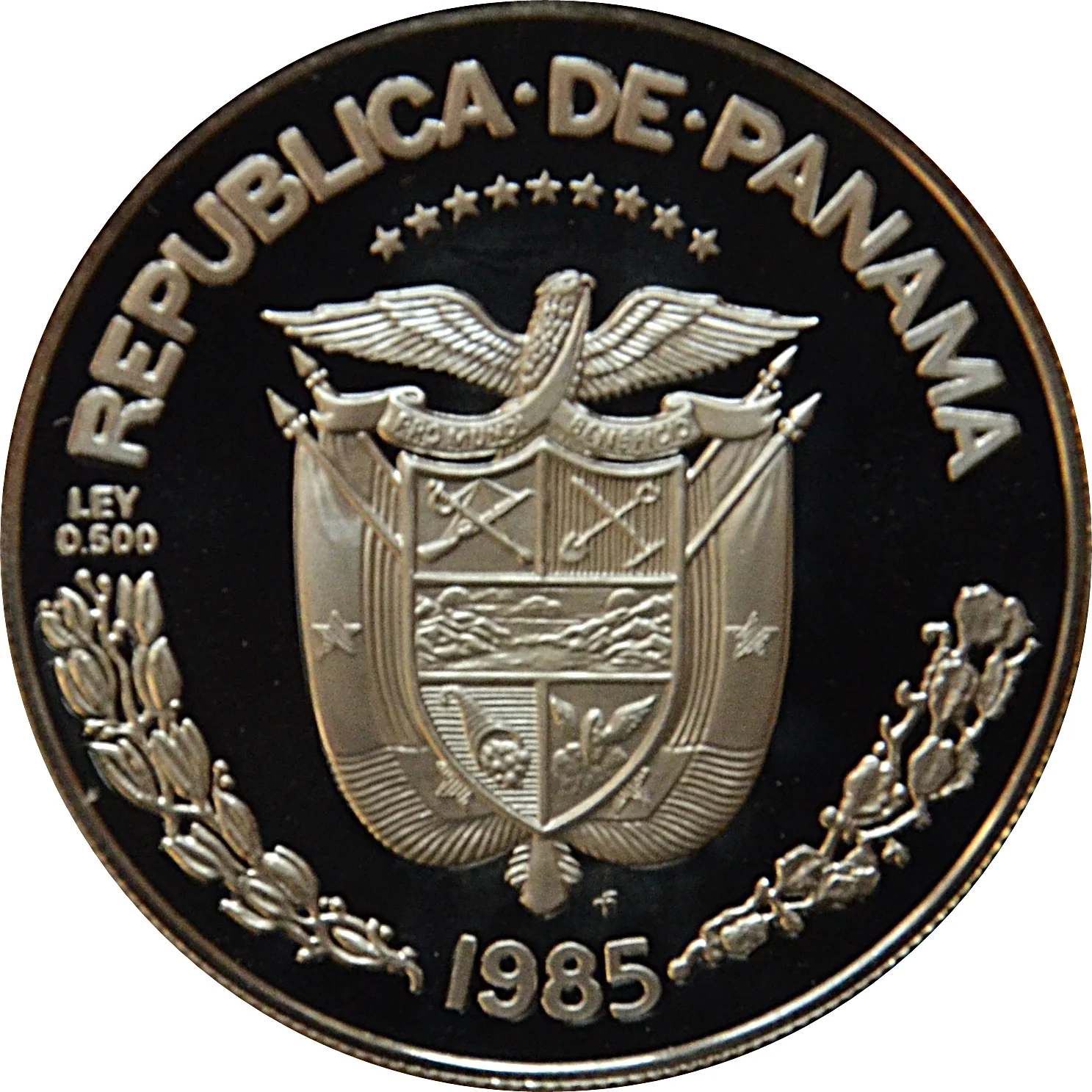
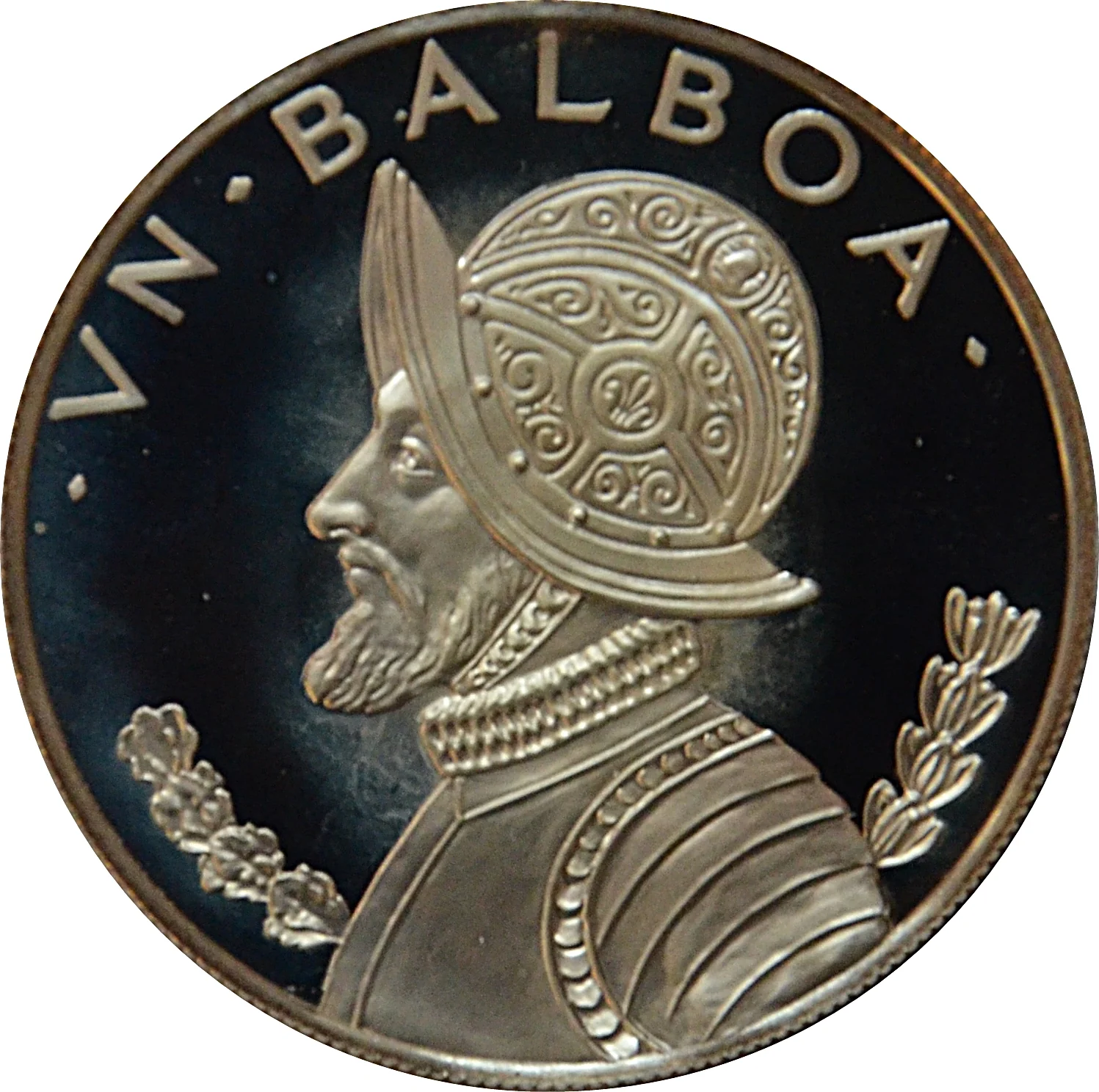
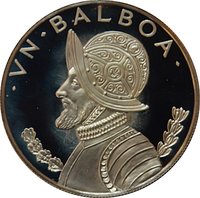
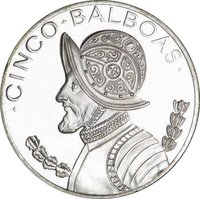
Obverse
Reverse
Edge
Reeded
Categories
| Symbols> Coat of Arms |
| Person> Explorer |
Mints
| Name | Mark |
|---|---|
| Franklin Mint | (FM) |
Mintings
| Year | Mint Mark | Mintage | Quality | Collection |
|---|---|---|---|---|
| 1983 | FM | 1,602 | Proof | |
| 1984 | FM | 1,044 | Proof | |
| 1985 | FM | 954 | Proof |
Historical background
In 1983, Panama's currency situation was uniquely stable and uncomplicated due to its long-standing and complete dollarization. Since 1904, following its independence from Colombia, Panama had used the US dollar as its official legal tender. The country did not have a central bank issuing a national paper currency; instead, the US dollar circulated freely for all transactions. The only locally issued currency was the Panamanian balboa, which existed solely in coin form and was pegged at par (1:1) with the US dollar.
This system provided significant benefits, particularly in controlling inflation and fostering international trade. While much of Latin America grappled with debt crises and hyperinflation in the early 1980s, Panama's dollarized economy largely insulated it from currency devaluation and exchange rate volatility. The financial sector, centered around the Colón Free Trade Zone and offshore banking, thrived on this predictability. However, this arrangement also meant Panama relinquished control over its own monetary policy, leaving it unable to independently adjust interest rates or print money to respond to economic shocks.
The political context of 1983 is crucial to understanding the period's economic undercurrents. General Manuel Noriega was consolidating power, and the country faced growing international scrutiny over its role in money laundering and the narcotics trade. While the dollarization itself remained a bedrock of stability, the broader economy was becoming increasingly entangled with illicit flows, and political uncertainty began to cast a shadow over Panama's reputation as a financial hub. Thus, in 1983, the currency regime was a source of economic stability but operated within a deteriorating political and governance framework.
This system provided significant benefits, particularly in controlling inflation and fostering international trade. While much of Latin America grappled with debt crises and hyperinflation in the early 1980s, Panama's dollarized economy largely insulated it from currency devaluation and exchange rate volatility. The financial sector, centered around the Colón Free Trade Zone and offshore banking, thrived on this predictability. However, this arrangement also meant Panama relinquished control over its own monetary policy, leaving it unable to independently adjust interest rates or print money to respond to economic shocks.
The political context of 1983 is crucial to understanding the period's economic undercurrents. General Manuel Noriega was consolidating power, and the country faced growing international scrutiny over its role in money laundering and the narcotics trade. While the dollarization itself remained a bedrock of stability, the broader economy was becoming increasingly entangled with illicit flows, and political uncertainty began to cast a shadow over Panama's reputation as a financial hub. Thus, in 1983, the currency regime was a source of economic stability but operated within a deteriorating political and governance framework.
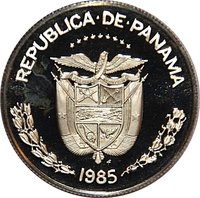
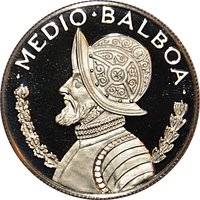
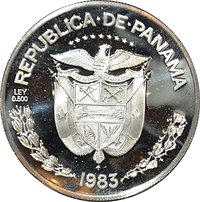
💎 Extremely Rare