

1 Crown (Accession of Queen Elizabeth II) – Isle of Man
Non-circulating coins
Commemoration: 25th Anniversary of the Accession of Queen Elizabeth II
Context
Year: 1977
Country: British Crown dependencies
Issuer: Isle of Man 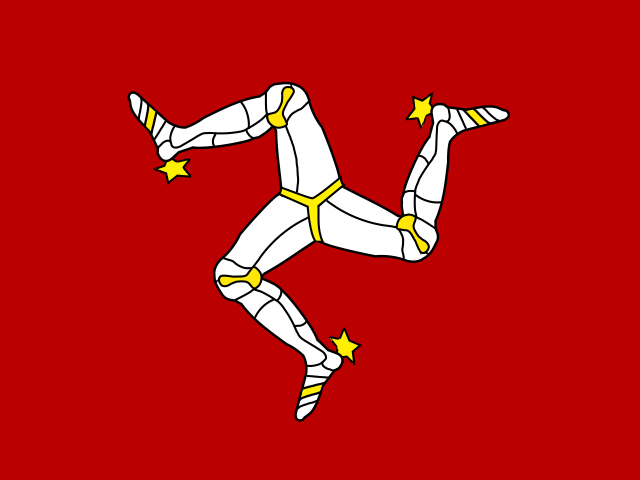
Ruler: Elizabeth II
Currency:
(since 1971)
Material
Diameter: 38.61 mm
Weight: 28.4 g
Thickness: 3.17 mm
Shape: Round
Composition: Copper-nickel
Technique: Milled
Alignment: Medal alignment
flip
References
KM: #Click to copy to clipboard41
Numista: #10805
Value
Exchange value: 0.25 IMP
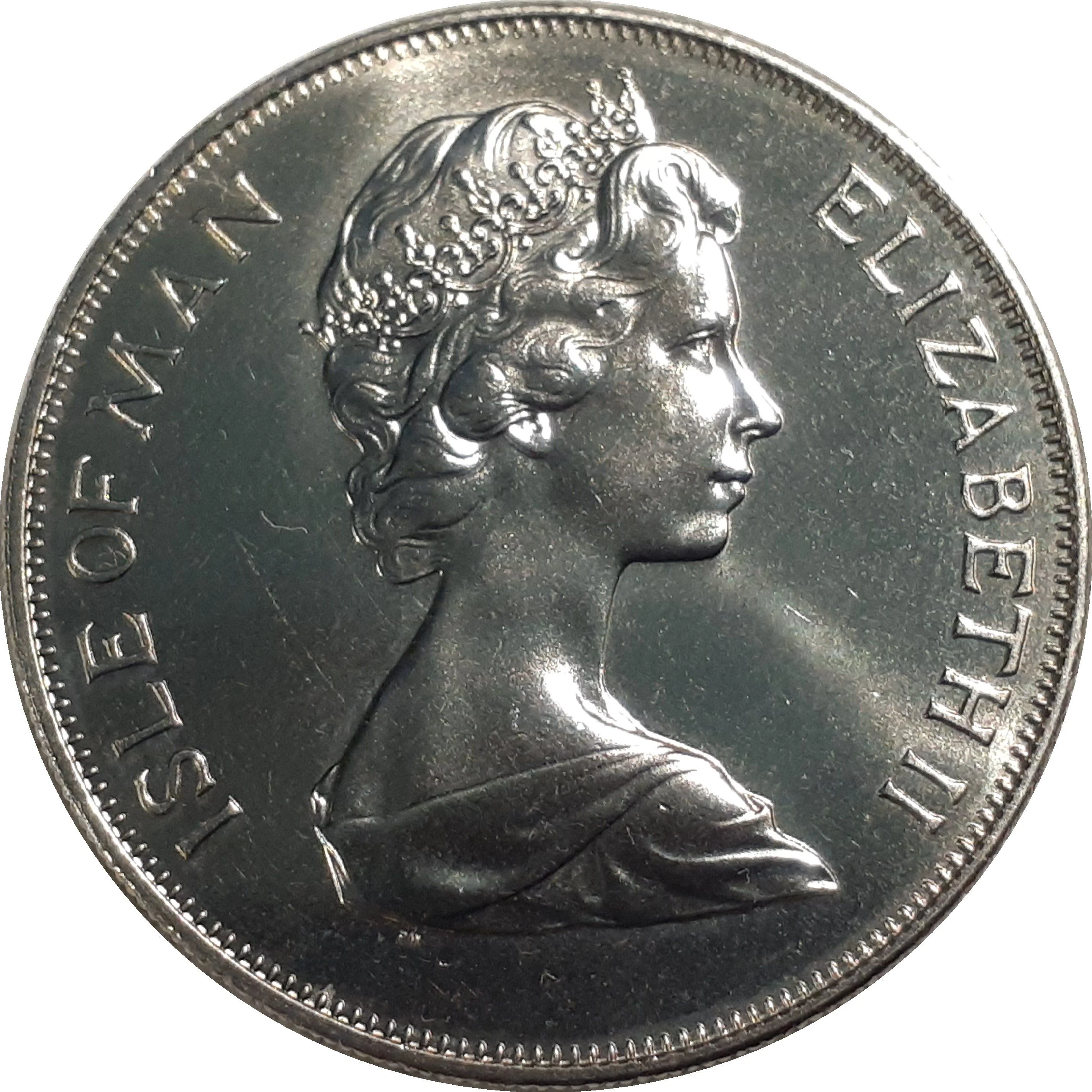
Obverse
Description:
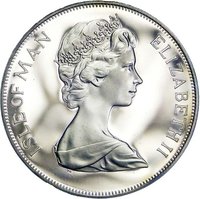
Queen Elizabeth II in profile, wearing the Girls of Great Britain and Ireland tiara.
Inscription:
ISLE OF MAN ELIZABETH II
PM
PM
Translation:
ISLE OF MAN ELIZABETH II
PM
PM
Script: Latin
Language: English
Designer: Arnold Machin
Reverse
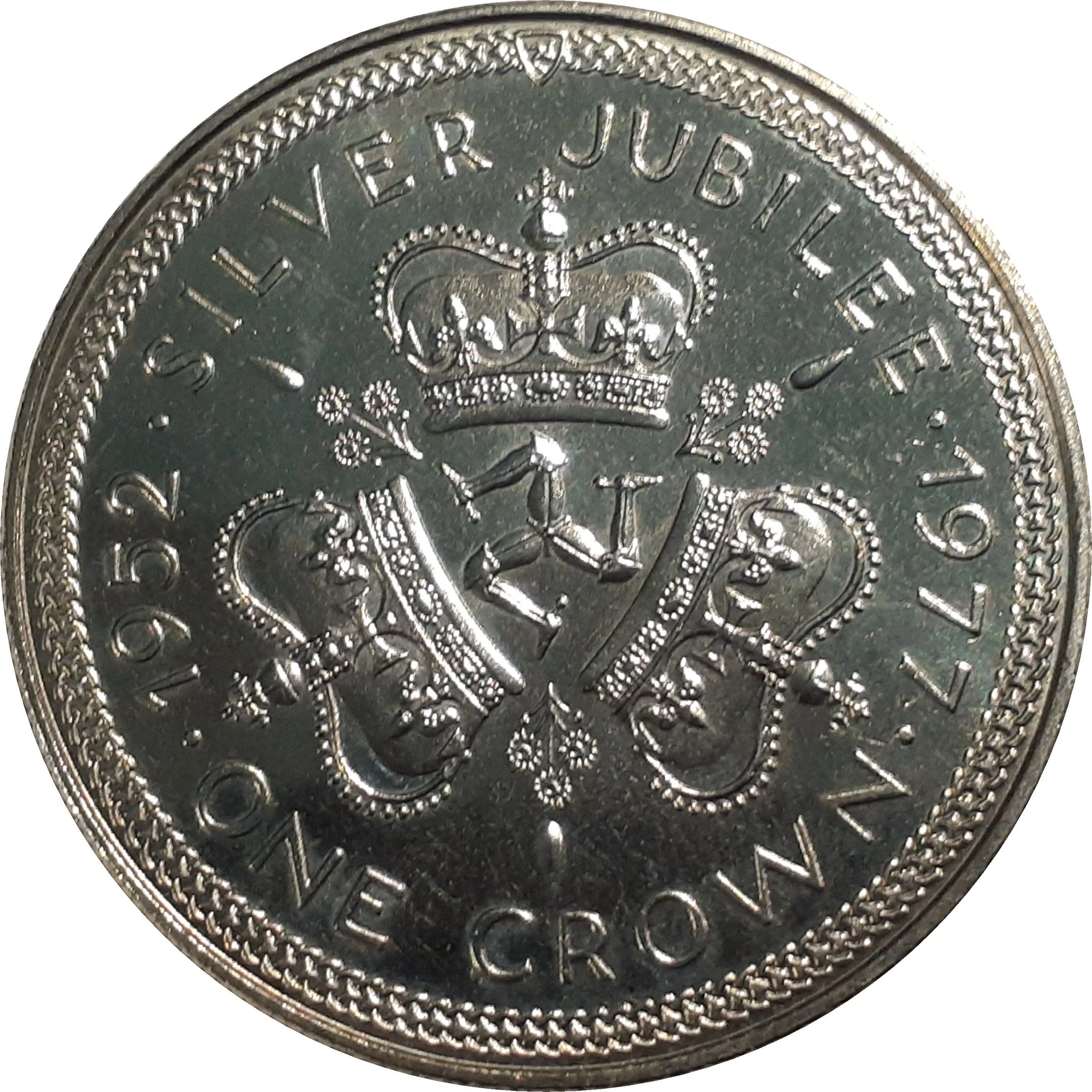
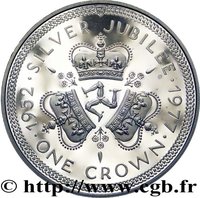
Description:
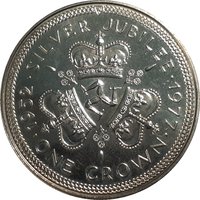
Isle of Man Triskelion encircled by three St Edward's Crowns.
Inscription:
1952·SILVER JUBILEE·1977
·ONE CROWN·
·ONE CROWN·
Script: Latin
Edge
Reeded
Categories
| Event> Coronation |
| Person> Monarch |
| Symbol> Crown |
| Symbol> Triskelion |
Mints
| Name | Mark |
|---|---|
| Pobjoy Mint | (PM) |
Mintings
| Year | Mint Mark | Mintage | Quality | Collection |
|---|---|---|---|---|
| 1977 | PM | — | ||
| 1977 | PM | — | Proof |
Historical background
In 1977, the Isle of Man's currency situation was defined by its unique constitutional position as a British Crown Dependency. While not part of the United Kingdom, the Island's economy was deeply integrated with Britain's, and sterling was the official currency. However, unlike Scotland or Northern Ireland, the Isle of Man government did not issue its own distinct banknotes bearing the portrait of the British monarch. Instead, local commercial banks—primarily the Isle of Man Bank, Barclays, and the Royal Bank of Scotland—issued their own sterling notes, which were legal tender on the Island but not in the UK. This created a practical duality where UK and Manx notes circulated side-by-side, though Manx notes were often not accepted elsewhere.
The year 1977 was significant as it marked a major step toward monetary sovereignty with the passage of the Isle of Man Currency Act. This legislation transferred the right to issue currency from the private banks to the Isle of Man Government Treasury for the first time. The Act was a strategic move to secure seigniorage profits (the revenue from issuing currency) for the public purse and to establish a more unified and government-controlled currency system. It set the legal framework for the Treasury to begin producing its own series of notes, a process that would commence in the following years.
Consequently, 1977 represented a transitional period. The familiar private banknotes remained in daily use, but the legislative foundation had been laid for their eventual phased withdrawal. The move was part of a broader assertion of domestic authority during a period of economic growth and increasing self-confidence in the Island's governance. The new government notes, which would later feature distinct Manx symbolism, were poised to become a potent symbol of national identity, while maintaining a fixed parity with sterling, which remained the bedrock of the Island's monetary policy.
The year 1977 was significant as it marked a major step toward monetary sovereignty with the passage of the Isle of Man Currency Act. This legislation transferred the right to issue currency from the private banks to the Isle of Man Government Treasury for the first time. The Act was a strategic move to secure seigniorage profits (the revenue from issuing currency) for the public purse and to establish a more unified and government-controlled currency system. It set the legal framework for the Treasury to begin producing its own series of notes, a process that would commence in the following years.
Consequently, 1977 represented a transitional period. The familiar private banknotes remained in daily use, but the legislative foundation had been laid for their eventual phased withdrawal. The move was part of a broader assertion of domestic authority during a period of economic growth and increasing self-confidence in the Island's governance. The new government notes, which would later feature distinct Manx symbolism, were poised to become a potent symbol of national identity, while maintaining a fixed parity with sterling, which remained the bedrock of the Island's monetary policy.
🌱 Common