

5 pesos – Mexico
Add to wishlist
Mexico
Context
Years: 1971–1978
Issuer: Mexico
Period:
(since 1823)
Currency:
(1863—1992)
Demonetization: 15 November 1995
Total mintage: 406,612,000
Material
References
KM: #
Numista: #1080
Value
Exchange value: 5 MXP
Inflation-adjusted value: 54362.98 MXP
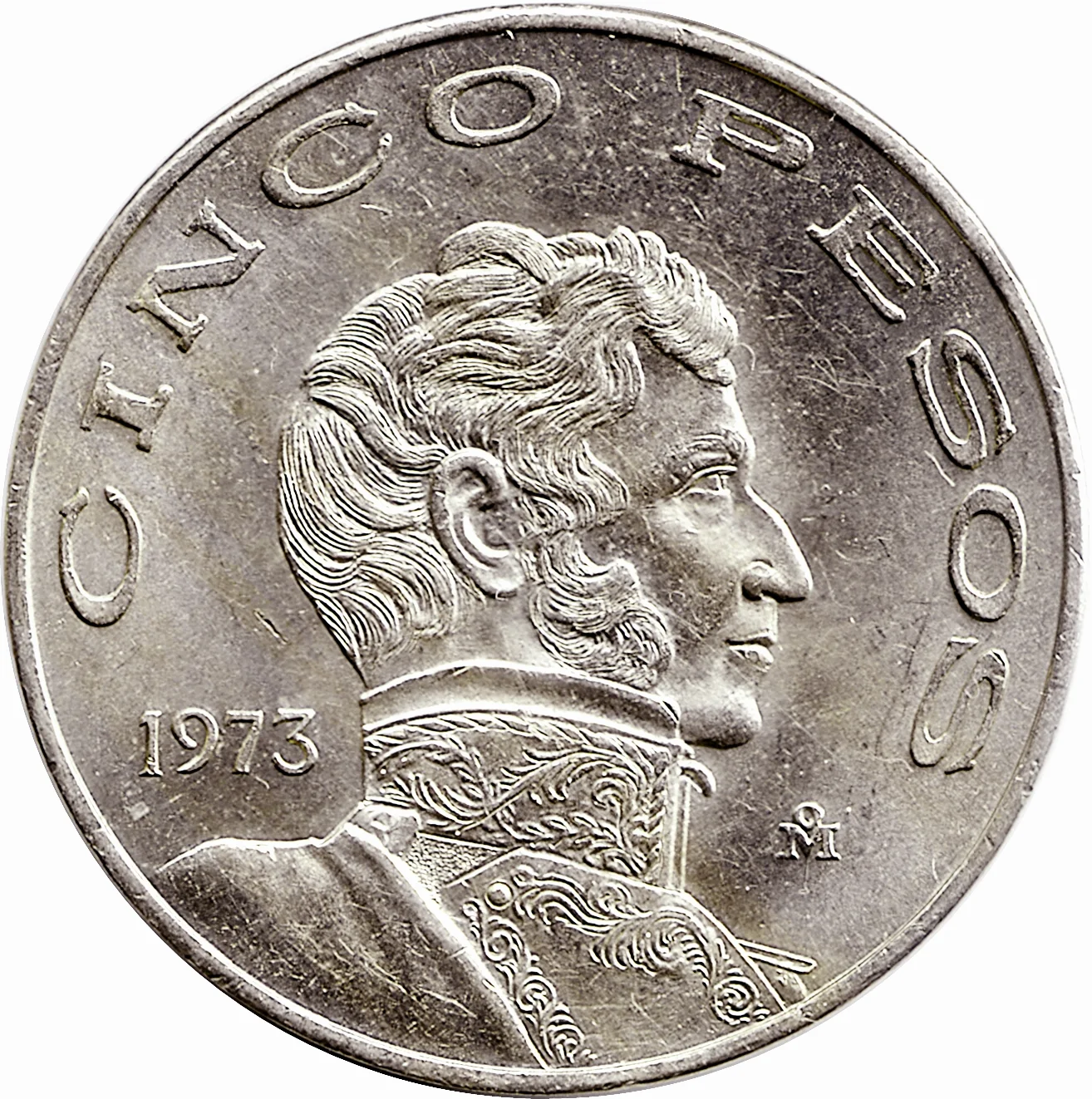
Obverse
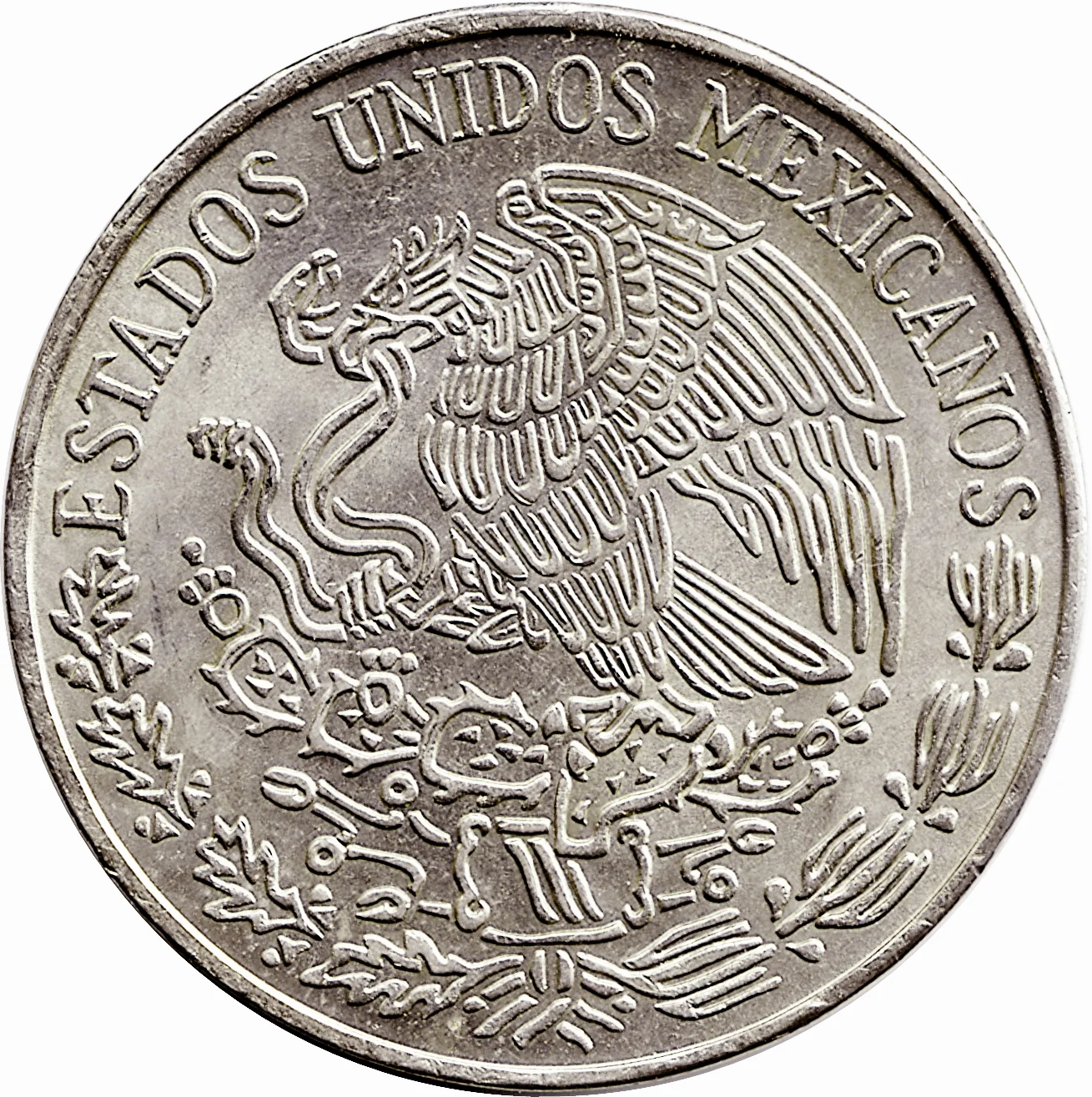
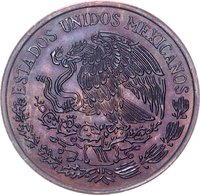
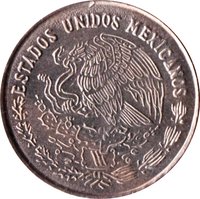
Reverse
Edge
Smooth with inscription
Legend:
INDEPENDENCIA Y LIBERTAD
Translation:
Independence and Liberty
Language: Spanish
Categories
| Animal> Bird |
| Animal> Reptile |
| Person> Military leader |
| Person> Politician |
Mints
| Name | Mark |
|---|---|
| Mexican Mint | (Mo) |
Mintings
| Year | Mint Mark | Mintage | Quality | Collection |
|---|---|---|---|---|
| 1971 | Mo | 28,457,000 | ||
| 1972 | Mo | 75,000,000 | ||
| 1973 | Mo | 19,405,000 | ||
| 1974 | Mo | 34,500,000 | ||
| 1976 | Mo | 121,550,000 | ||
| 1977 | Mo | 102,000,000 | ||
| 1978 | Mo | 25,700,000 |
Historical background
In 1971, Mexico's currency situation was characterized by a period of relative stability under the long-standing fixed exchange rate regime of the Mexican peso, which was pegged to the U.S. dollar at 12.50 pesos per dollar. This parity, established in 1954, had become a cornerstone of the nation's "stabilizing development" model, fostering decades of impressive economic growth, low inflation, and investor confidence known as the "Mexican Miracle." The fixed rate provided predictability for trade and investment, crucially tying the thriving economy to its largest partner, the United States.
However, this stability was increasingly fragile and built upon underlying pressures. The model relied heavily on government spending and borrowing, leading to growing public sector deficits. While not yet in crisis, the economy was showing signs of strain, including a gradual rise in inflation and a widening current account deficit. The fixed exchange rate began to be seen as overvalued, making Mexican exports less competitive and encouraging imports, which further pressured the country's balance of payments. These vulnerabilities meant Mexico was highly exposed to external shocks.
The defining external shock arrived in August 1971 when U.S. President Richard Nixon suspended the convertibility of the U.S. dollar into gold, imposed a temporary surcharge on imports, and effectively ended the Bretton Woods system of fixed exchange rates. This "Nixon Shock" directly and immediately challenged Mexico's peg. In response, the Mexican government, under President Luis Echeverría, initially defended the 12.50 parity for over a year, expending substantial reserves to do so. Thus, 1971 marked the abrupt end of an era of unquestioned monetary stability and the beginning of a prolonged period of pressure that would ultimately force a devaluation in 1976, shattering a key pillar of the country's postwar economic identity.
However, this stability was increasingly fragile and built upon underlying pressures. The model relied heavily on government spending and borrowing, leading to growing public sector deficits. While not yet in crisis, the economy was showing signs of strain, including a gradual rise in inflation and a widening current account deficit. The fixed exchange rate began to be seen as overvalued, making Mexican exports less competitive and encouraging imports, which further pressured the country's balance of payments. These vulnerabilities meant Mexico was highly exposed to external shocks.
The defining external shock arrived in August 1971 when U.S. President Richard Nixon suspended the convertibility of the U.S. dollar into gold, imposed a temporary surcharge on imports, and effectively ended the Bretton Woods system of fixed exchange rates. This "Nixon Shock" directly and immediately challenged Mexico's peg. In response, the Mexican government, under President Luis Echeverría, initially defended the 12.50 parity for over a year, expending substantial reserves to do so. Thus, 1971 marked the abrupt end of an era of unquestioned monetary stability and the beginning of a prolonged period of pressure that would ultimately force a devaluation in 1976, shattering a key pillar of the country's postwar economic identity.
🌱 Very Common