

1 riel – Cambodia
Add to wishlist
Circulating commemorative coins
Commemoration: FAO
Cambodia
Context
Year: 1970
Issuer: Cambodia
Period:
(1970—1975)
Currency:
(1953—1975)
Demonetization: 17 April 1975
Total mintage: 5,000,000
Material
References
KM: #
Numista: #19297
Obverse
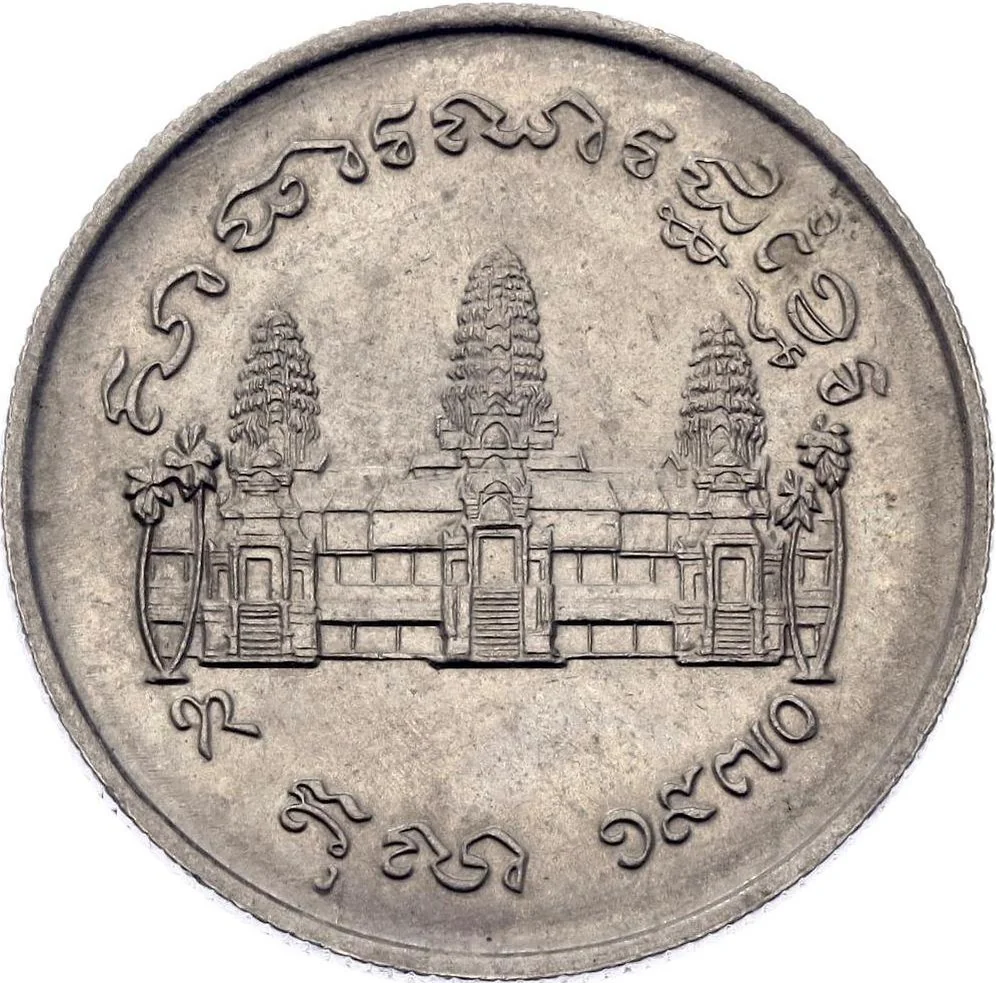
Description:
Angkor Wat temple.
Inscription:
សាធារណរដ្ឋខ្មែរ
៩ តុលា ១៩៧០
៩ តុលា ១៩៧០
Translation:
Republic of Khmer
9 October 1970
9 October 1970
Script: Khmer
Language: Central Khmer
Reverse
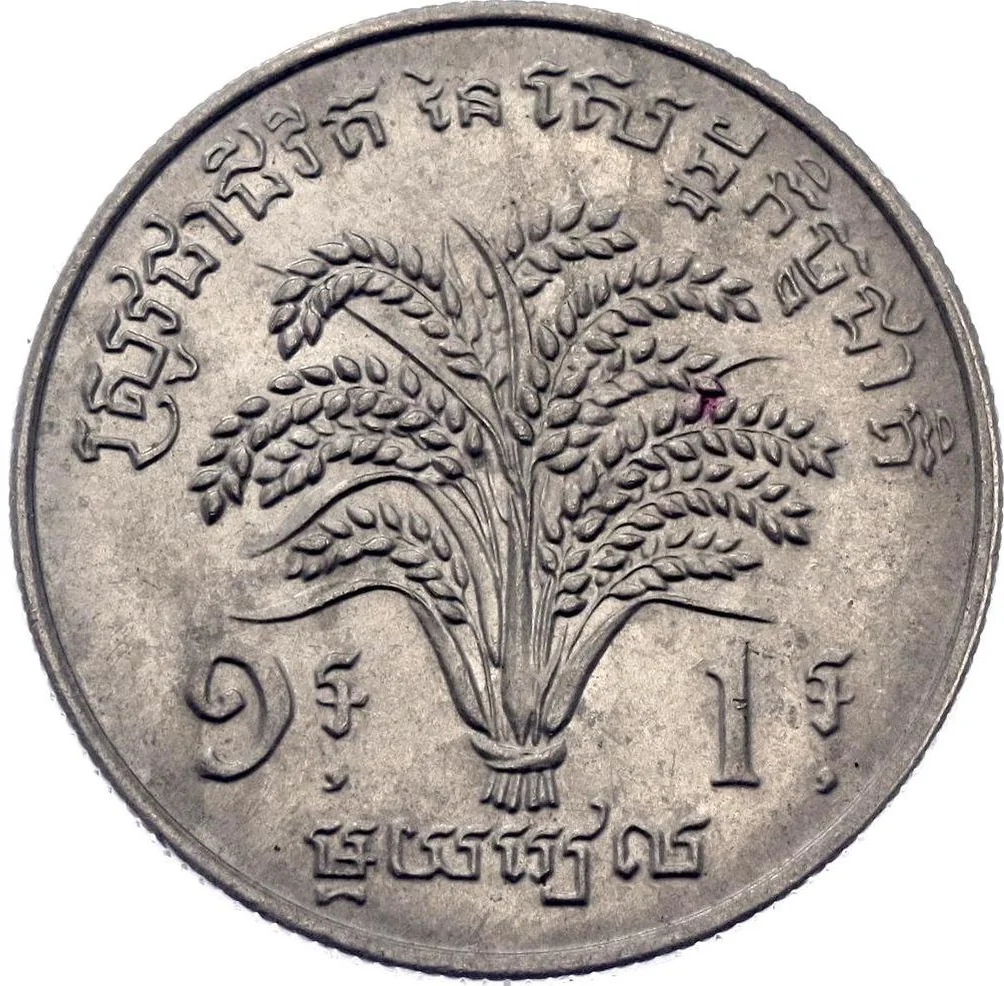
Description:
Grain bouquet, type
Inscription:
សូ្រវជាជីវិត នៃ សេដ្ឋតិច្នជាតិ
១ ៛. | 1 ៛.
មួយរេ្យល
១ ៛. | 1 ៛.
មួយរេ្យល
Translation:
Long live the national economy.
1 Riel | 1 Riel
One Riel
1 Riel | 1 Riel
One Riel
Script: Khmer
Language: Central Khmer
Edge
Reeded
Categories
| Building> Religious building |
| Organization> FAO |
Mints
| Name | Mark |
|---|---|
| Royal Mint | — |
Mintings
| Year | Mint Mark | Mintage | Quality | Collection |
|---|---|---|---|---|
| 1970 | — | 5,000,000 |
Historical background
In 1970, Cambodia's currency situation was directly destabilized by the nation's abrupt political upheaval. On March 18, Prime Minister Lon Nol, with U.S. support, orchestrated a coup against Prince Norodom Sihanouk, plunging the country into the wider Indochina conflict. The new Khmer Republic, recognized by the United States, immediately faced a dire financial crisis as the war expanded across its territory. The government in Phnom Penh lost control of key economic zones, including vital rice-growing regions and the crucial port of Sihanoukville, severing major revenue streams and crippling its ability to fund the military.
The primary currency, the riel, came under severe pressure. The Lon Nol government, needing to finance its war effort against the growing Khmer Rouge insurgency and North Vietnamese forces, resorted to printing money without sufficient economic backing. This led to rampant inflation, a rapidly depreciating riel, and the emergence of a thriving black market for foreign currencies, particularly the U.S. dollar and the South Vietnamese piastre. The economic infrastructure crumbled as fighting disrupted agriculture and trade, making basic goods scarce and expensive.
Simultaneously, a dual-currency system emerged, reflecting the fractured state of the nation. In the areas controlled by the Khmer Rouge and their allies, the riel was often rejected in favor of barter or other currencies, further undermining its legitimacy. The U.S. provided direct budgetary support and dollar injections to prop up the Lon Nol regime, making the American currency a critical, if unstable, pillar of the official economy. Thus, by the end of 1970, Cambodia's monetary system was caught in a vicious cycle of war finance, hyperinflation, and fragmentation, foreshadowing the complete economic collapse that would follow in the coming years.
The primary currency, the riel, came under severe pressure. The Lon Nol government, needing to finance its war effort against the growing Khmer Rouge insurgency and North Vietnamese forces, resorted to printing money without sufficient economic backing. This led to rampant inflation, a rapidly depreciating riel, and the emergence of a thriving black market for foreign currencies, particularly the U.S. dollar and the South Vietnamese piastre. The economic infrastructure crumbled as fighting disrupted agriculture and trade, making basic goods scarce and expensive.
Simultaneously, a dual-currency system emerged, reflecting the fractured state of the nation. In the areas controlled by the Khmer Rouge and their allies, the riel was often rejected in favor of barter or other currencies, further undermining its legitimacy. The U.S. provided direct budgetary support and dollar injections to prop up the Lon Nol regime, making the American currency a critical, if unstable, pillar of the official economy. Thus, by the end of 1970, Cambodia's monetary system was caught in a vicious cycle of war finance, hyperinflation, and fragmentation, foreshadowing the complete economic collapse that would follow in the coming years.
🌱 Fairly Common