

5 pesetas – Spain
Add to wishlist
Spain
Context
Years: 1895–1899
Issuer: Spain
Ruler: Alfonso XIII
Currency:
(1868—2001)
Demonetized: Yes
Total mintage: 64,912,000
Material
References
KM: #
Numista: #10782
Value
Exchange value: 5 ESP
Bullion value: $56.20
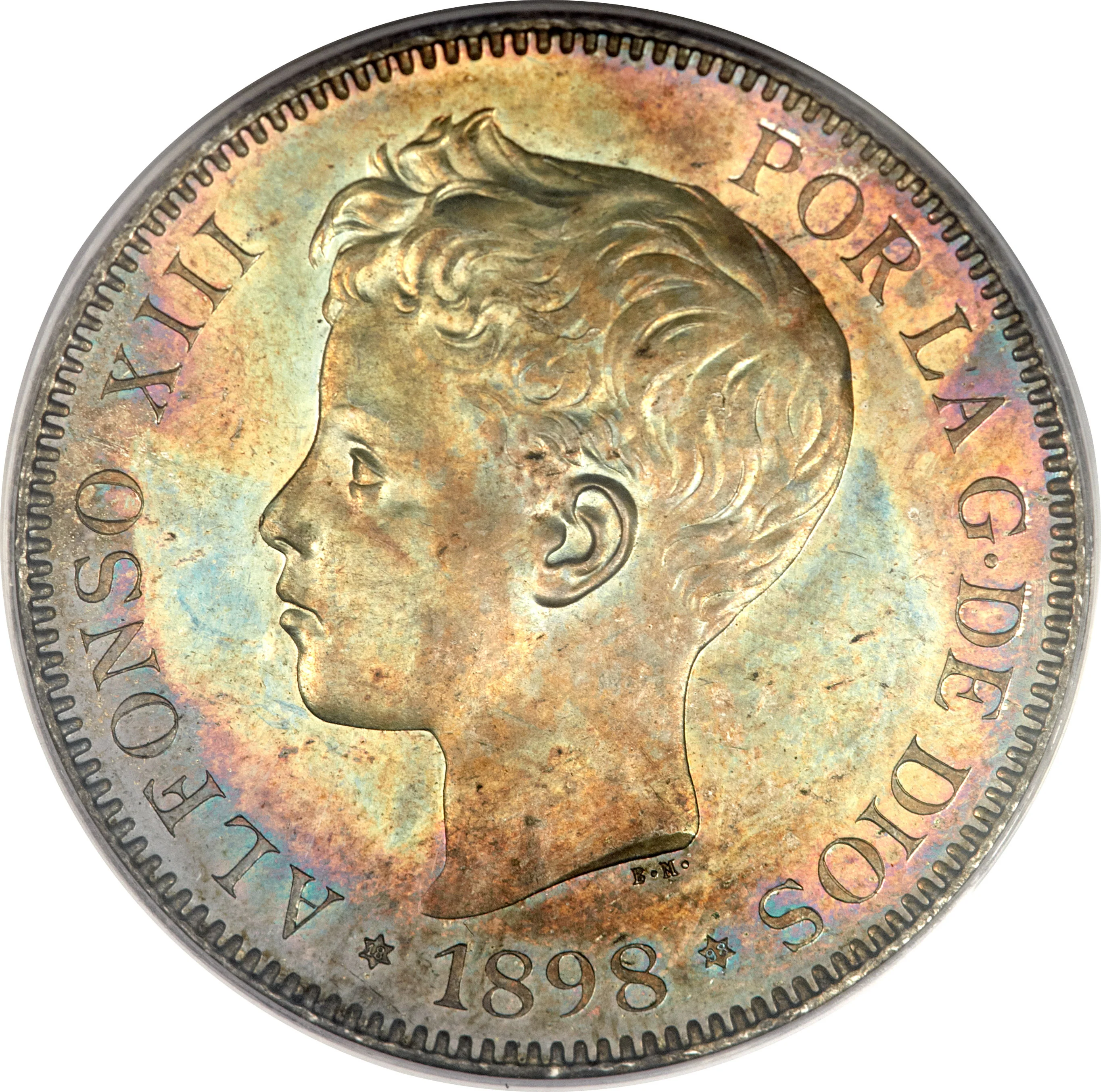
Obverse
Description:
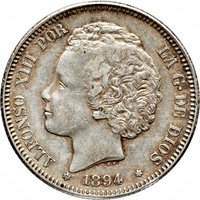
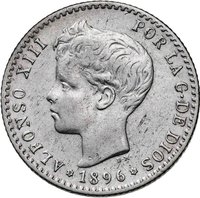
Child King Alfonso XIII facing left.
Inscription:
ALFONSO XIII POR LA G· DE DIOS
B· M·
🟌 1898 🟌
B· M·
🟌 1898 🟌
Translation:
ALFONSO XIII BY THE GRACE OF GOD
KING OF SPAIN
* 1898 *
KING OF SPAIN
* 1898 *
Script: Latin
Language: Spanish
Engraver: Bartolomé Maura Montaner
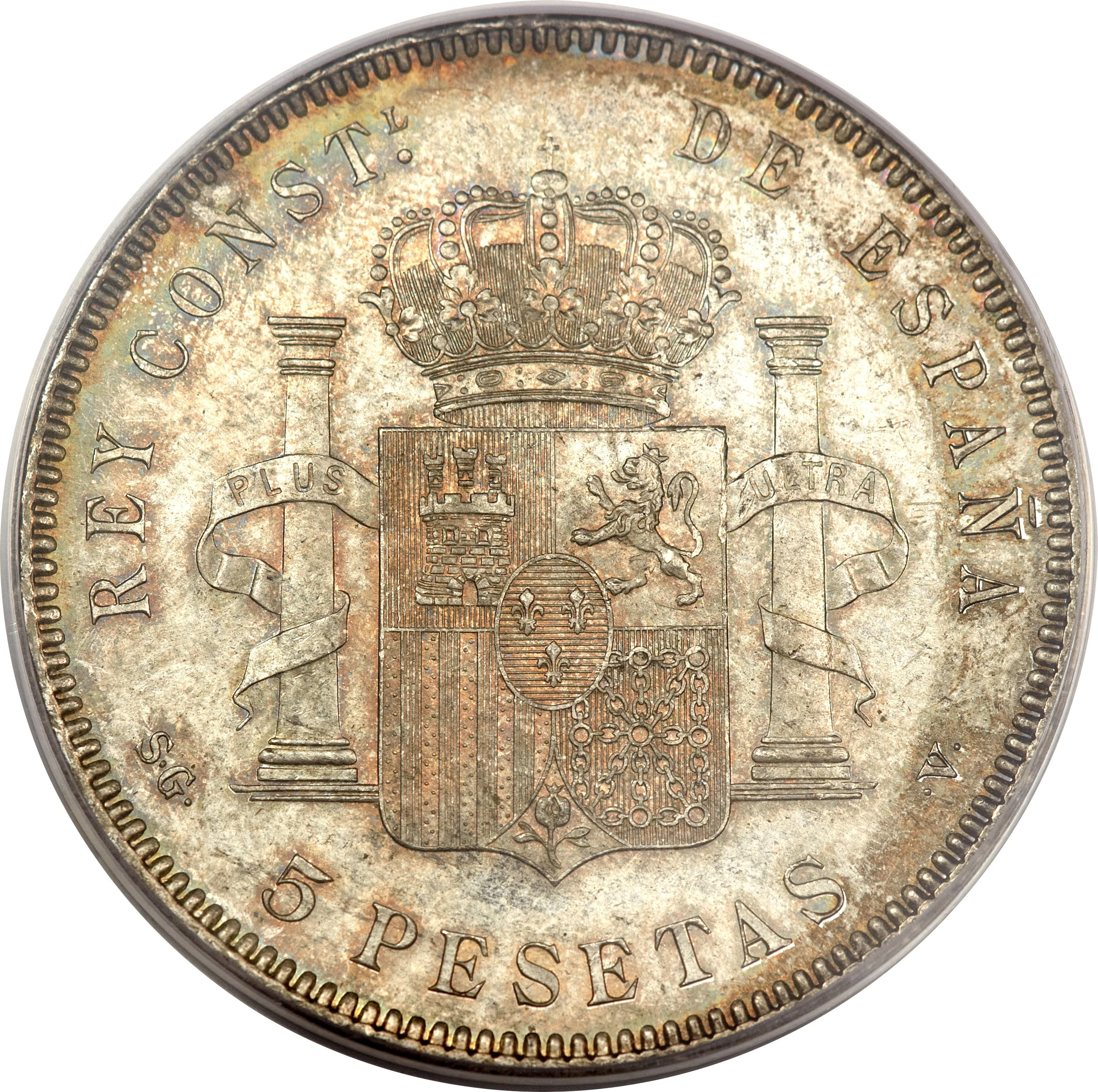
Reverse
Description:
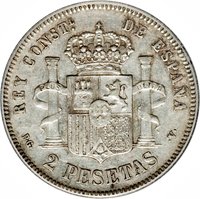
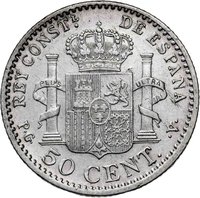
Spanish coat of arms with the Pillars of Hercules.
Inscription:
REY CONSTL. DE ESPAÑA
PLUS ULTRA
S·G· 5 PESETAS ·V·
PLUS ULTRA
S·G· 5 PESETAS ·V·
Translation:
King Constitutional of Spain
Further Beyond
S·G· 5 Pesetas ·V·
Further Beyond
S·G· 5 Pesetas ·V·
Script: Latin
Engraver: Bartolomé Maura Montaner
Edge
Three groups of nine fleur-de-lis
Categories
| Person> Monarch |
| Symbols> Coat of Arms |
Mints
| Name | Mark |
|---|---|
| Royal Mint of Madrid | (🟌) |
Mintings
| Year | Mint Mark | Mintage | Quality | Collection |
|---|---|---|---|---|
| 1895 | 🟌 | — | ||
| 1896 | 🟌 | 4,272,000 | ||
| 1897 | 🟌 | 6,733,000 | ||
| 1898 | 🟌 | 39,977,000 | ||
| 1899 | 🟌 | 13,930,000 |
Historical background
In 1895, Spain’s currency system was in a state of transition and vulnerability, anchored to the Bimetallic Standard of the Latin Monetary Union. Officially, the system valued silver and gold at a fixed ratio (15.5:1), with the peseta, introduced in 1868, as the national unit. However, the global phenomenon of "the flight of gold" had rendered this standard largely theoretical. A worldwide surge in silver production had drastically depressed its market value, making it overvalued at the official rate. Consequently, gold coins were being hoarded or exported, leaving silver as the primary circulating coinage and effectively placing Spain on a silver standard in practice, which isolated it financially from gold-based powers like Britain and France.
This monetary isolation exacerbated Spain's profound economic and fiscal woes. The state was burdened by massive public debt from earlier conflicts and chronic budget deficits, leading to frequent devaluations and a loss of confidence in the peseta. The currency's instability was a symptom of the broader "Disaster of '98" already unfolding, as Spain was embroiled in costly wars for independence in Cuba and the Philippines. These conflicts drained the treasury, forcing the government to print more money and borrow at high interest, further eroding the peseta's international value and fueling inflation at home.
Ultimately, the 1895 currency situation was a critical pressure point in Spain's national decline. The ineffective bimetallic system, the reliance on depreciating silver, and the fiscal hemorrhage from colonial wars created a cycle of monetary weakness and economic stagnation. This precarious financial backdrop would culminate in the catastrophic loss of Spain's remaining overseas empire in 1898, after which the country would be forced to officially abandon bimetallism and adopt the gold standard in an attempt to achieve stability and modernize its economy.
This monetary isolation exacerbated Spain's profound economic and fiscal woes. The state was burdened by massive public debt from earlier conflicts and chronic budget deficits, leading to frequent devaluations and a loss of confidence in the peseta. The currency's instability was a symptom of the broader "Disaster of '98" already unfolding, as Spain was embroiled in costly wars for independence in Cuba and the Philippines. These conflicts drained the treasury, forcing the government to print more money and borrow at high interest, further eroding the peseta's international value and fueling inflation at home.
Ultimately, the 1895 currency situation was a critical pressure point in Spain's national decline. The ineffective bimetallic system, the reliance on depreciating silver, and the fiscal hemorrhage from colonial wars created a cycle of monetary weakness and economic stagnation. This precarious financial backdrop would culminate in the catastrophic loss of Spain's remaining overseas empire in 1898, after which the country would be forced to officially abandon bimetallism and adopt the gold standard in an attempt to achieve stability and modernize its economy.
🌱 Common