

1 perper – Montenegro
Add to wishlist
Montenegro
Context
Years: 1912–1914
Issuer: Montenegro
Ruler: Nicholas I
Currency:
(1906—1918)
Demonetized: Yes
Total mintage: 1,020,008
Material
References
KM: #
Numista: #18815
Value
Bullion value: $10.15
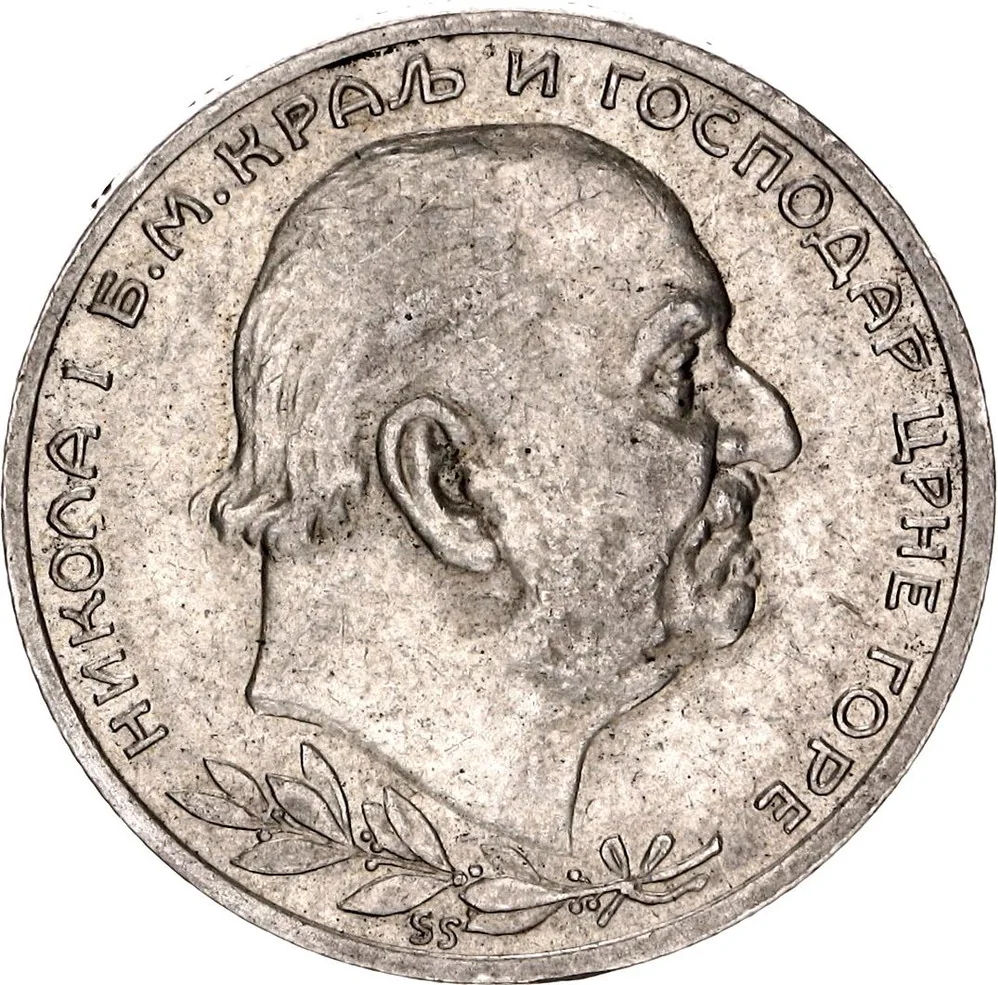
Obverse
Description:
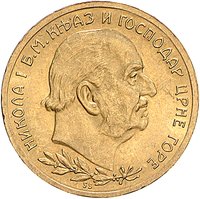
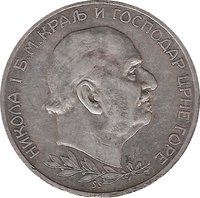
Bust of Nicholas I facing right, surrounded by lettering.
Inscription:
НИКОЛА 1 Б.М. КРАЉ И ГОСПОДАР ЦРНЕ ГОРЕ
SS
SS
Translation:
NICHOLAS I BY THE GRACE OF GOD KING AND LORD OF MONTENEGRO
Languages: Montenegrin, Serbian
Engraver: Stephan Schwartz
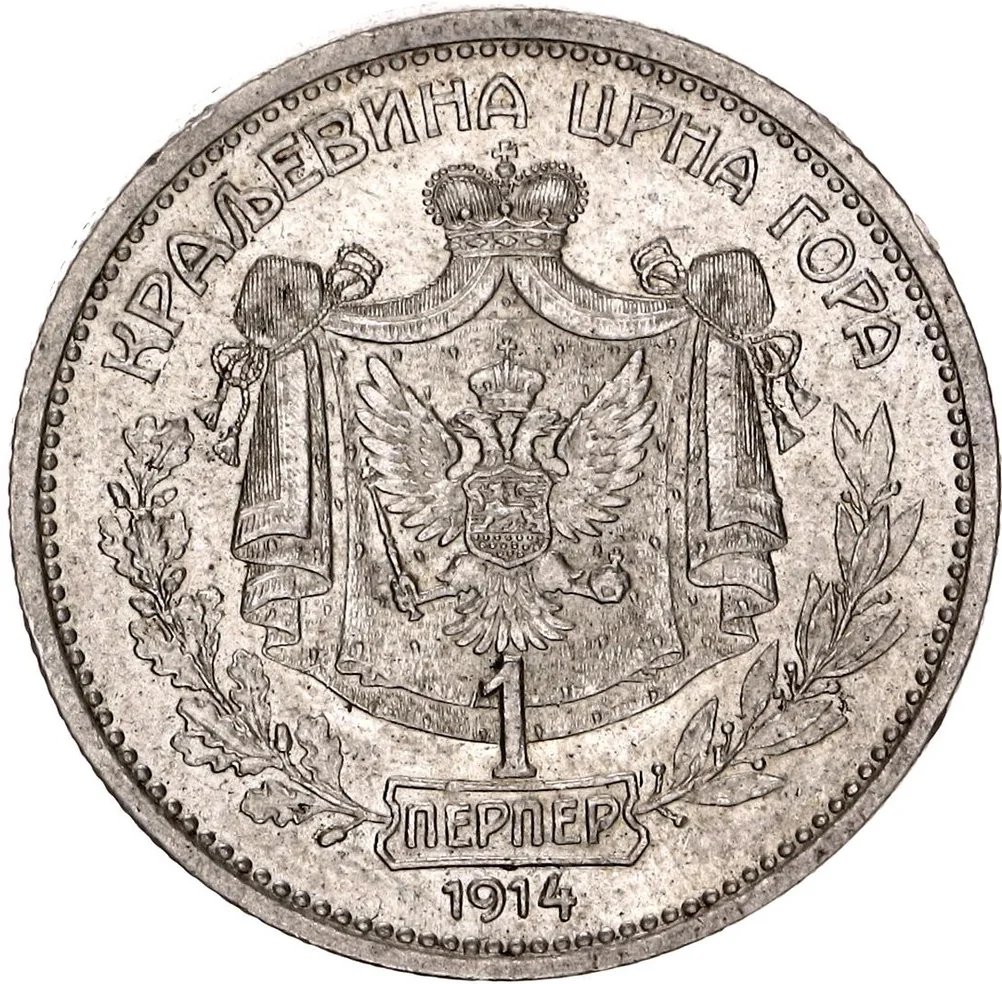
Reverse
Description:
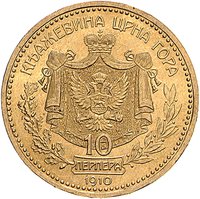
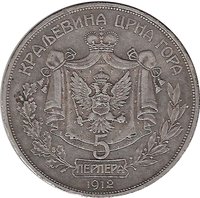
Arms with crown and sprigs above date and value.
Inscription:
КРАЉЕВИНА ЦРНА ГОРА
1
ПЕРПЕР
1914
1
ПЕРПЕР
1914
Translation:
KINGDOM OF MONTENEGRO
1
PERPER
1914
1
PERPER
1914
Script: Cyrillic
Engraver: Stephan Schwartz
Edge
Reeded
Categories
| Animal> Bird |
| Person> Monarch |
| Object> Globus cruciger |
| Mustache/Beard |
| Symbol> Crown |
| Symbols> Coat of Arms |
| Symbol> Double-headed eagle |
Mintings
| Year | Mint Mark | Mintage | Quality | Collection |
|---|---|---|---|---|
| 1912 | — | 520,008 | ||
| 1914 | — | 500,000 |
Historical background
In 1912, Montenegro existed as the independent Kingdom of Montenegro, but its monetary system was a complex and practical reflection of its geopolitical position and economic limitations. The kingdom did not issue its own domestic currency for general circulation. Instead, its economy operated on a de facto standard based on foreign silver coins, primarily the Austro-Hungarian krone (or crown), which dominated commerce due to the Habsburg Monarchy's overwhelming economic and political influence in the Balkan region. This situation was typical for smaller Balkan states of the period, which often relied on the stable currencies of larger empires to facilitate trade and maintain monetary stability.
Alongside the Austro-Hungarian krone, other foreign silver coins, such as the French franc, the Italian lira, and the Russian ruble, also circulated freely within Montenegro's borders. This created a multi-currency environment where the value of goods and transactions was commonly expressed in kronen, but payments could be made with a mix of these accepted foreign coins. The Montenegrin state did mint its own metallic currency, but these issues—the perper, subdivided into 100 para—were limited in scope. First introduced in 1906, the perper was used almost exclusively for state payments, ceremonial purposes, and as a symbol of national sovereignty, rather than as a practical, everyday circulating medium.
This reliance on foreign currency underscored Montenegro's economic vulnerability and its integration into broader European financial systems on terms dictated by more powerful neighbors. The system functioned but left the kingdom without independent monetary policy. The outbreak of the First Balkan War in October 1912, in which Montenegro joined Serbia, Bulgaria, and Greece against the Ottoman Empire, would have further strained this arrangement, potentially disrupting trade flows and the supply of foreign coinage, while increasing the financial demands on the state for military expenditure.
Alongside the Austro-Hungarian krone, other foreign silver coins, such as the French franc, the Italian lira, and the Russian ruble, also circulated freely within Montenegro's borders. This created a multi-currency environment where the value of goods and transactions was commonly expressed in kronen, but payments could be made with a mix of these accepted foreign coins. The Montenegrin state did mint its own metallic currency, but these issues—the perper, subdivided into 100 para—were limited in scope. First introduced in 1906, the perper was used almost exclusively for state payments, ceremonial purposes, and as a symbol of national sovereignty, rather than as a practical, everyday circulating medium.
This reliance on foreign currency underscored Montenegro's economic vulnerability and its integration into broader European financial systems on terms dictated by more powerful neighbors. The system functioned but left the kingdom without independent monetary policy. The outbreak of the First Balkan War in October 1912, in which Montenegro joined Serbia, Bulgaria, and Greece against the Ottoman Empire, would have further strained this arrangement, potentially disrupting trade flows and the supply of foreign coinage, while increasing the financial demands on the state for military expenditure.
🌱 Fairly Common