

250 colones – Costa Rica
Add to wishlist
Costa Rica
Context
Year: 1983
Issuer: Costa Rica
Issuing organization: Central Bank of Costa Rica
Period:
(since 1948)
Currency:
(since 1896)
Total mintage: 393
Material
References
KM: #
Numista: #188127
Value
Exchange value: 250 CRC
Bullion value: $70.42
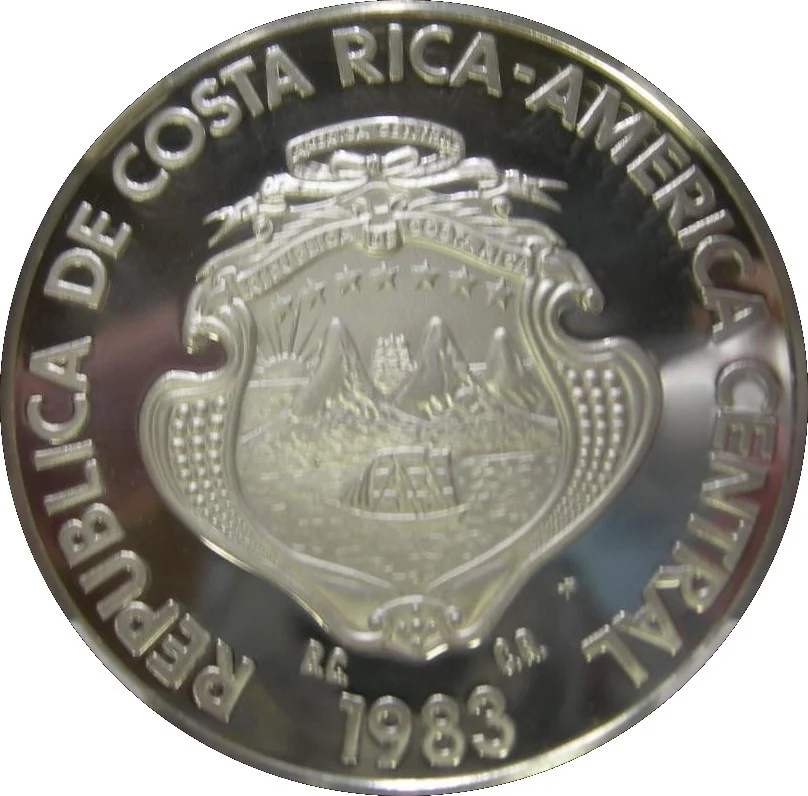
Obverse
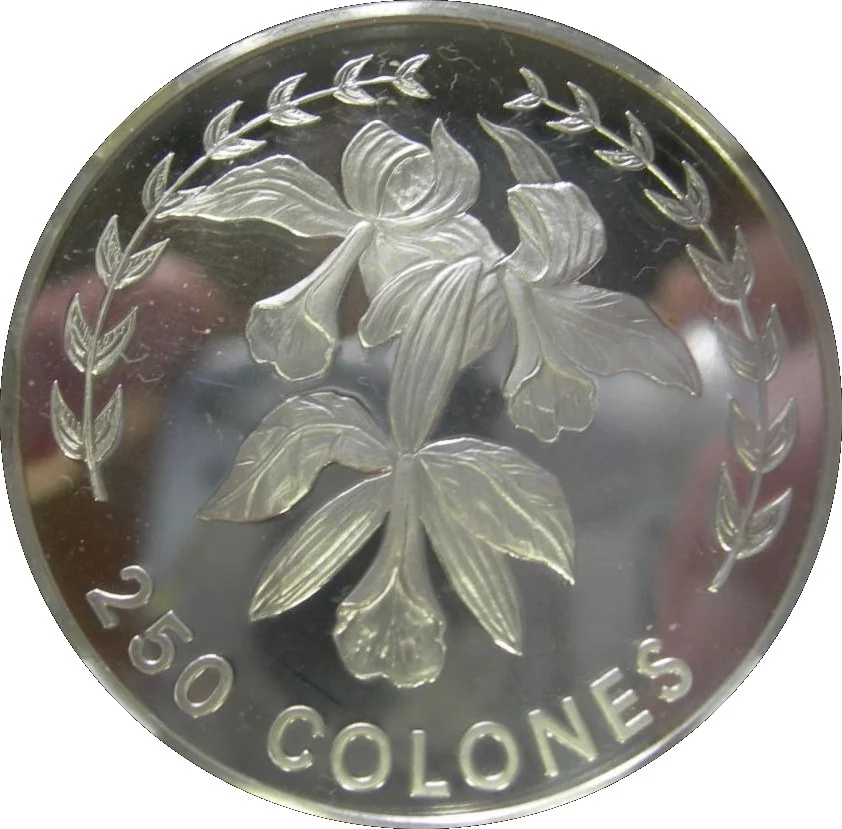
Reverse
Edge
Reeded
Categories
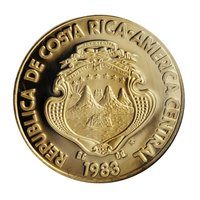
| Symbols> Coat of Arms |
| Plants> Flower |
Mints
| Name | Mark |
|---|---|
| Franklin Mint | (FM) |
Mintings
| Year | Mint Mark | Mintage | Quality | Collection |
|---|---|---|---|---|
| 1983 | FM | 393 |
Historical background
In 1983, Costa Rica was in the midst of a severe economic crisis, largely a consequence of the broader Latin American debt crisis and regional instability. The country faced soaring external debt, high inflation, and a significant decline in the price of its key exports, particularly coffee. This perfect storm led to a severe shortage of foreign exchange reserves, crippling the government's ability to service its debt and pay for essential imports. By the early 1980s, Costa Rica had effectively defaulted on its foreign obligations and was forced to seek emergency assistance and restructuring from the International Monetary Fund (IMF) and other international lenders.
The currency situation was defined by a complex and unsustainable system of multiple exchange rates. The Central Bank of Costa Rica maintained an overvalued official exchange rate for the colón, used for priority imports and debt servicing, while a parallel "free market" rate, used for most other transactions, was significantly depreciated. This dual system created major distortions, encouraged capital flight, and led to a thriving black market for U.S. dollars. The scarcity of dollars and the gap between the official and free rates reflected a profound loss of confidence in the colón and the government's fiscal management.
The crisis culminated in 1983 with the implementation of a stringent IMF stabilization program. A critical component was a major devaluation of the official exchange rate, moving toward a unified system. This painful adjustment, alongside austerity measures, aimed to restore balance of payments equilibrium and curb inflation. While setting the stage for eventual recovery, these policies immediately exacerbated social hardship, leading to protests and strikes as the cost of living soared, marking 1983 as a pivotal year of economic reckoning for the nation.
The currency situation was defined by a complex and unsustainable system of multiple exchange rates. The Central Bank of Costa Rica maintained an overvalued official exchange rate for the colón, used for priority imports and debt servicing, while a parallel "free market" rate, used for most other transactions, was significantly depreciated. This dual system created major distortions, encouraged capital flight, and led to a thriving black market for U.S. dollars. The scarcity of dollars and the gap between the official and free rates reflected a profound loss of confidence in the colón and the government's fiscal management.
The crisis culminated in 1983 with the implementation of a stringent IMF stabilization program. A critical component was a major devaluation of the official exchange rate, moving toward a unified system. This painful adjustment, alongside austerity measures, aimed to restore balance of payments equilibrium and curb inflation. While setting the stage for eventual recovery, these policies immediately exacerbated social hardship, leading to protests and strikes as the cost of living soared, marking 1983 as a pivotal year of economic reckoning for the nation.
✨ Legendary