

50 Pence – Falkland Islands
Non-circulating coins
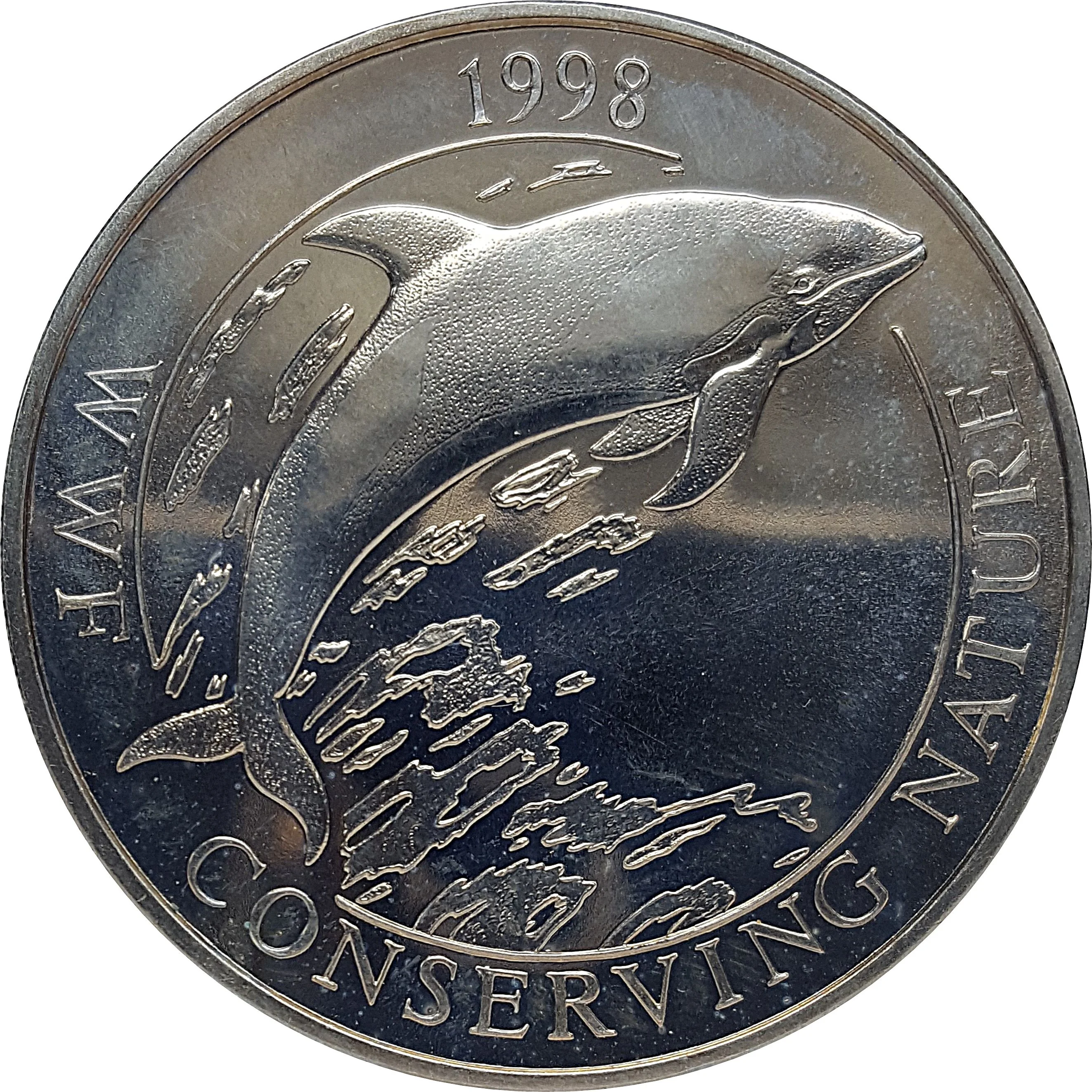
Commemoration: WWF Conserving Nature Series
United Kingdom
Context
Year: 1998
Country: United Kingdom 
Issuer: Falkland Islands 
Ruler: Elizabeth II
Currency:
(since 1971)
Material
Diameter: 38.61 mm
Weight: 28.47 g
Shape: Round
Composition: Copper-nickel
Technique: Milled
Alignment: Medal alignment
flip
References
KM: #Click to copy to clipboard60
Numista: #18767
Value
Exchange value: 0.50 FKP
Inflation-adjusted value: 1.16 FKP
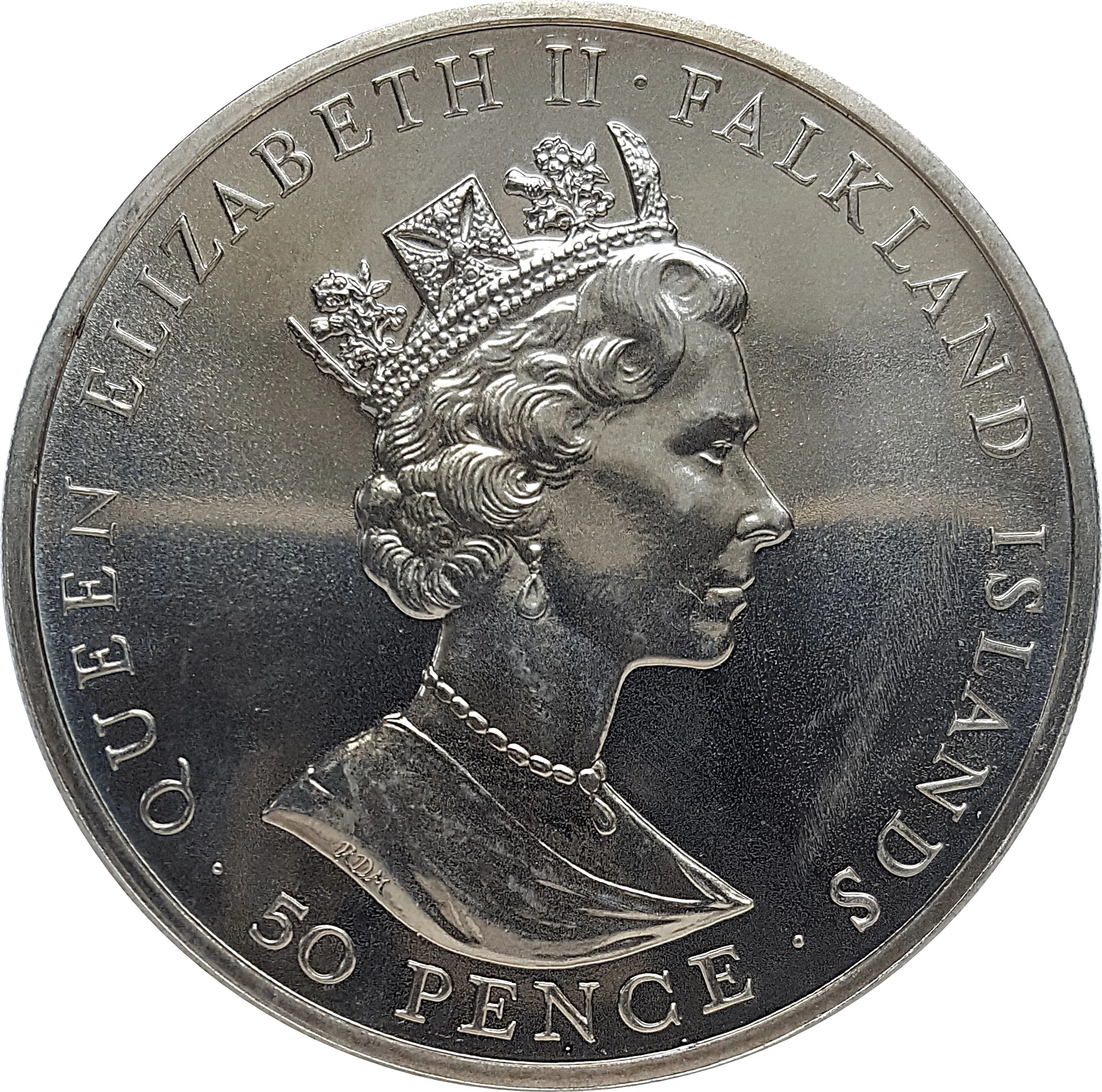
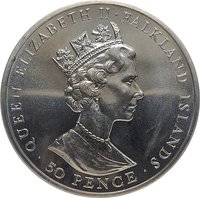
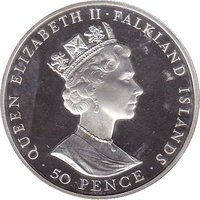
Obverse
Inscription:
QUEEN ELIZABETH II·FALKLAND ISLANDS
· 50 PENCE ·
· 50 PENCE ·
Script: Latin
Engraver: Raphael David Maklouf
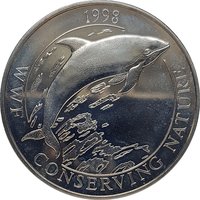
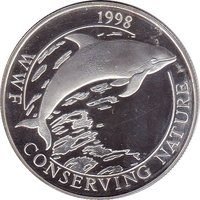
Reverse
Inscription:
1998
WWF CONSERVING NATURE
WWF CONSERVING NATURE
Script: Latin
Edge
Reeded
Categories
| Animal> Marine mammal |
| Organization> WWF |
Mintings
| Year | Mint Mark | Mintage | Quality | Collection |
|---|---|---|---|---|
| 1998 | — | — |
Historical background
In 1998, the currency situation in the Falkland Islands was characterized by a formal and practical reliance on Sterling, but with a distinct local issuance. The official currency was (and remains) the Falkland Islands pound (FKP), which is pegged at par with the British pound sterling (GBP). This meant one FKP always equaled one GBP, creating a stable and predictable monetary environment. The Falkland Islands Government issued its own banknotes and coins, which featured unique local imagery, but these were not legal tender in the United Kingdom itself.
Economically, this peg provided crucial stability for a small, isolated economy heavily dependent on fishing licenses (particularly for Illex squid) and, to a lesser extent, wool and tourism. It eliminated exchange rate risk for trade and reinforced financial links with the United Kingdom, which was the territory's main source of imports, government funding, and investment. Both UK sterling and Falkland notes circulated interchangeably on the islands, though the local issue was more common in daily use.
The year 1998 fell within a period of consolidation following the economic transformation brought by the establishment of the Fisheries Conservation Zone in 1986. The stable currency regime underpinned government revenue and development projects. There was no serious debate about altering the peg, as it was seen as fundamental to economic confidence. The situation reflected the islands' unique political status as a British Overseas Territory, with a high degree of internal self-government but with sterling providing an anchor of monetary stability.
Economically, this peg provided crucial stability for a small, isolated economy heavily dependent on fishing licenses (particularly for Illex squid) and, to a lesser extent, wool and tourism. It eliminated exchange rate risk for trade and reinforced financial links with the United Kingdom, which was the territory's main source of imports, government funding, and investment. Both UK sterling and Falkland notes circulated interchangeably on the islands, though the local issue was more common in daily use.
The year 1998 fell within a period of consolidation following the economic transformation brought by the establishment of the Fisheries Conservation Zone in 1986. The stable currency regime underpinned government revenue and development projects. There was no serious debate about altering the peg, as it was seen as fundamental to economic confidence. The situation reflected the islands' unique political status as a British Overseas Territory, with a high degree of internal self-government but with sterling providing an anchor of monetary stability.
💎 Very Rare