

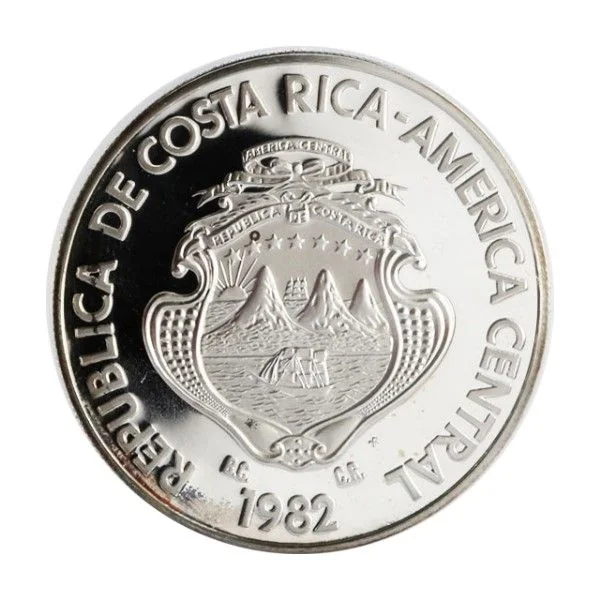
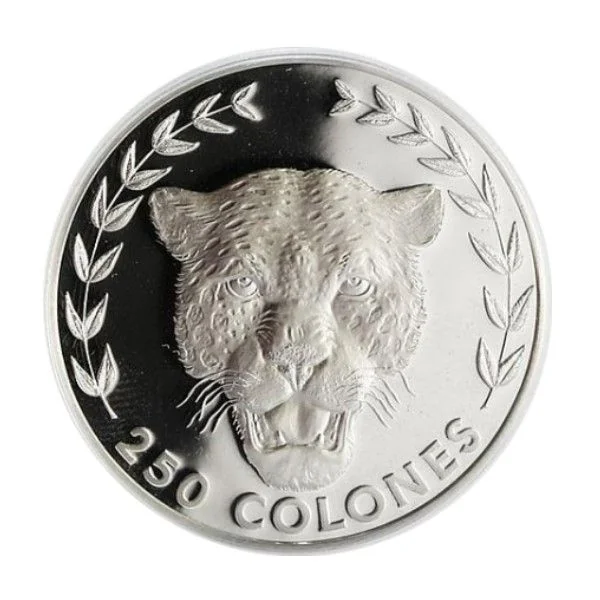
250 colones – Costa Rica
Add to wishlist
Non-circulating coins
Commemoration: Conservation
Costa Rica
Context
Year: 1982
Issuer: Costa Rica
Issuing organization: Central Bank of Costa Rica
Period:
(since 1948)
Currency:
(since 1896)
Total mintage: 1,109
Material
References
KM: #
Numista: #187418
Value
Exchange value: 250 CRC
Bullion value: $71.69
Obverse
Reverse
Edge
Reeded
Categories
| Animal> Feline |
| Symbols> Coat of Arms |
Mints
| Name | Mark |
|---|---|
| Franklin Mint | FM |
Mintings
| Year | Mint Mark | Mintage | Quality | Collection |
|---|---|---|---|---|
| 1982 | FM | 1,109 |
Historical background
In 1982, Costa Rica faced a severe currency and economic crisis, marking one of the most difficult periods in its modern financial history. The nation was grappling with the compounded effects of the 1979 oil shock, a global recession that slashed demand for its key exports like coffee and bananas, and a legacy of high public spending and foreign borrowing from the 1970s. This perfect storm led to a massive balance of payments deficit, critically low international reserves, and an unsustainable external debt burden, pushing the country to the brink of default.
The currency situation was characterized by a profound overvaluation of the Costa Rican colón under a rigid fixed exchange rate system. The official rate was artificially maintained, creating a wide and growing gap with the black-market rate, which reflected the currency's true depreciated value. This disparity fueled capital flight, crippled legitimate exports, and created severe distortions in the economy. By late 1981, the government had exhausted its reserves defending the peg, leading to a foreign exchange crisis where essential imports, including medicines and spare parts, became scarce.
In response, the government of President Luis Alberto Monge, inaugurated in May 1982, was forced to implement drastic stabilization measures under guidance from the International Monetary Fund (IMF). The cornerstone was a major devaluation of the colón and the abandonment of the fixed exchange rate in favor of a crawling peg system, allowing for periodic adjustments. This was accompanied by painful austerity, including cuts to public subsidies and social spending. These actions, while stabilizing the currency and restoring IMF and international creditor confidence, came at a significant social cost, plunging many Costa Ricans into poverty and setting the stage for a long and difficult period of economic adjustment.
The currency situation was characterized by a profound overvaluation of the Costa Rican colón under a rigid fixed exchange rate system. The official rate was artificially maintained, creating a wide and growing gap with the black-market rate, which reflected the currency's true depreciated value. This disparity fueled capital flight, crippled legitimate exports, and created severe distortions in the economy. By late 1981, the government had exhausted its reserves defending the peg, leading to a foreign exchange crisis where essential imports, including medicines and spare parts, became scarce.
In response, the government of President Luis Alberto Monge, inaugurated in May 1982, was forced to implement drastic stabilization measures under guidance from the International Monetary Fund (IMF). The cornerstone was a major devaluation of the colón and the abandonment of the fixed exchange rate in favor of a crawling peg system, allowing for periodic adjustments. This was accompanied by painful austerity, including cuts to public subsidies and social spending. These actions, while stabilizing the currency and restoring IMF and international creditor confidence, came at a significant social cost, plunging many Costa Ricans into poverty and setting the stage for a long and difficult period of economic adjustment.
✨ Legendary