

100 francs – Saar
Add to wishlist
Germany
Context
Material
References
KM: #
Numista: #1864
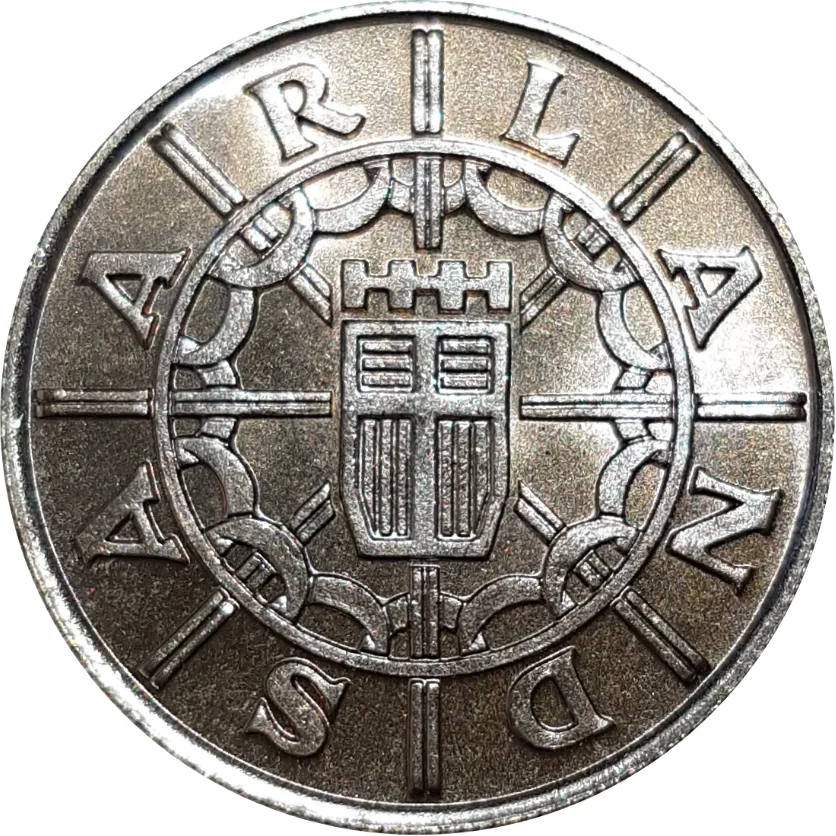
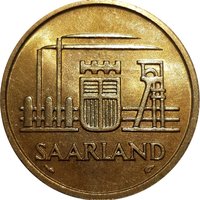
Obverse
Description:
Circular arms with radial lines.
Inscription:
SAARLAND
Translation:
Saarland
Script: Latin
Language: German
Engraver: Theo Siegle
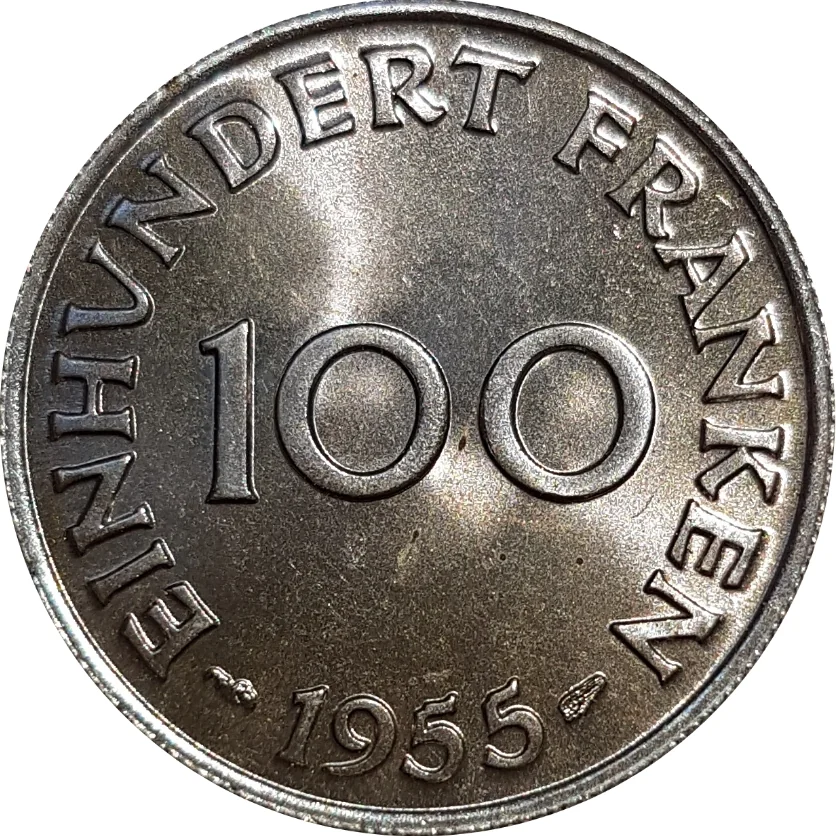
Reverse
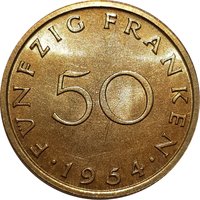
Description:
Value, date
Inscription:
EINHUNDERT FRANKEN
100
1955
100
1955
Translation:
One Hundred Francs
100
1955
100
1955
Script: Latin
Engraver: Theo Siegle
Edge
Reeded
Categories
| Symbols> Coat of Arms |
Mints
| Name | Mark |
|---|---|
| Monnaie de Paris | — |
Mintings
| Year | Mint Mark | Mintage | Quality | Collection |
|---|---|---|---|---|
| 1955 | — | 11,000,000 |
Historical background
Following World War II, the Saarland was separated from Germany and placed under a French-administered protectorate in 1947. As part of its economic integration with France, the French franc became the sole legal tender, replacing the Reichsmark and later the Saar mark. This monetary union was a cornerstone of French policy to detach the region economically and politically from a defeated and divided Germany, tying its prosperity directly to France.
By the mid-1950s, this currency arrangement became a central issue in the debate over the Saar's political future. Pro-German political parties and a majority of the population, who favored reunification with West Germany, viewed the franc as a symbol of foreign control. Economically, while the link provided stability, it also isolated the Saar from the booming West German "Economic Miracle" and its new currency, the Deutsche Mark (DM), which was gaining strength as a symbol of post-war recovery.
The currency question was decisively resolved by the Saar Statute referendum of October 23, 1955. Voters overwhelmingly rejected the statute, which would have kept the region under a Europeanized status but still within the French monetary zone. This clear rejection paved the way for the Saar Treaty of 1956, which stipulated political reunification with West Germany effective January 1, 1957. As part of this transition, the Deutsche Mark was introduced in the Saarland on July 6, 1959, formally ending the franc era and completing the territory's economic reintegration into Germany.
By the mid-1950s, this currency arrangement became a central issue in the debate over the Saar's political future. Pro-German political parties and a majority of the population, who favored reunification with West Germany, viewed the franc as a symbol of foreign control. Economically, while the link provided stability, it also isolated the Saar from the booming West German "Economic Miracle" and its new currency, the Deutsche Mark (DM), which was gaining strength as a symbol of post-war recovery.
The currency question was decisively resolved by the Saar Statute referendum of October 23, 1955. Voters overwhelmingly rejected the statute, which would have kept the region under a Europeanized status but still within the French monetary zone. This clear rejection paved the way for the Saar Treaty of 1956, which stipulated political reunification with West Germany effective January 1, 1957. As part of this transition, the Deutsche Mark was introduced in the Saarland on July 6, 1959, formally ending the franc era and completing the territory's economic reintegration into Germany.
🌱 Very Common