

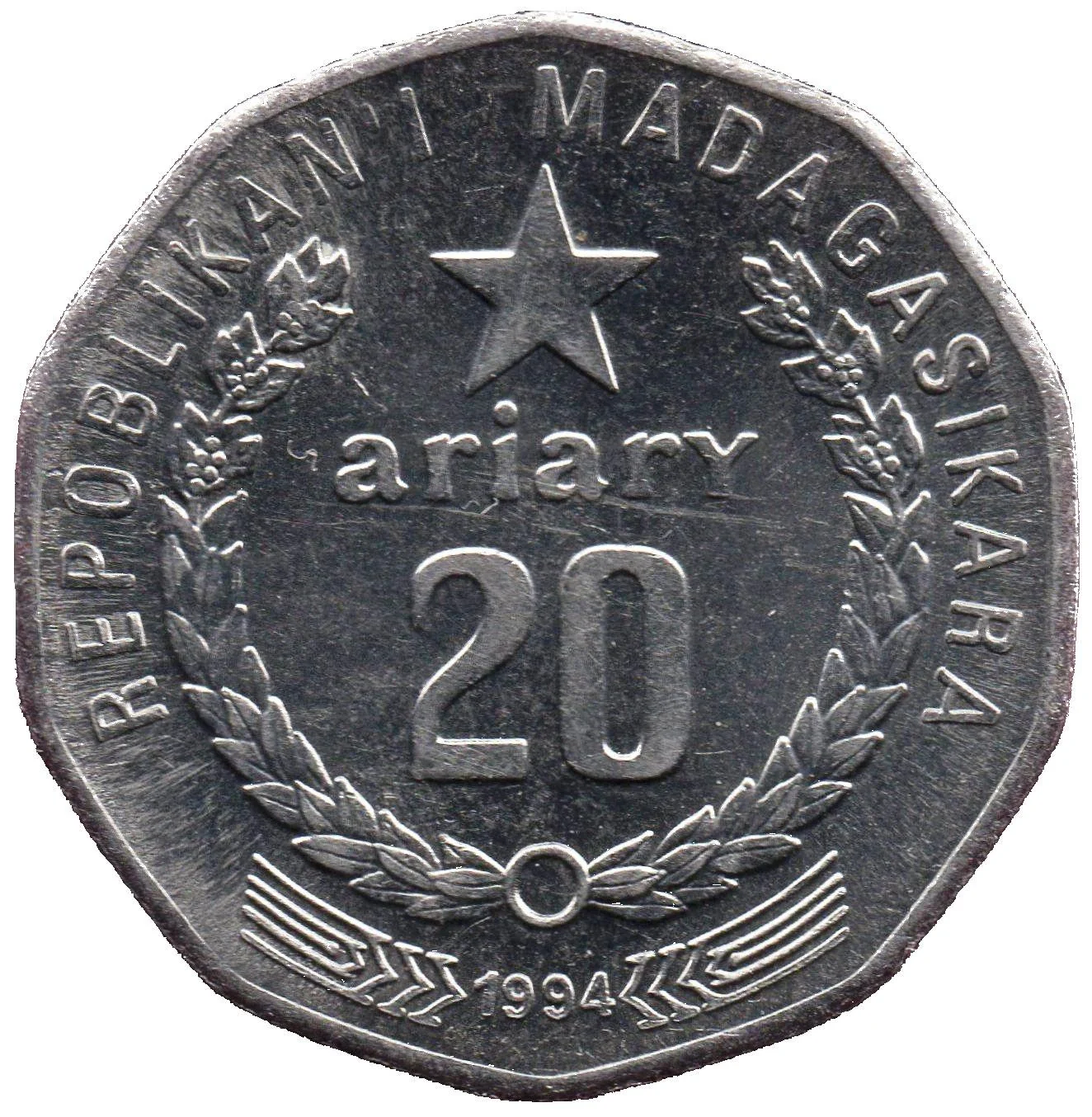
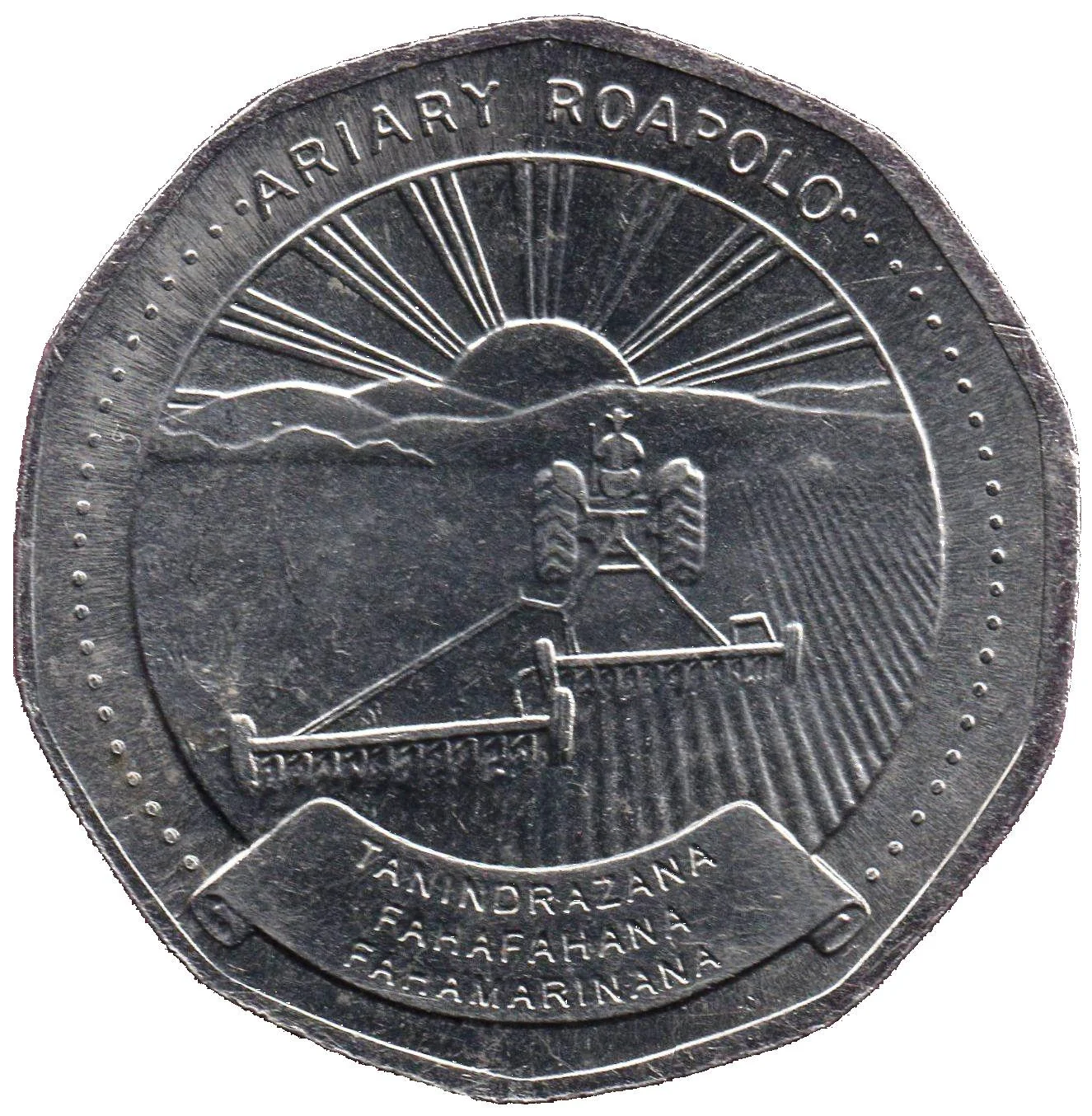
20 ariary – Madagascar
Add to wishlist
Circulating commemorative coins
Commemoration: F.A.O.
Madagascar
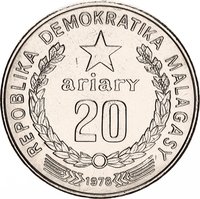
Obverse
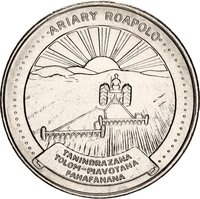
Reverse
Edge
Plain
Categories
| Agriculture |
| Organization> FAO |
| Transportation> Truck or tractor |
Mints
| Name | Mark |
|---|---|
| Royal Canadian Mint of Winnipeg | — |
Mintings
| Year | Mint Mark | Mintage | Quality | Collection |
|---|---|---|---|---|
| 1994 | — | — |
Historical background
In 1994, Madagascar was in the throes of a severe economic and political crisis following a prolonged period of instability. The first multi-party presidential election in 1993 had led to a fragile and contentious power-sharing arrangement between President Albert Zafy and Prime Minister Francisque Ravony. This political paralysis stifled economic decision-making and reform, exacerbating years of industrial decline, crumbling public infrastructure, and a heavy reliance on foreign aid. The national currency, the Malagasy franc (FMG), was under immense pressure, with its value artificially propped up by an overvalued official exchange rate that fueled a rampant black market and critically depleted the country's foreign reserves.
The situation reached a breaking point in early 1994, necessitating drastic intervention. In May, under the guidance and conditionality of the International Monetary Fund (IMF) and the World Bank, the government implemented a sharp devaluation of the FMG. The currency was devalued by approximately 50%, moving from an official rate of about 1,900 FMG to the French franc to a new, unified rate of around 3,800 FMG. This painful but necessary measure aimed to align the official rate with market reality, eliminate the distorting black market, restore competitiveness to key export sectors like vanilla and shrimp, and unlock crucial international financial support and debt rescheduling.
The immediate aftermath of the 1994 devaluation was socially difficult, causing a sharp spike in inflation that eroded purchasing power and strained the population. However, it marked a pivotal turning point. The devaluation, coupled with accompanying structural adjustment programs, laid the foundation for a period of macroeconomic stabilization. It restored some confidence from international financial institutions, leading to renewed aid flows and setting the stage for the modest economic recovery and growth that characterized the latter half of the 1990s, even as political tensions persisted.
The situation reached a breaking point in early 1994, necessitating drastic intervention. In May, under the guidance and conditionality of the International Monetary Fund (IMF) and the World Bank, the government implemented a sharp devaluation of the FMG. The currency was devalued by approximately 50%, moving from an official rate of about 1,900 FMG to the French franc to a new, unified rate of around 3,800 FMG. This painful but necessary measure aimed to align the official rate with market reality, eliminate the distorting black market, restore competitiveness to key export sectors like vanilla and shrimp, and unlock crucial international financial support and debt rescheduling.
The immediate aftermath of the 1994 devaluation was socially difficult, causing a sharp spike in inflation that eroded purchasing power and strained the population. However, it marked a pivotal turning point. The devaluation, coupled with accompanying structural adjustment programs, laid the foundation for a period of macroeconomic stabilization. It restored some confidence from international financial institutions, leading to renewed aid flows and setting the stage for the modest economic recovery and growth that characterized the latter half of the 1990s, even as political tensions persisted.
🌱 Common