

5 Pence – Jersey
Context
Years: 2012–2016
Country: British Crown dependencies
Issuer: Jersey 
Ruler: Elizabeth II
Currency:
(since 1971)
Total mintage: 2,182,000
Material
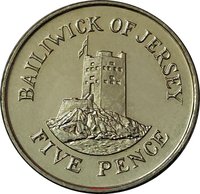
References
KM: #Click to copy to clipboard249
Numista: #185236
Value
Exchange value: 0.05 JEP
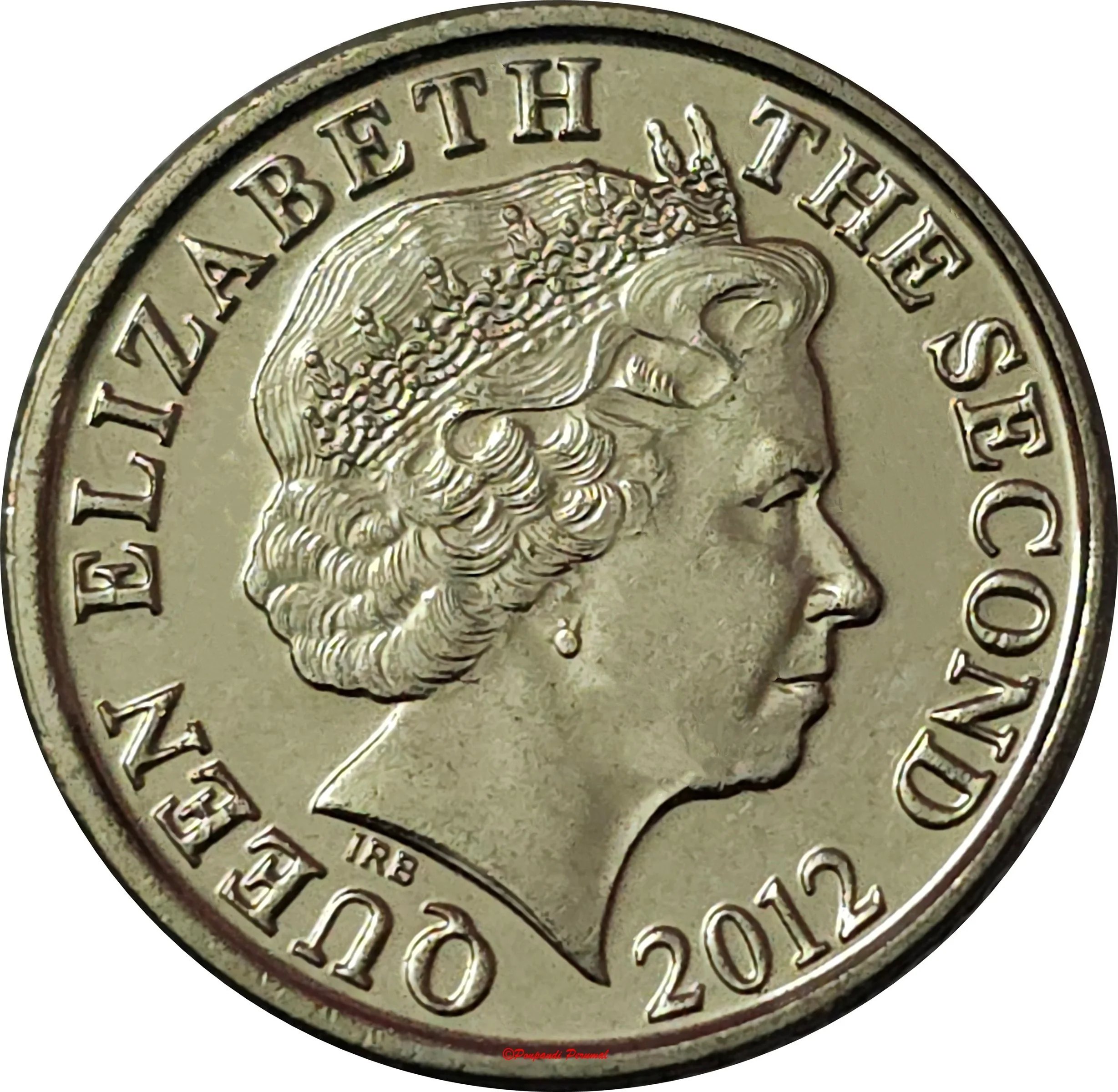
Obverse
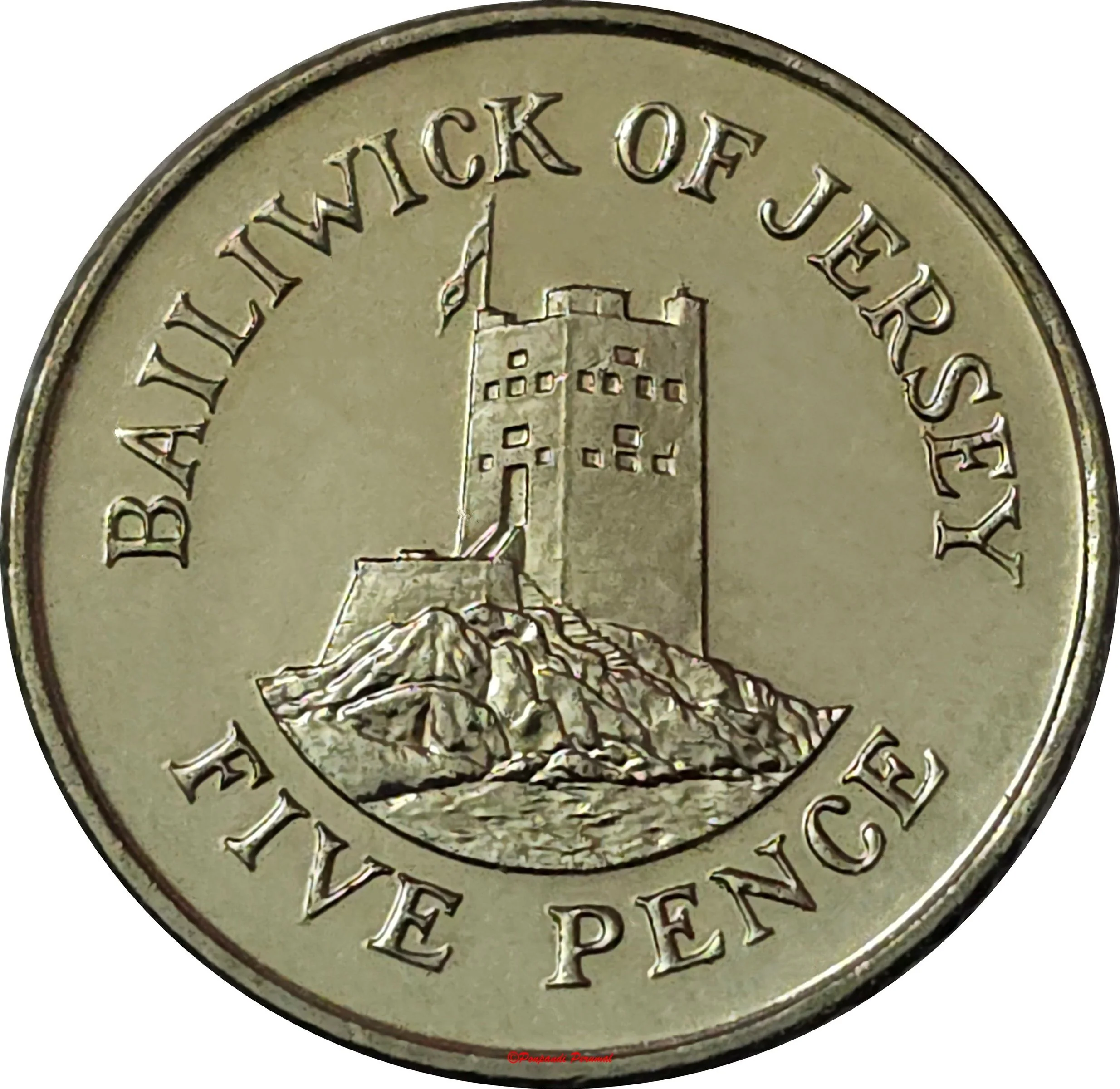
Reverse
Edge
Milled
Mintings
| Year | Mint Mark | Mintage | Quality | Collection |
|---|---|---|---|---|
| 2012 | — | — | ||
| 2014 | — | 862,000 | ||
| 2016 | — | 1,320,000 |
Historical background
In 2012, Jersey's currency situation was defined by its unique dual-currency system and a period of significant numismatic change. As a British Crown Dependency, the island issued its own sterling-pegged currency, the Jersey pound, which circulated alongside Bank of England notes and UK coinage. Both were legal tender on the island and valued at parity, creating a practical monetary union with the United Kingdom while allowing Jersey to retain a symbol of its political and cultural identity through its own banknotes and coins.
The year was particularly notable for the launch of Jersey's first ever circulating £1 coin in October 2012. This new 12-sided, bimetallic coin was introduced ahead of the UK's own identical redesign (which came in 2017) and featured the iconic "Jersey cow" design on its reverse. This issuance was a proactive move to modernise the currency and enhance security features, while also physically distinguishing Jersey coinage more clearly from UK coinage in everyday transactions. Concurrently, the States of Jersey Treasury continued to manage the issue of its own series of polymer banknotes, which had begun with the £100 note in 2010.
This period also unfolded against a backdrop of ongoing international scrutiny regarding tax transparency and financial regulation, which indirectly impacted the broader financial system in which the currency operated. However, the domestic currency situation itself remained stable, underpinned by the Currency Fund established in 1972, which held sterling reserves to fully back the local note issue. Thus, 2012 represented a year of modernisation within a long-established and carefully managed framework, ensuring the continued integrity and distinctiveness of Jersey's monetary system.
The year was particularly notable for the launch of Jersey's first ever circulating £1 coin in October 2012. This new 12-sided, bimetallic coin was introduced ahead of the UK's own identical redesign (which came in 2017) and featured the iconic "Jersey cow" design on its reverse. This issuance was a proactive move to modernise the currency and enhance security features, while also physically distinguishing Jersey coinage more clearly from UK coinage in everyday transactions. Concurrently, the States of Jersey Treasury continued to manage the issue of its own series of polymer banknotes, which had begun with the £100 note in 2010.
This period also unfolded against a backdrop of ongoing international scrutiny regarding tax transparency and financial regulation, which indirectly impacted the broader financial system in which the currency operated. However, the domestic currency situation itself remained stable, underpinned by the Currency Fund established in 1972, which held sterling reserves to fully back the local note issue. Thus, 2012 represented a year of modernisation within a long-established and carefully managed framework, ensuring the continued integrity and distinctiveness of Jersey's monetary system.
🌱 Fairly Common