

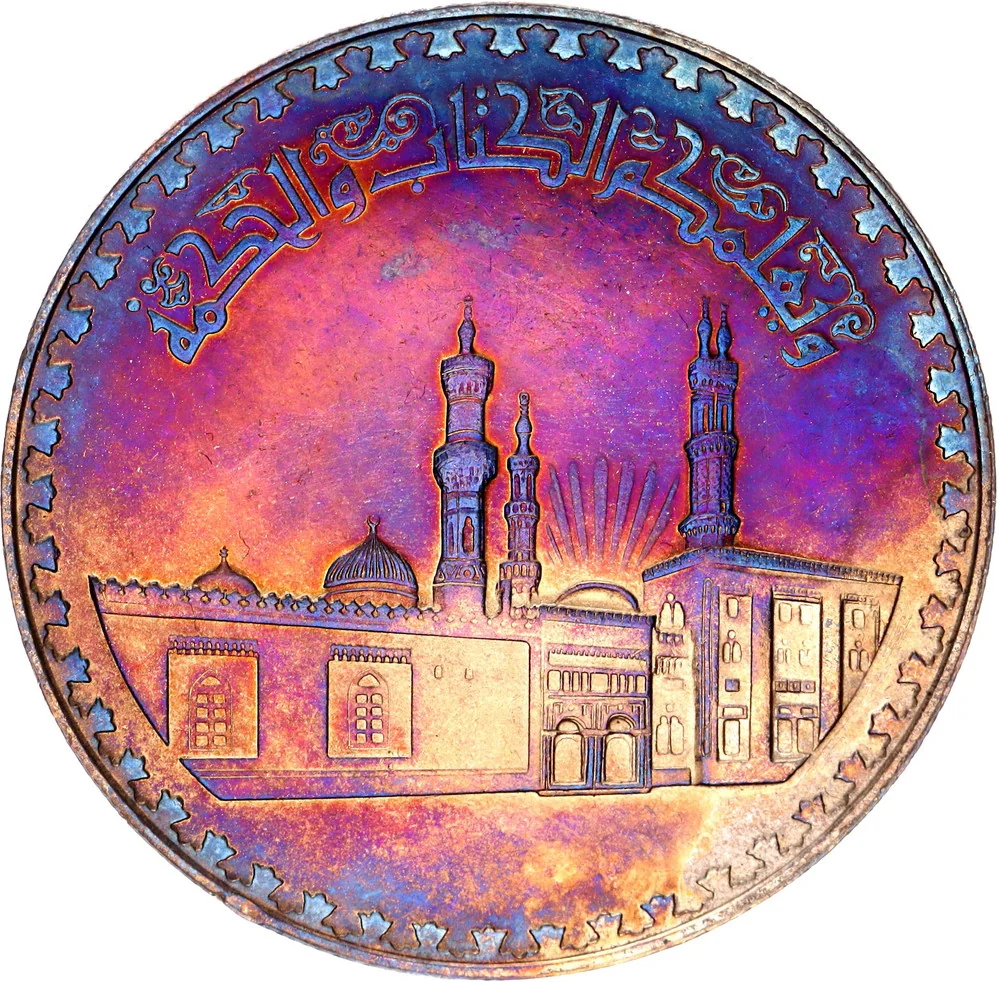
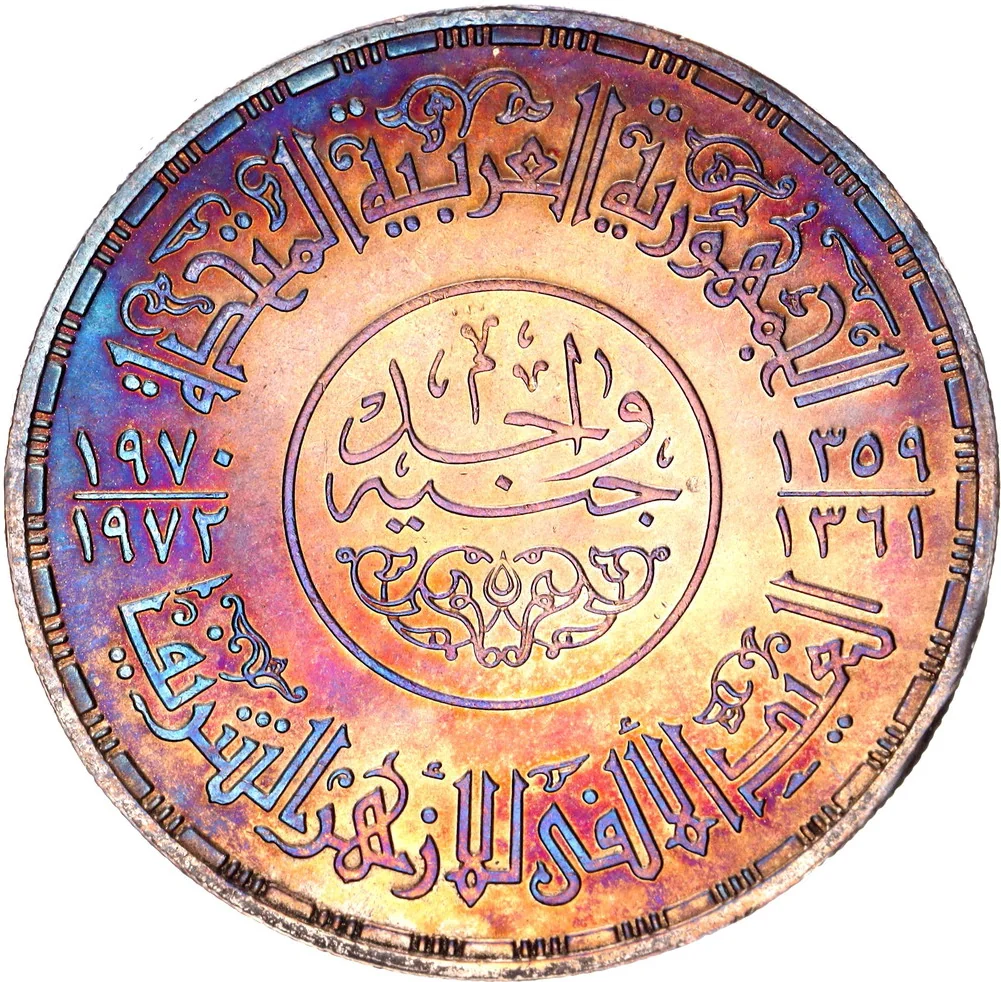
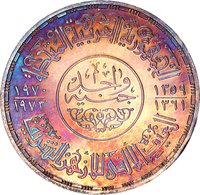
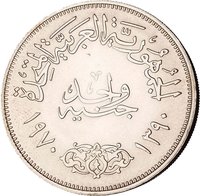
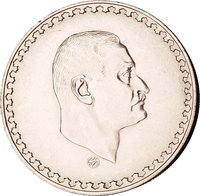
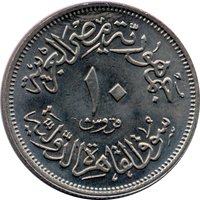
1 Pound (al-Azhar Mosque) – Egypt
Circulating commemorative coins
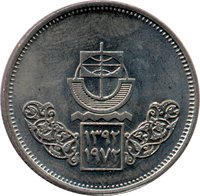
Commemoration: 1000th anniversary of the al-Azhar Mosque
Egypt
Context
Year: 1972
Islamic (Hijri) Year: 1359
Issuer: Egypt 
Period:
(1958—1971)
Currency:
(since 1916)
Total mintage: 250,000
Material
References
KM: #Click to copy to clipboard424
Numista: #18474
Value
Exchange value: 1 EGP
Bullion value: $51.15
Obverse
Reverse
Edge
Reeded
Categories
| Building> Religious building |
Mints
| Name | Mark |
|---|---|
| Egyptian Mint Authority | — |
Mintings
| Year | Mint Mark | Mintage | Quality | Collection |
|---|---|---|---|---|
| 1972 | — | 250,000 |
Historical background
In 1972, Egypt's currency situation was fundamentally shaped by the political and economic aftermath of the 1967 Six-Day War. The country was operating under a complex system of exchange rates, a legacy of President Gamal Abdel Nasser's socialist policies. The official fixed rate was set at EGP 0.43 to the US dollar, but this rate was largely symbolic, reserved for government transactions and essential imports like food and medicine. For most other transactions, a "parallel" or "non-official" market existed where the Egyptian pound traded at a significantly depreciated value, reflecting the severe strain on the economy from years of war, heavy state subsidies, and a large military budget.
Economically, the country faced mounting pressures. The cost of the ongoing War of Attrition with Israel (1967-1970) and the need to rebuild the devastated Suez Canal cities placed an enormous burden on state finances. A growing trade deficit, reliance on foreign aid (particularly from the Soviet Union and Arab Gulf states), and a bloated public sector contributed to underlying inflationary pressures. While the official rate remained artificially strong, the reality for many businesses and individuals was access to foreign currency at a much weaker market rate, creating distortions, encouraging a black market, and hindering foreign investment.
Politically, 1972 was a year of transition under President Anwar Sadat, who had succeeded Nasser in 1970. Sadat was beginning to signal a shift away from strict state socialism and the Soviet alliance, but major economic reforms, including currency liberalization, had not yet been implemented. The currency regime's rigidity was increasingly seen as unsustainable, setting the stage for the more dramatic economic changes of the Infitah (open door) policy that Sadat would announce after the 1973 war. Thus, in 1972, Egypt's currency was caught between the legacy of a controlled, war-time economy and the impending pressures for change.
Economically, the country faced mounting pressures. The cost of the ongoing War of Attrition with Israel (1967-1970) and the need to rebuild the devastated Suez Canal cities placed an enormous burden on state finances. A growing trade deficit, reliance on foreign aid (particularly from the Soviet Union and Arab Gulf states), and a bloated public sector contributed to underlying inflationary pressures. While the official rate remained artificially strong, the reality for many businesses and individuals was access to foreign currency at a much weaker market rate, creating distortions, encouraging a black market, and hindering foreign investment.
Politically, 1972 was a year of transition under President Anwar Sadat, who had succeeded Nasser in 1970. Sadat was beginning to signal a shift away from strict state socialism and the Soviet alliance, but major economic reforms, including currency liberalization, had not yet been implemented. The currency regime's rigidity was increasingly seen as unsustainable, setting the stage for the more dramatic economic changes of the Infitah (open door) policy that Sadat would announce after the 1973 war. Thus, in 1972, Egypt's currency was caught between the legacy of a controlled, war-time economy and the impending pressures for change.
🌱 Fairly Common