

2⁄10 real – Spain
Add to wishlist
Spain
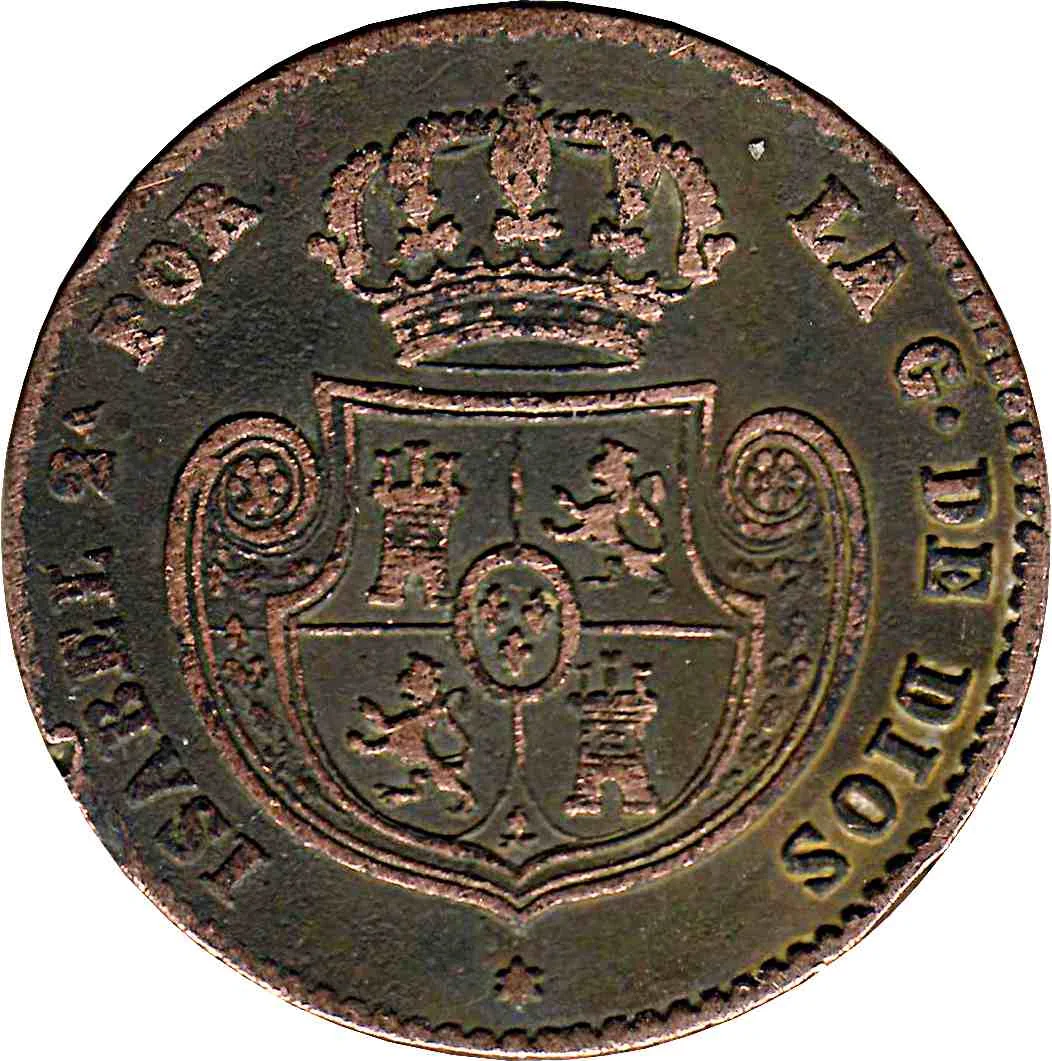
Obverse
Description:
Royal arms of Spain.
Inscription:
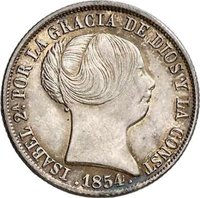
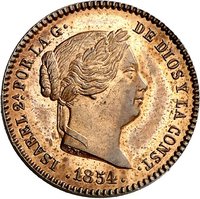
ISABEL 2A. POR LA G· DE DIOS
Translation:
Isabel 2nd. By the Grace of God
Script: Latin
Language: Spanish
Engraver: Remigio Vega
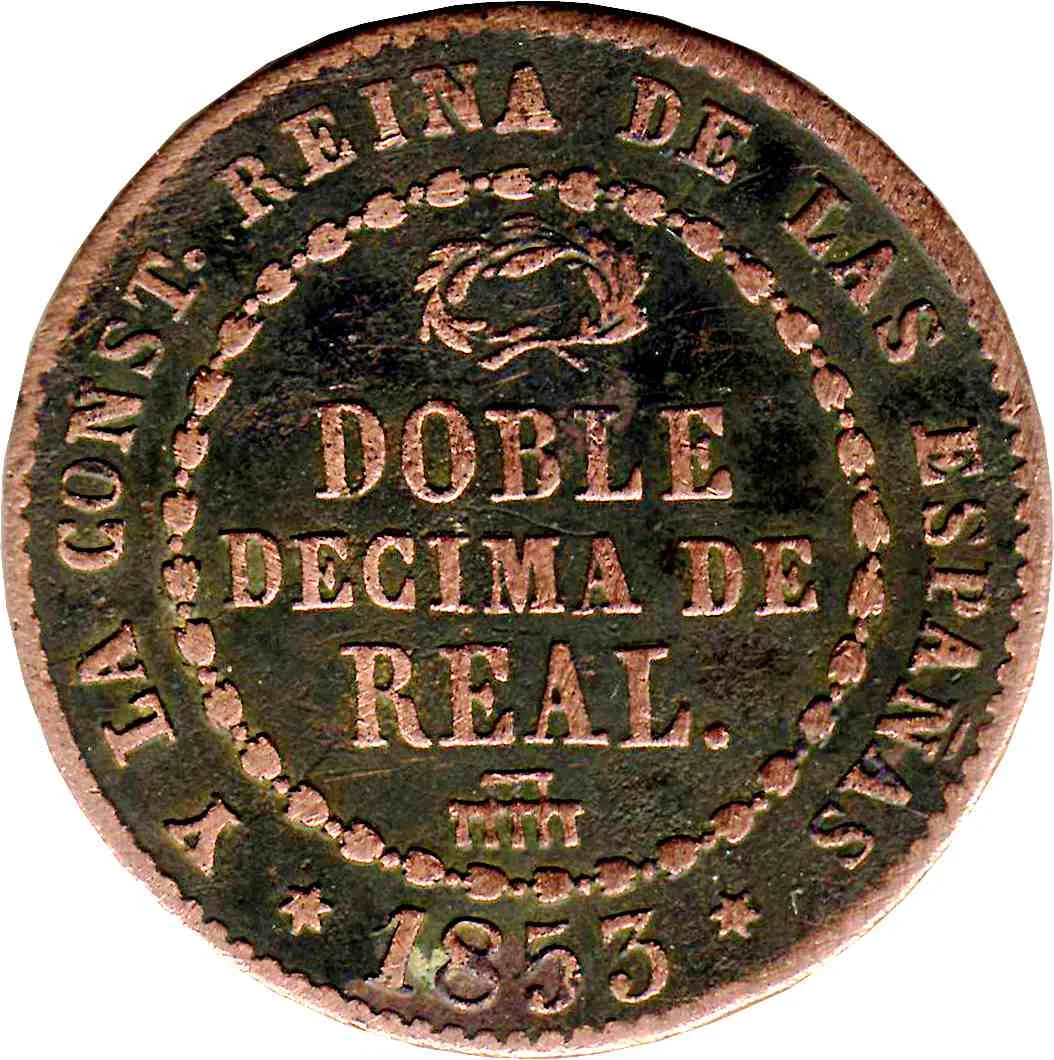
Reverse
Description:
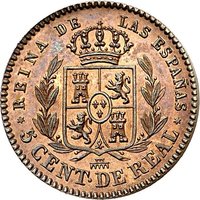
Laurel crown and wreath.
Inscription:
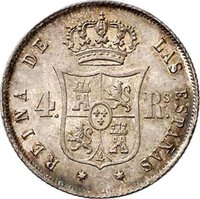
Y LA CONST· REINA DE LAS ESPAÑAS
DOBLE
DECIMA DE
REAL
* 1853 *
DOBLE
DECIMA DE
REAL
* 1853 *
Translation:
And the Constitutional Queen of the Spains
Double
Tenth of a
Real
* 1853 *
Double
Tenth of a
Real
* 1853 *
Script: Latin
Language: Spanish
Engraver: Remigio Vega
Edge
Plain
Categories
| Symbols> Coat of Arms |
| Symbol> Wreath |
Mints
| Name | Mark |
|---|---|
| Royal Mint of Segovia | — |
Mintings
| Year | Mint Mark | Mintage | Quality | Collection |
|---|---|---|---|---|
| 1853 | — | — |
Historical background
In 1853, Spain's currency system was a complex and unstable relic of its colonial past and turbulent 19th century. The nation operated on a bimetallic standard, theoretically using both silver reales and gold escudos, but the fixed legal ratio between the metals did not match their market values, leading to the effective disappearance of full-bodied gold coinage from circulation. This Gresham's Law dynamic, where "bad money drives out good," left the economy reliant on a chaotic mix of underweight silver coins, worn copper maravedís for small transactions, and a plethora of unstable paper money issued by private banks and the state itself. The system was further fragmented by regional variations and a severe lack of small change, hampering daily commerce.
The root of this monetary disorder lay in decades of political instability, including the Carlist Wars and frequent changes of government, which had forced successive regimes to finance deficits through debt and currency debasement. The Bank of San Fernando (precursor to the Bank of Spain) held a note-issuing monopoly but its credibility was weak, and its notes often traded at a significant discount to their face value. This period fell within the reign of Isabella II, a time of nascent industrialization and railway expansion, which acutely highlighted the inadequacy of the archaic monetary system for a modernizing economy.
Consequently, by 1853, there was a growing consensus among policymakers and economists on the urgent need for comprehensive monetary reform. The goal was to create a unified, decimal-based currency that was stable, trustworthy, and capable of facilitating national and international trade. This pressure would culminate just a few years later in the pivotal Monetary Law of 1856, which established the foundational principles for the peseta, ultimately introduced in 1868, to replace the old system and provide Spain with a single, modern national currency.
The root of this monetary disorder lay in decades of political instability, including the Carlist Wars and frequent changes of government, which had forced successive regimes to finance deficits through debt and currency debasement. The Bank of San Fernando (precursor to the Bank of Spain) held a note-issuing monopoly but its credibility was weak, and its notes often traded at a significant discount to their face value. This period fell within the reign of Isabella II, a time of nascent industrialization and railway expansion, which acutely highlighted the inadequacy of the archaic monetary system for a modernizing economy.
Consequently, by 1853, there was a growing consensus among policymakers and economists on the urgent need for comprehensive monetary reform. The goal was to create a unified, decimal-based currency that was stable, trustworthy, and capable of facilitating national and international trade. This pressure would culminate just a few years later in the pivotal Monetary Law of 1856, which established the foundational principles for the peseta, ultimately introduced in 1868, to replace the old system and provide Spain with a single, modern national currency.
💎 Very Rare