

150 Kuna – Croatia
Non-circulating coins
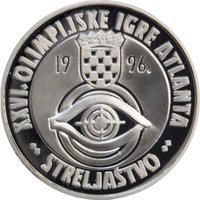
Commemoration: XXVI Olympic Games in Atlanta 1996
Croatia
Context
Material
References
KM: #Click to copy to clipboard43
Numista: #100495
Value
Exchange value: 150 HRK
Bullion value: $64.50
Obverse
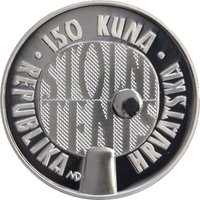
Description:
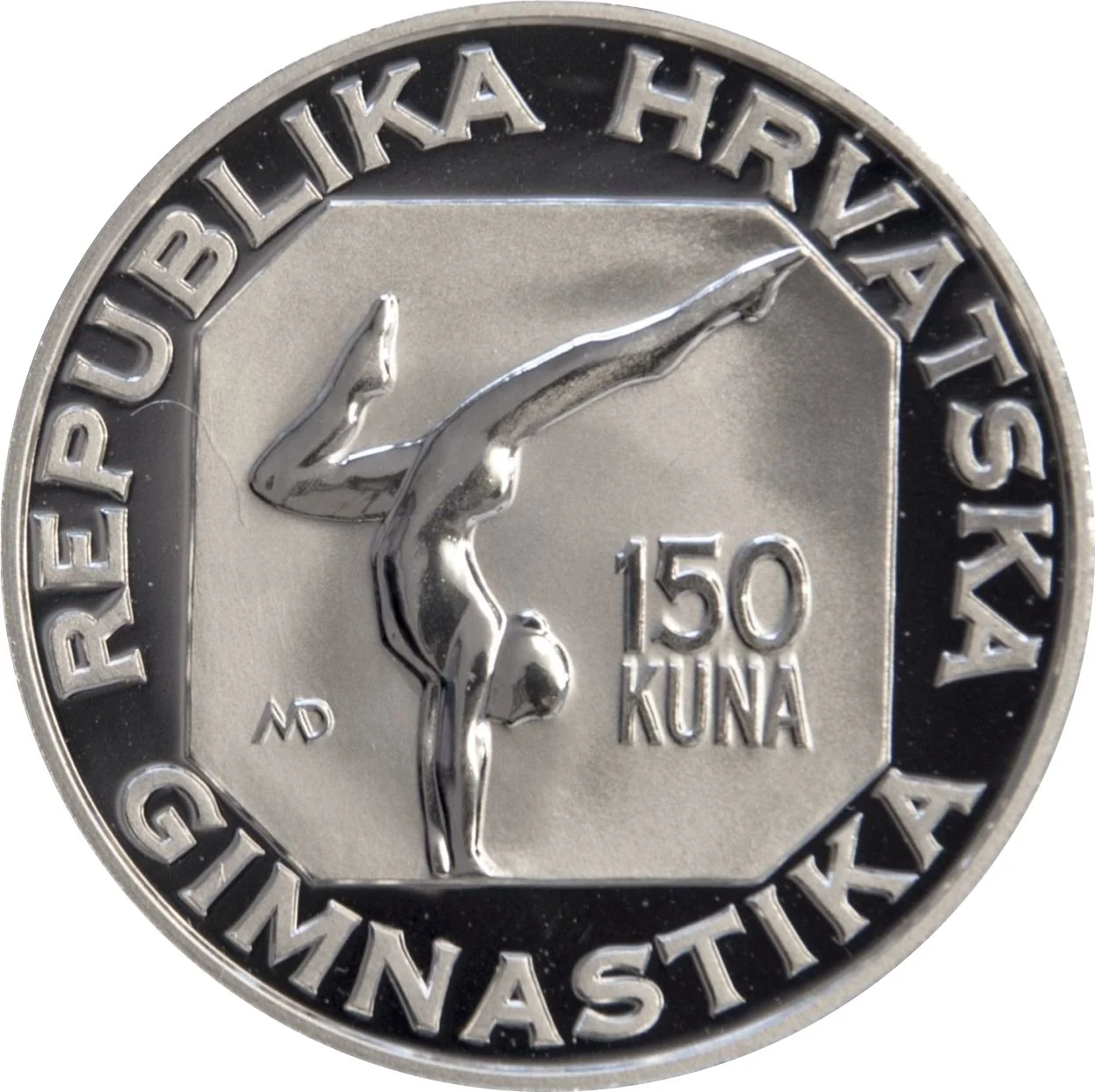
Gymnast, right.
Inscription:
REPUBLIKA HRVATSKA
MD 150 KUNA
GIMNASTIKA
MD 150 KUNA
GIMNASTIKA
Translation:
REPUBLIC OF CROATIA
150 KUNA
GYMNASTICS
150 KUNA
GYMNASTICS
Script: Latin
Language: Croatian
Designer: Damir Mataušić
Reverse
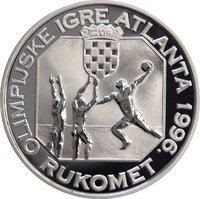
Description:
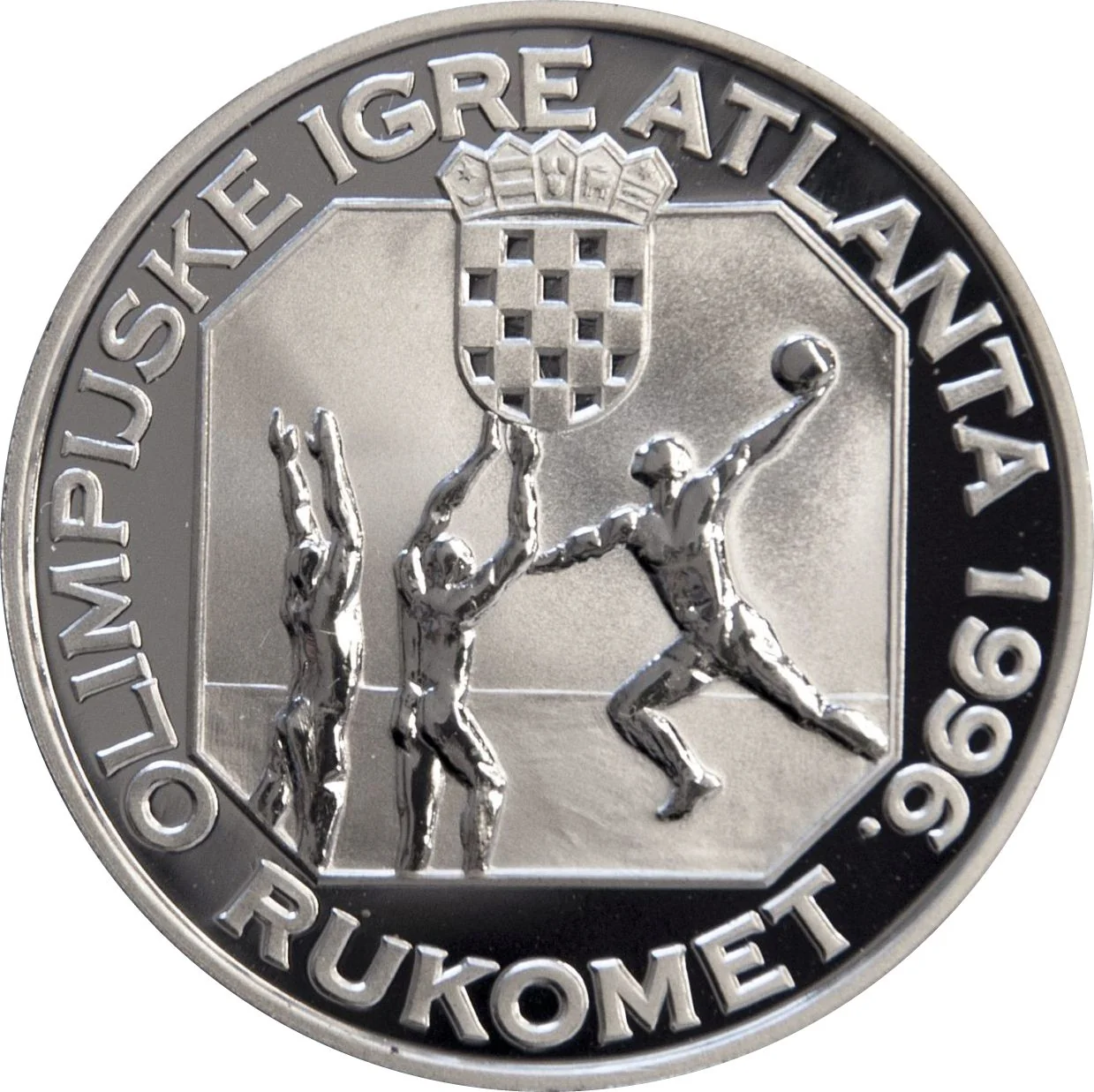
Handball players, arms raised in victory.
Inscription:
OLIMPIJSKE IGRE ATLANTA 1996.
RUKOMET
RUKOMET
Translation:
Olympic Games Atlanta 1996.
Handball
Handball
Script: Latin
Designer: Damir Mataušić
Edge
Categories
| Sport> Summer Olympic Games |
Mintings
| Year | Mint Mark | Mintage | Quality | Collection |
|---|---|---|---|---|
| 1996 | — | 2,000 | Proof |
Historical background
In 1996, Croatia was navigating a complex and fragile monetary environment just one year after the end of the Homeland War. The national currency was the Croatian dinar (HRD), which had been introduced in 1991 to replace the Yugoslav dinar. However, it suffered from high inflation and a significant lack of public confidence due to the economic devastation of the war, the costs of reconstruction, and the challenges of transitioning from a socialist system. This instability was a major obstacle to economic recovery and foreign investment.
Recognizing the need for radical stabilization, the Croatian government, under Finance Minister Božo Prka, undertook a decisive reform. On May 30, 1996, they engineered a currency switch, replacing the inflation-weakened dinar with a new, stronger currency: the Croatian kuna (HRK). The conversion was set at 1 kuna for 1,000 dinars, a redenomination designed to simplify transactions and psychologically break from the past inflationary period. The kuna was pegged to the German Deutsche Mark, the anchor currency of stability in Europe at the time.
This reform was a cornerstone of Croatia's broader stabilization program, which included fiscal austerity and tight monetary policy. The successful introduction of the kuna immediately curtailed inflation and established much-needed monetary credibility. It provided the stable foundation upon which Croatia's post-war economy could begin to rebuild, setting the stage for banking sector reforms and the gradual liberalization of the economy throughout the late 1990s.
Recognizing the need for radical stabilization, the Croatian government, under Finance Minister Božo Prka, undertook a decisive reform. On May 30, 1996, they engineered a currency switch, replacing the inflation-weakened dinar with a new, stronger currency: the Croatian kuna (HRK). The conversion was set at 1 kuna for 1,000 dinars, a redenomination designed to simplify transactions and psychologically break from the past inflationary period. The kuna was pegged to the German Deutsche Mark, the anchor currency of stability in Europe at the time.
This reform was a cornerstone of Croatia's broader stabilization program, which included fiscal austerity and tight monetary policy. The successful introduction of the kuna immediately curtailed inflation and established much-needed monetary credibility. It provided the stable foundation upon which Croatia's post-war economy could begin to rebuild, setting the stage for banking sector reforms and the gradual liberalization of the economy throughout the late 1990s.
✨ Legendary