

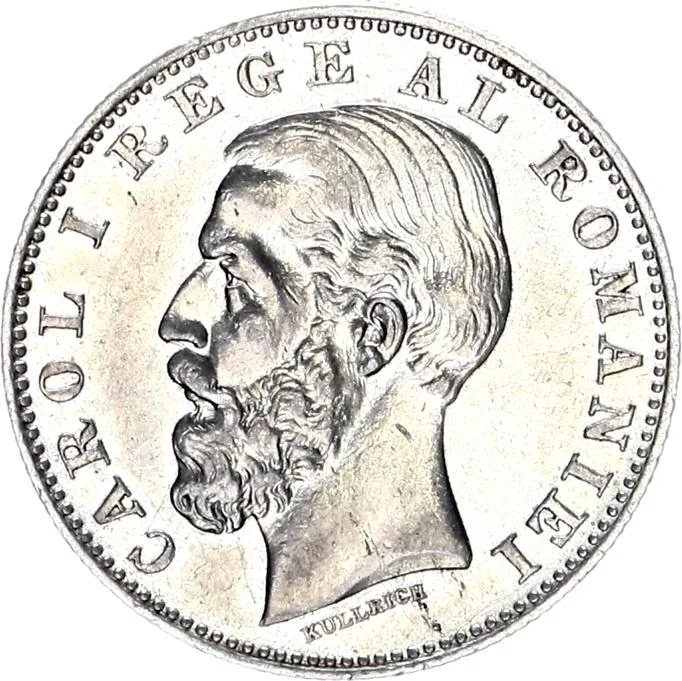
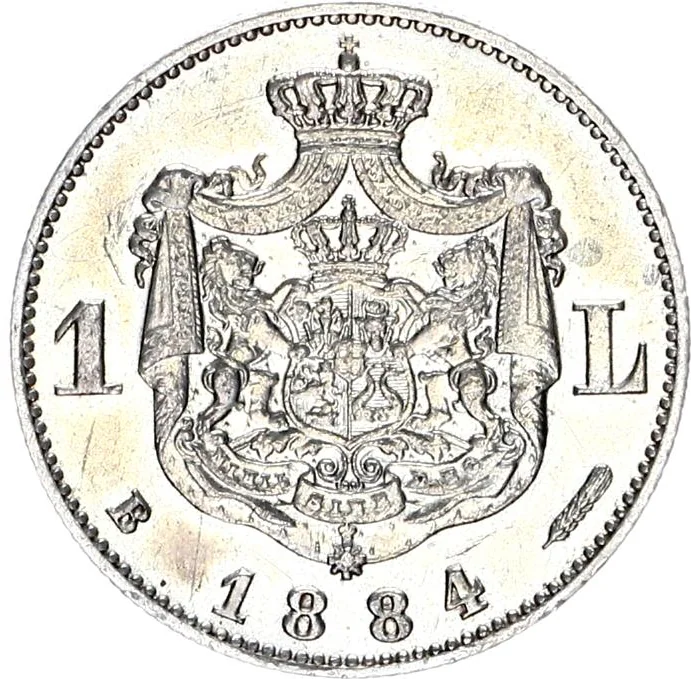

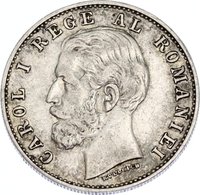
Obverse
Description:
Turn left.
Inscription:
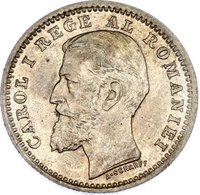
CAROL I REGE AL ROMANIEI
KULLRICH
KULLRICH
Translation:
CAROL I KING OF ROMANIA
KULLRICH
KULLRICH
Script: Latin
Engraver: Friedrich Wilhelm Kullrich
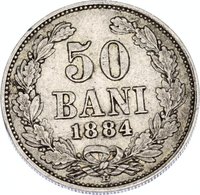
Reverse
Edge
Reeded
Categories
| Symbols> Coat of Arms |
| Person> Monarch |
Mints
| Name | Mark |
|---|---|
| State Mint | B |
Historical background
In 1884, Romania's currency situation was defined by its ongoing transition towards a unified national monetary system, a process deeply intertwined with the young nation's quest for economic sovereignty and international recognition. Following independence from the Ottoman Empire in 1877, the country's circulation was a chaotic mix of foreign and domestic coins, including Ottoman piastres, Russian rubles, Austrian florins, and French francs, alongside the domestically minted leu (lion) and ban. The National Bank of Romania, established in 1880, held the exclusive right of note issue, but a lack of public trust meant that its paper banknotes circulated at a discount to metal coins, complicating all commercial transactions.
The central monetary policy goal was to place the Romanian leu on a firm metallic standard, aligning with the dominant European model of the Latin Monetary Union. While the leu was theoretically bimetallic (based on both gold and silver), in practice the government aimed for a de facto gold standard to attract foreign investment and stabilize trade. This period was characterized by careful preparations, including the accumulation of gold reserves and legislative efforts to define the leu's precise metal content, paving the way for the future minting of standardized national coinage.
Therefore, the currency landscape of 1884 was one of deliberate construction amidst lingering fragmentation. The state, through its National Bank, was actively working to suppress the circulation of foreign coins and establish the credibility of its own paper money, all while laying the technical and legal groundwork for a modern, gold-backed national currency. This financial consolidation was a critical component of Romania's broader political strategy to cement its status as a stable and independent kingdom within the European economic order.
The central monetary policy goal was to place the Romanian leu on a firm metallic standard, aligning with the dominant European model of the Latin Monetary Union. While the leu was theoretically bimetallic (based on both gold and silver), in practice the government aimed for a de facto gold standard to attract foreign investment and stabilize trade. This period was characterized by careful preparations, including the accumulation of gold reserves and legislative efforts to define the leu's precise metal content, paving the way for the future minting of standardized national coinage.
Therefore, the currency landscape of 1884 was one of deliberate construction amidst lingering fragmentation. The state, through its National Bank, was actively working to suppress the circulation of foreign coins and establish the credibility of its own paper money, all while laying the technical and legal groundwork for a modern, gold-backed national currency. This financial consolidation was a critical component of Romania's broader political strategy to cement its status as a stable and independent kingdom within the European economic order.
🌟 Limited