

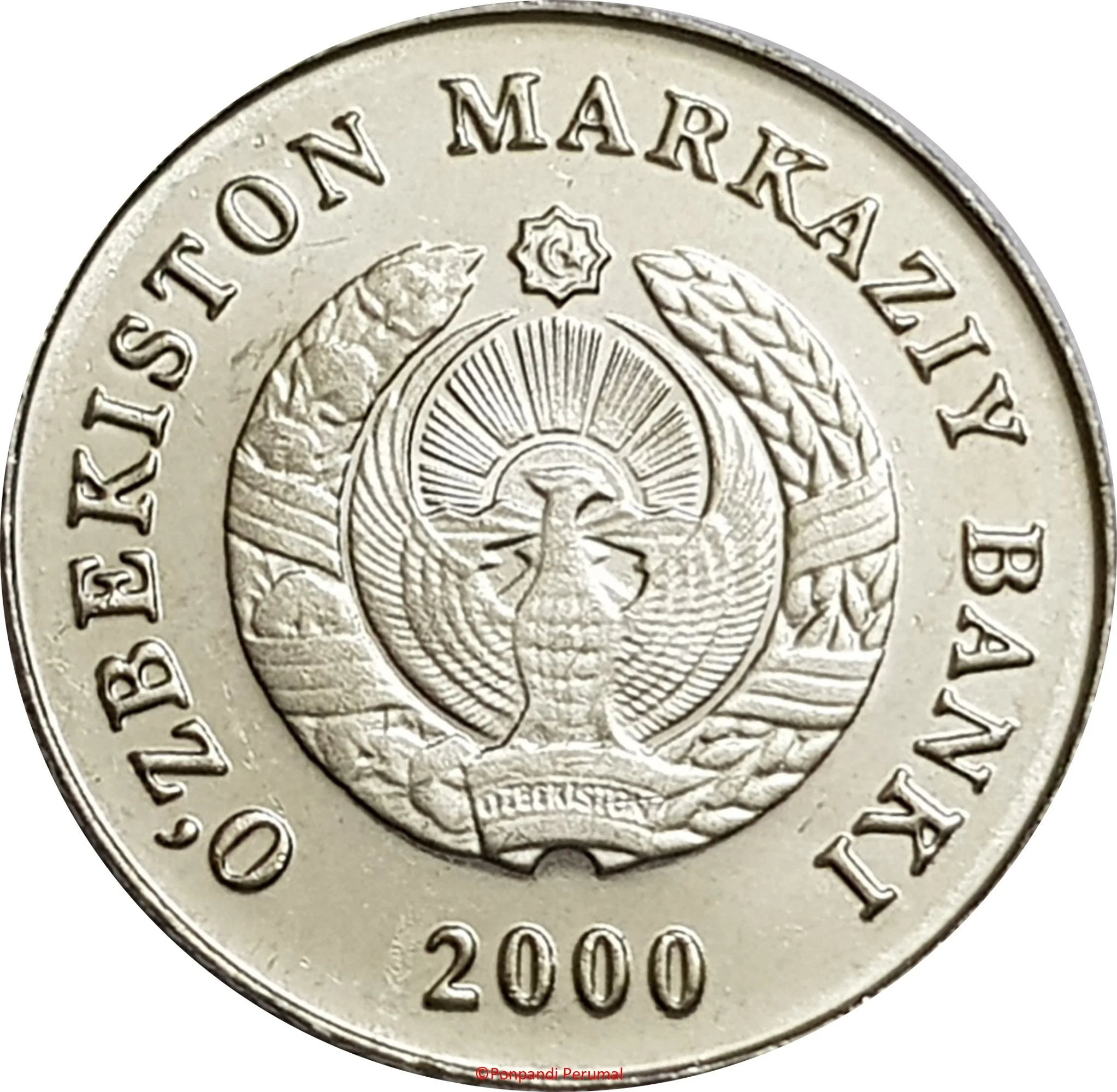
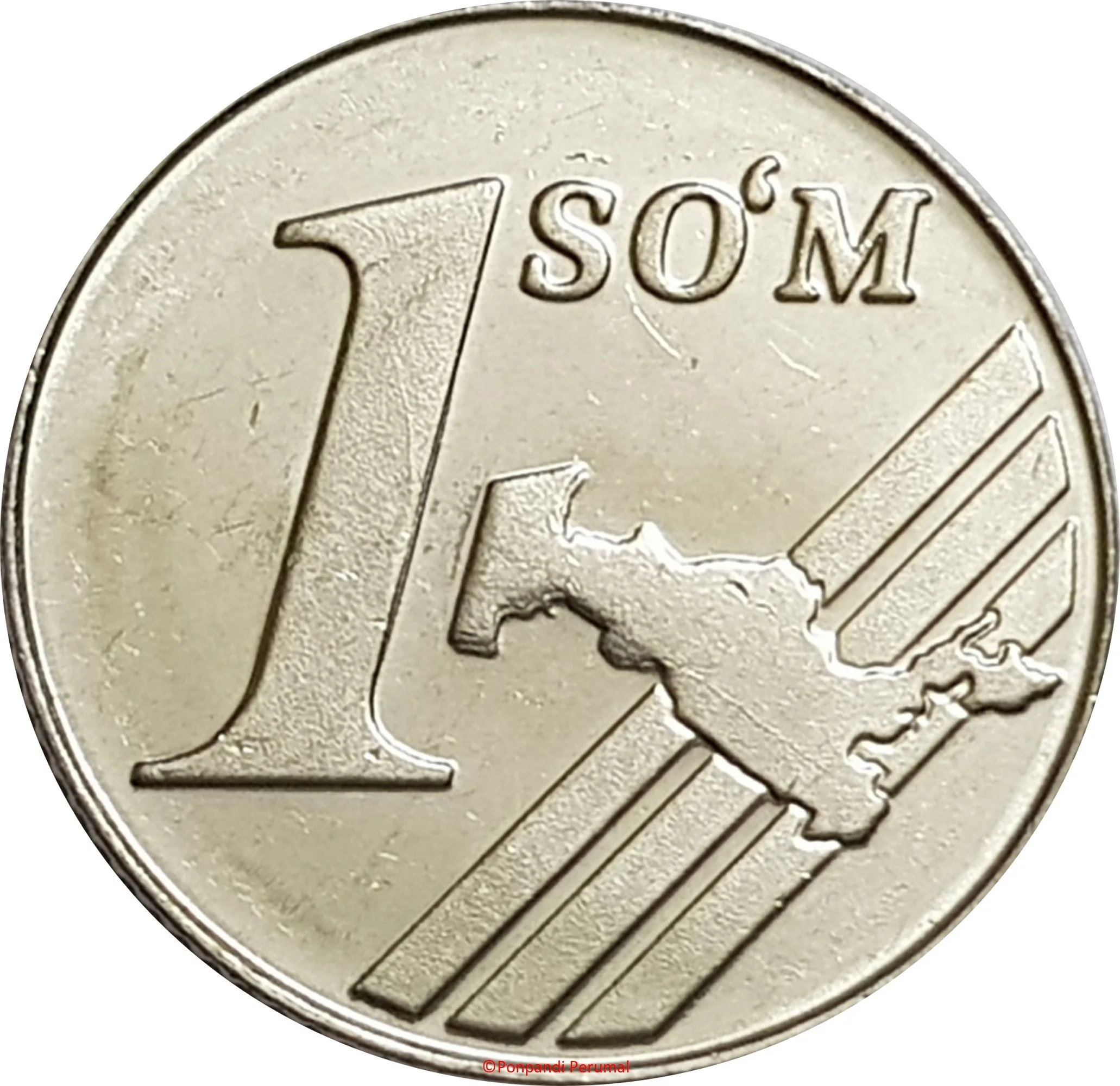
1 soʻm – Uzbekistan
Add to wishlist
Uzbekistan
Context
Year: 2000
Issuer: Uzbekistan
Period:
(since 1991)
Currency:
(since 1994)
Demonetization: 1 March 2020
Material
References
KM: #
Numista: #10044
Value
Exchange value: 1 UZS
Obverse
Reverse
Edge
Reeded
Categories
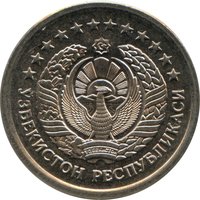
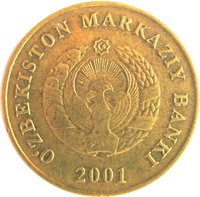
| Symbols> Coat of Arms |
| Symbol> Sun |
| Animal> Bird |
| Mythology> Fantastic animal |
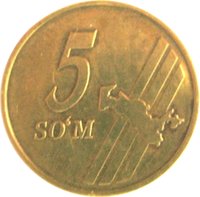
| Map |
Mintings
| Year | Mint Mark | Mintage | Quality | Collection |
|---|---|---|---|---|
| 2000 | — | — |
Historical background
In 2000, Uzbekistan's currency situation was characterized by a complex and restrictive system of multiple exchange rates, a legacy of the Soviet collapse and the government's cautious approach to economic reform. The official exchange rate, set by the Central Bank of Uzbekistan, was highly overvalued and used only for priority state imports and some budgetary calculations. In practice, the vast majority of transactions occurred at the significantly weaker black-market rate, which more accurately reflected the som's true value. This dual system created major distortions, encouraging corruption, hampering foreign investment, and stifling legitimate trade, as exporters were forced to surrender hard currency earnings at the unfavorable official rate.
The government maintained strict capital controls to defend this system, limiting access to foreign currency for both businesses and citizens. This led to chronic shortages of hard currency within the banking system, making it extremely difficult for importers to obtain dollars or euros for payments. Consequently, a thriving unofficial currency exchange market operated openly, despite being technically illegal. The economic environment was one of isolation, with limited convertibility of the som, which discouraged integration into the global economy and contributed to a scarcity of imported goods.
This restrictive regime was a central feature of Uzbekistan's gradualist and state-controlled economic model under President Islam Karimov. While it provided the government with a mechanism to control resource allocation and subsidize strategic sectors, the costs were high. The currency distortions exacerbated inflation, discouraged productivity, and widened the gap between the formal and informal economies. The situation in 2000 thus represented a critical point of tension, highlighting the unsustainable nature of the multiple exchange rate system and setting the stage for future, albeit slow, pressures for monetary reform in the years to follow.
The government maintained strict capital controls to defend this system, limiting access to foreign currency for both businesses and citizens. This led to chronic shortages of hard currency within the banking system, making it extremely difficult for importers to obtain dollars or euros for payments. Consequently, a thriving unofficial currency exchange market operated openly, despite being technically illegal. The economic environment was one of isolation, with limited convertibility of the som, which discouraged integration into the global economy and contributed to a scarcity of imported goods.
This restrictive regime was a central feature of Uzbekistan's gradualist and state-controlled economic model under President Islam Karimov. While it provided the government with a mechanism to control resource allocation and subsidize strategic sectors, the costs were high. The currency distortions exacerbated inflation, discouraged productivity, and widened the gap between the formal and informal economies. The situation in 2000 thus represented a critical point of tension, highlighting the unsustainable nature of the multiple exchange rate system and setting the stage for future, albeit slow, pressures for monetary reform in the years to follow.
🌱 Common