

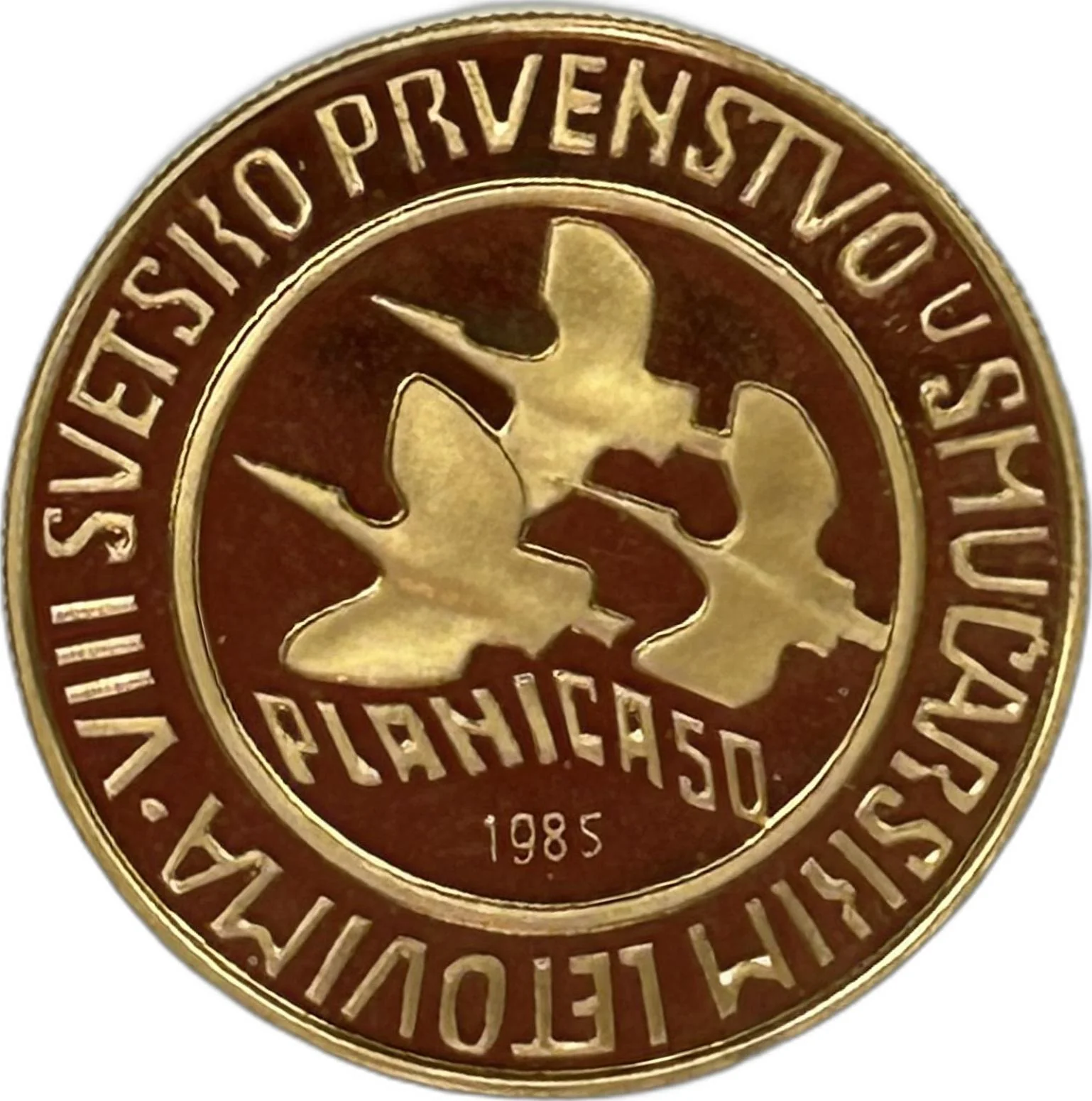
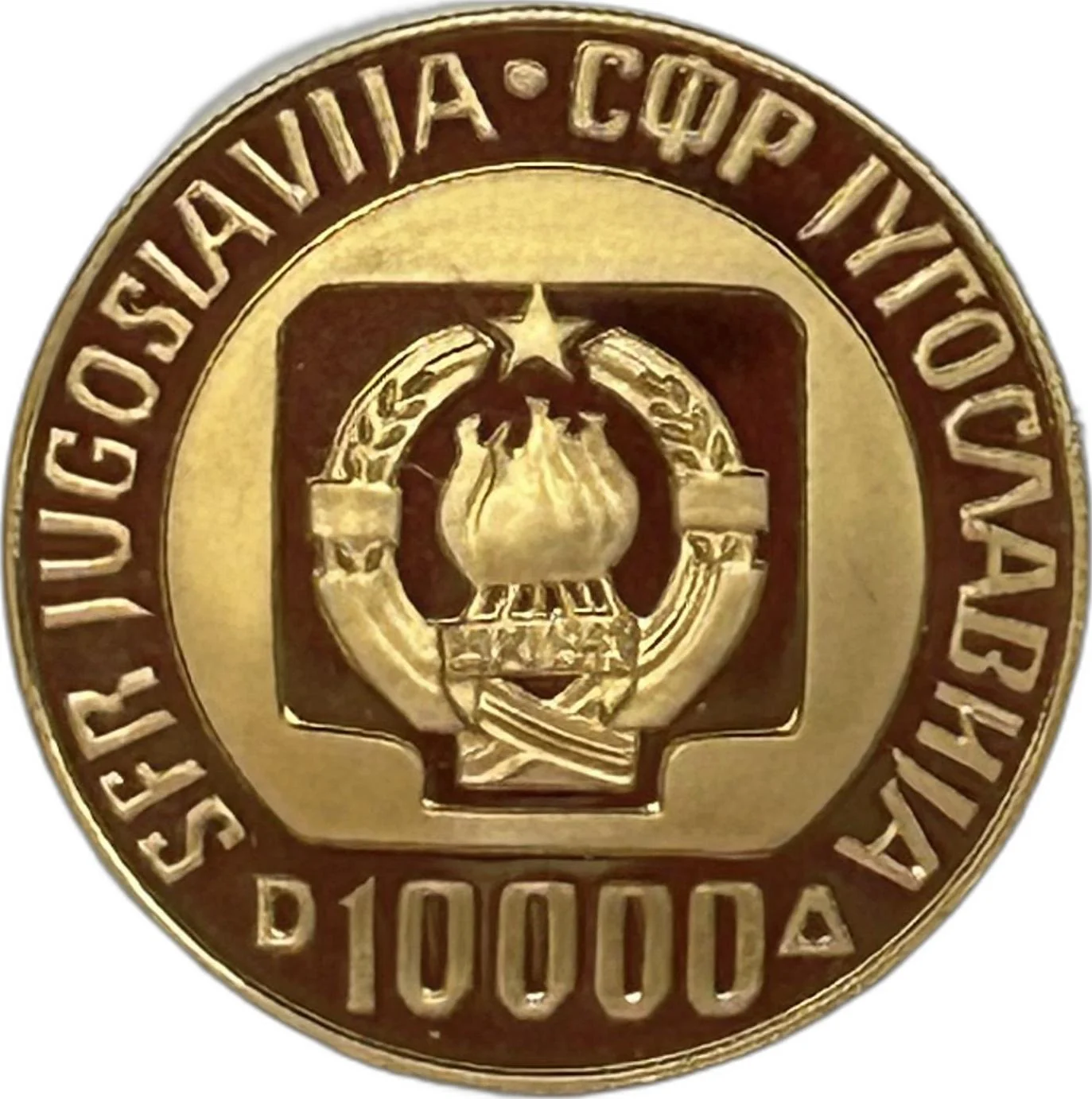
10000 Dinars – Yugoslavia
Non-circulating coins
Commemoration: World Ski Jumping Championship
Context
Year: 1985
Issuer: Yugoslavia
Period:
(1963—1992)
Currency:
(1966—1989)
Demonetized: Yes
Total mintage: 10,000
Material
References
KM: #Click to copy to clipboard123
Numista: #181962
Value
Exchange value: 10000 YUD
Bullion value: $1202.89
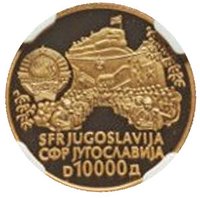
Obverse
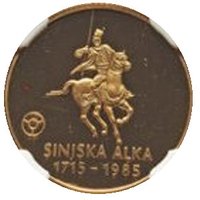
Reverse
Edge
© mojcoin (CC BY-SA)
Mintings
| Year | Mint Mark | Mintage | Quality | Collection |
|---|---|---|---|---|
| 1985 | — | 10,000 |
Historical background
By 1985, Yugoslavia's currency situation was a clear symptom of its deepening economic crisis and political fragmentation. The Yugoslav dinar, theoretically a single national currency, was increasingly strained by the country's unique system of "associated labor" and regional autonomy. Runaway inflation, initially in the double digits, was accelerating due to a combination of factors: excessive money printing to cover government and enterprise deficits, a massive foreign debt burden (over $20 billion), and the fundamental inefficiencies of the self-managed socialist economy. Price controls on essentials created shortages, while a growing black market operated with hard currencies like the Deutsche Mark.
The monetary system itself was becoming dysfunctional. While the National Bank of Yugoslavia in Belgrade held nominal authority, the powerful republican and provincial banks often pursued their own credit policies, effectively creating competing monetary pressures within the federation. This institutional fragmentation prevented a coherent anti-inflation policy. Furthermore, the practice of "internal borrowing," where republics and provinces issued debt to the national bank, monetized regional deficits and fueled inflation across the entire country, creating a cycle of resentment and blame between the wealthier northern republics and the less developed south.
Internationally, the dinar was virtually inconvertible, and Yugoslavia relied heavily on IMF loans and debt rescheduling to maintain solvency. Domestically, citizens and businesses increasingly lost faith in the dinar, seeking refuge in foreign currency savings ("devizni račun") or tangible assets. The 1985 devaluation was another in a series of attempts to correct trade imbalances, but it primarily increased the cost of imports and further eroded living standards. This currency instability underscored the failure of federal economic coordination and set the stage for the hyperinflation and monetary disintegration that would accompany the country's political collapse in the early 1990s.
The monetary system itself was becoming dysfunctional. While the National Bank of Yugoslavia in Belgrade held nominal authority, the powerful republican and provincial banks often pursued their own credit policies, effectively creating competing monetary pressures within the federation. This institutional fragmentation prevented a coherent anti-inflation policy. Furthermore, the practice of "internal borrowing," where republics and provinces issued debt to the national bank, monetized regional deficits and fueled inflation across the entire country, creating a cycle of resentment and blame between the wealthier northern republics and the less developed south.
Internationally, the dinar was virtually inconvertible, and Yugoslavia relied heavily on IMF loans and debt rescheduling to maintain solvency. Domestically, citizens and businesses increasingly lost faith in the dinar, seeking refuge in foreign currency savings ("devizni račun") or tangible assets. The 1985 devaluation was another in a series of attempts to correct trade imbalances, but it primarily increased the cost of imports and further eroded living standards. This currency instability underscored the failure of federal economic coordination and set the stage for the hyperinflation and monetary disintegration that would accompany the country's political collapse in the early 1990s.
✨ Legendary