

1 angel – Isle of Man
Add to wishlist
Non-circulating coins
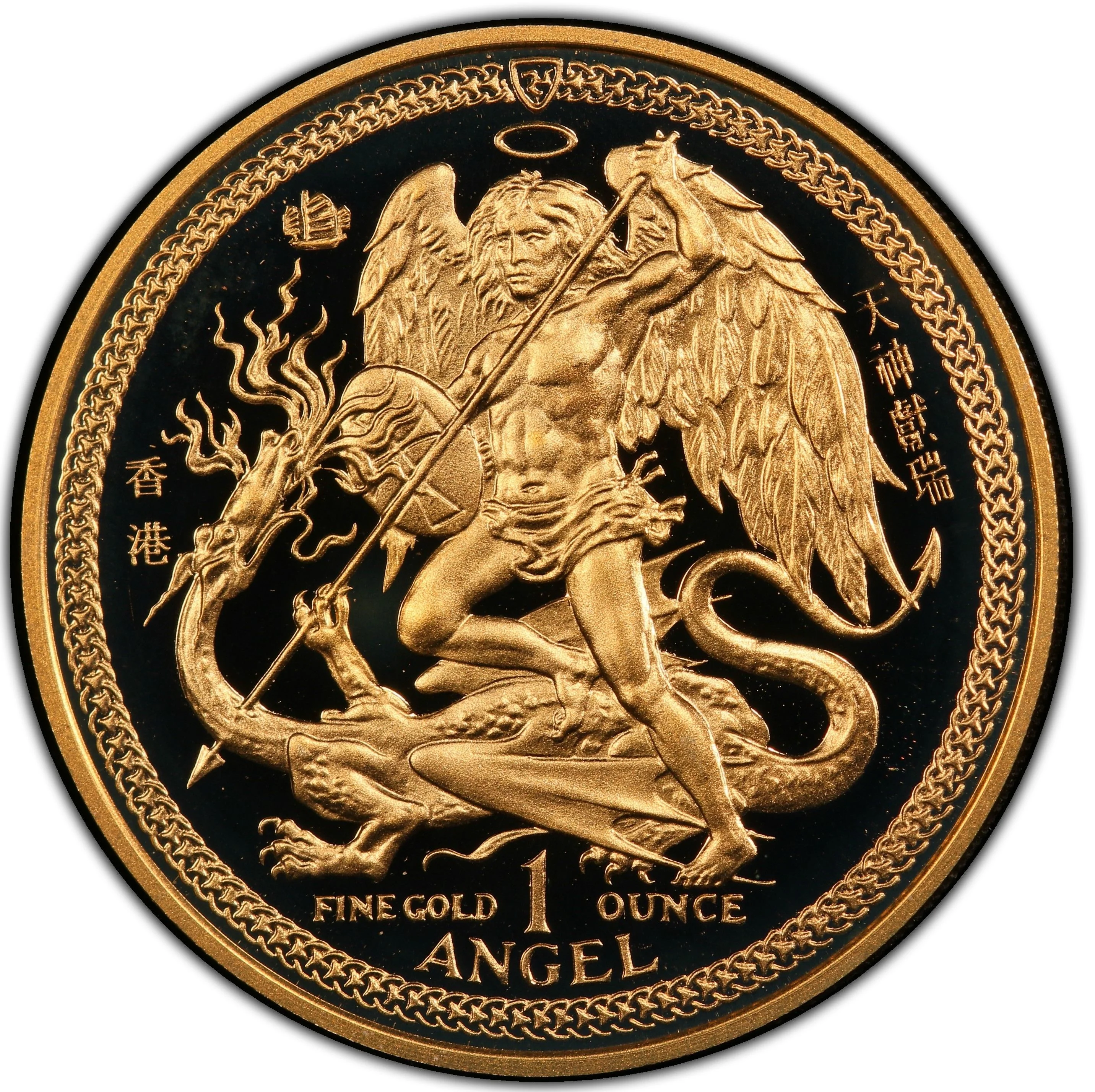
Commemoration: Archangel Michael
Context
Year: 1987
Country: British Crown dependencies
Issuer: Isle of Man
Ruler: Elizabeth II
Currency:
(since 1984)
Material
References
KM: #
Numista: #181775
Value
Bullion value: $4779.98
Obverse
Description:
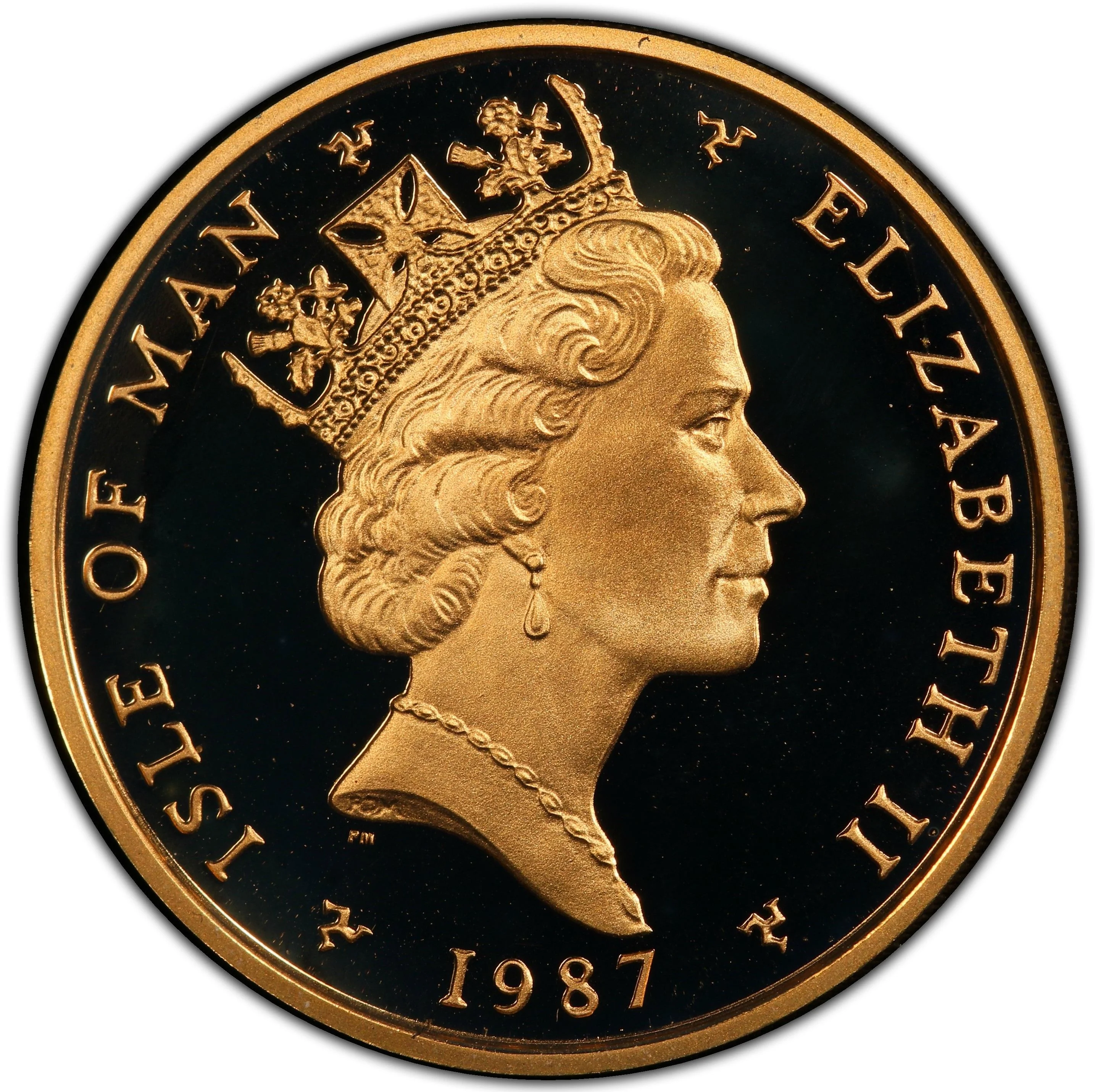
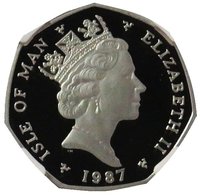
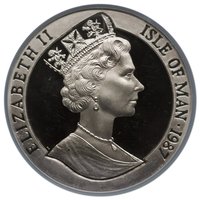
Queen Elizabeth II right-facing bust in George IV State Diadem, legend around, date below.
Inscription:
ISLE OF MAN ELIZABETH II
PM
1987
PM
1987
Translation:
ISLE OF MAN ELIZABETH II
PM
1987
PM
1987
Script: Latin
Language: English
Designer: Raphael David Maklouf
Reverse
Edge
Reeded
Categories
| Object> Armour |
| Person> Religious figure |
| Mythology> Fantastic animal |
| Object> Cold weapons |
Mints
| Name | Mark |
|---|---|
| Pobjoy Mint | (PM) |
Mintings
| Year | Mint Mark | Mintage | Quality | Collection |
|---|---|---|---|---|
| 1987 | PM | — | Proof |
Historical background
In 1987, the Isle of Man's currency situation was defined by its unique constitutional position as a British Crown Dependency, possessing its own legislative and fiscal autonomy while relying on the United Kingdom for defence and foreign affairs. This duality was reflected in its monetary system. The official currency was, and remains, sterling, with UK banknotes and coins circulating freely. However, the Isle of Man government, through its Treasury, also issued its own distinct series of pound sterling banknotes and coins (pounds and pence). These Manx issues were legal tender on the island but were not automatically accepted elsewhere in the British Isles, creating a practical need for currency exchange when travelling to the UK.
The year 1987 fell within a significant period of modernization for Manx currency. A new series of banknotes had been introduced in 1983, featuring a more secure design and iconic Manx imagery like the Manx Loaghtan sheep and the Three Legs of Man emblem. Concurrently, the Treasury was in the process of updating its coinage, having introduced new, smaller-sized £1 coins in 1983 to align with UK changes. This period solidified the island's practice of issuing its own legal tender that was pegged 1:1 with UK sterling, a system managed by the Isle of Man Bank (then a subsidiary of NatWest) which acted as the government's banker.
Economically, the late 1980s were a time of growth for the Isle of Man, driven by the expansion of its offshore financial services sector. A stable and credible currency, fully backed by sterling reserves held in London, was fundamental to this development. The 1987 currency arrangement provided both a symbol of national identity and the monetary stability required to attract international business and investment, effectively balancing political distinction with economic pragmatism within the wider British monetary sphere.
The year 1987 fell within a significant period of modernization for Manx currency. A new series of banknotes had been introduced in 1983, featuring a more secure design and iconic Manx imagery like the Manx Loaghtan sheep and the Three Legs of Man emblem. Concurrently, the Treasury was in the process of updating its coinage, having introduced new, smaller-sized £1 coins in 1983 to align with UK changes. This period solidified the island's practice of issuing its own legal tender that was pegged 1:1 with UK sterling, a system managed by the Isle of Man Bank (then a subsidiary of NatWest) which acted as the government's banker.
Economically, the late 1980s were a time of growth for the Isle of Man, driven by the expansion of its offshore financial services sector. A stable and credible currency, fully backed by sterling reserves held in London, was fundamental to this development. The 1987 currency arrangement provided both a symbol of national identity and the monetary stability required to attract international business and investment, effectively balancing political distinction with economic pragmatism within the wider British monetary sphere.
✨ Legendary