

Obverse
Description:
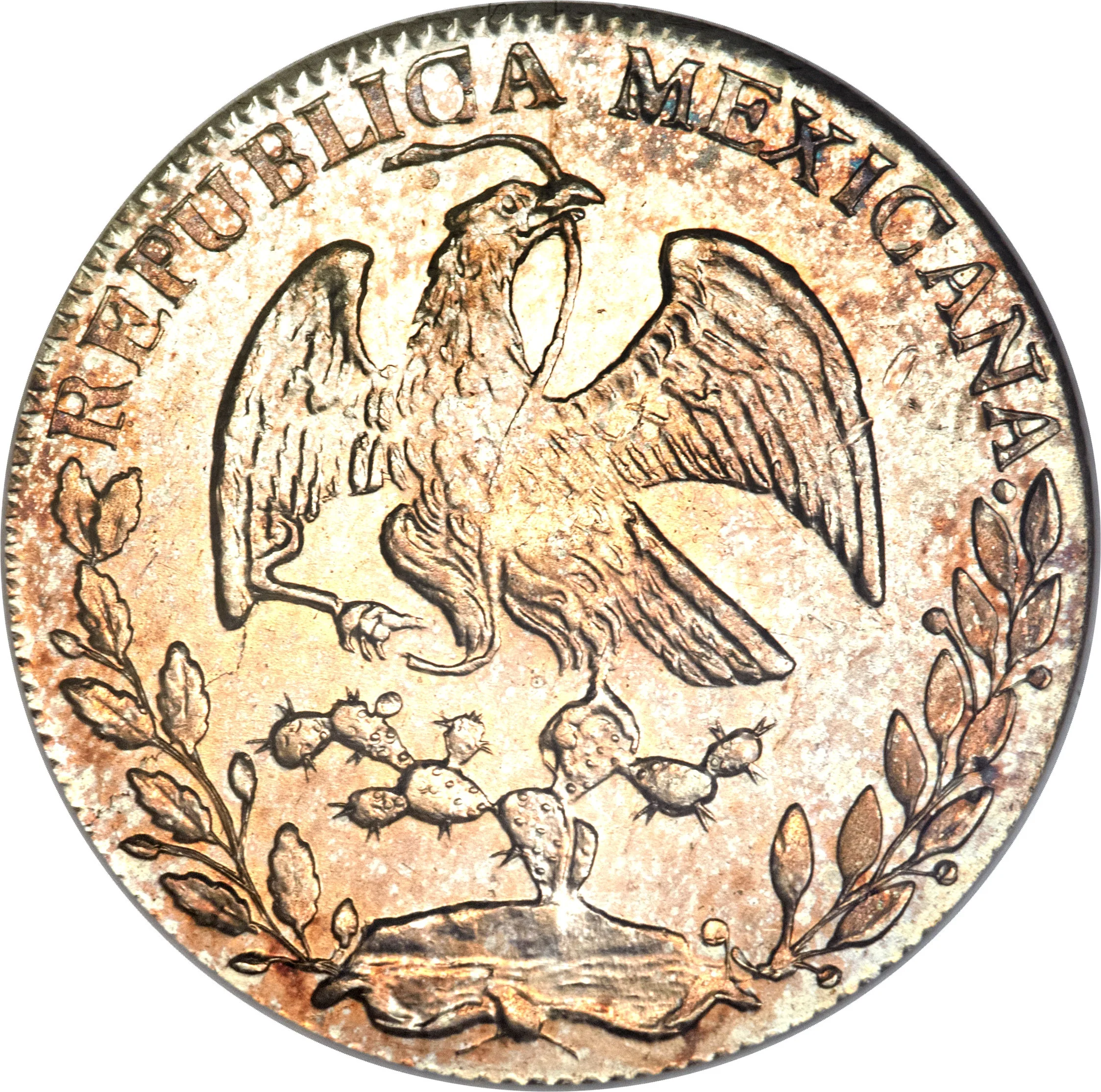
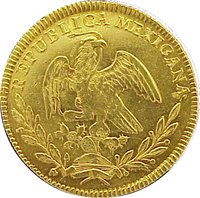
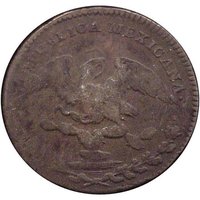
National coat of arms: an eagle perched on a cactus, gripping a snake in its beak. The cactus grows from a rock in a lake. A wreath of oak and laurel branches frames the bottom, with a legend across the top.
Inscription:
REPUBLICA MEXICANA
Translation:
Mexican Republic
Script: Latin
Language: Latin
Reverse
Edge
Reeded
Mints
| Name | Mark |
|---|---|
| Casa de Moneda de Culiacán | C |
| Real de Catorce | Ce |
| Guadalajara | Ga |
| Guadalupe y Calvo | GC |
| Casa de Moneda de Guanajuato | Go |
| Hermosillo | Ho |
| Mexican Mint | Mo |
| Oaxaca | O |
| San Luís Potosí | Pi |
| Casa de Moneda de Zacatecas | Zs |
Mintings
| Year | Mint Mark | Mintage | Quality | Collection |
|---|---|---|---|---|
| 1827 | Mo | — | ||
| 1830 | Zs | — | ||
| 1831 | Zs | — | ||
| 1832 | Zs | — | ||
| 1833 | Zs | — | ||
| 1834 | Zs | — | ||
| 1835 | Go | — | ||
| 1835 | Zs | — | ||
| 1836 | Go | — | ||
| 1836 | Zs | — | ||
| 1837 | Go | — | ||
| 1837 | Pi | — | ||
| 1837 | Zs | — | ||
| 1838 | Go | — | ||
| 1838 | Pi | — | ||
| 1838 | Zs | — | ||
| 1839 | Go | — | ||
| 1839 | Zs | — | ||
| 1840 | Go | — | ||
| 1840 | Zs | — | ||
| 1841 | Go | — | ||
| 1841 | Zs | — | ||
| 1842 | Zs | — | ||
| 1842 | Pi | — | ||
| 1842 | Go | — | ||
| 1843 | Ga | — | ||
| 1843 | Pi | — | ||
| 1843 | Go | — | ||
| 1843 | Zs | — | ||
| 1844 | Pi | — | ||
| 1844 | Zs | — | ||
| 1844 | Ga | — | ||
| 1844 | GC | — | ||
| 1844 | Go | — | ||
| 1845 | GC | — | ||
| 1845 | Ga | — | ||
| 1845 | Pi | — | ||
| 1845 | Zs | — | ||
| 1845 | Go | — | ||
| 1846 | C | — | ||
| 1846 | Ga | — | ||
| 1846 | GC | — | ||
| 1846 | Go | — | ||
| 1846 | Pi | — | ||
| 1846 | Zs | — | ||
| 1847 | Ga | — | ||
| 1847 | GC | — | ||
| 1847 | Go | — | ||
| 1847 | Pi | — | ||
| 1847 | Zs | — | ||
| 1848 | Ga | — | ||
| 1848 | Go | — | ||
| 1848 | Pi | — | ||
| 1848 | Zs | — | ||
| 1849 | Ga | — | ||
| 1849 | GC | — | ||
| 1849 | Go | — | ||
| 1849 | Pi | — | ||
| 1849 | Zs | — | ||
| 1850 | Go | — | ||
| 1850 | Mo | — | ||
| 1850 | Pi | — | ||
| 1850 | Zs | — | ||
| 1850 | GC | — | ||
| 1850 | C | — | ||
| 1850 | Ga | — | ||
| 1851 | Go | — | ||
| 1851 | Pi | — | ||
| 1851 | Zs | — | ||
| 1852 | C | — | ||
| 1852 | Ga | — | ||
| 1852 | Go | — | ||
| 1852 | Mo | — | ||
| 1852 | Pi | — | ||
| 1852 | Zs | — | ||
| 1853 | Go | — | ||
| 1853 | Pi | — | ||
| 1853 | Zs | — | ||
| 1854 | Mo | — | ||
| 1854 | Pi | — | ||
| 1854 | Zs | — | ||
| 1854 | Ga | — | ||
| 1854 | Go | — | ||
| 1855 | Go | — | ||
| 1855 | Mo | — | ||
| 1855 | Zs | — | ||
| 1855 | Ga | — | ||
| 1855 | Pi | — | ||
| 1856 | Ga | — | ||
| 1856 | Go | — | ||
| 1856 | Mo | — | ||
| 1856 | Pi | — | ||
| 1856 | Zs | — | ||
| 1857 | Go | — | ||
| 1857 | Pi | — | ||
| 1857 | Zs | — | ||
| 1857 | Ga | — | ||
| 1857 | C | — | ||
| 1858 | C | — | ||
| 1858 | Ga | — | ||
| 1858 | Go | — | ||
| 1858 | Pi | — | ||
| 1858 | Zs | — | ||
| 1859 | Pi | — | ||
| 1859 | Zs | — | ||
| 1859 | Ga | — | ||
| 1859 | Go | — | ||
| 1859 | Mo | — | ||
| 1860 | C | — | ||
| 1860 | Ga | — | ||
| 1860 | Go | — | ||
| 1860 | Pi | — | ||
| 1860 | Zs | — | ||
| 1861 | Go | — | ||
| 1861 | Ho | — | ||
| 1861 | Mo | — | ||
| 1861 | O | — | ||
| 1861 | Pi | — | ||
| 1861 | Zs | — | ||
| 1862 | Mo | — | ||
| 1862 | Pi | — | ||
| 1862 | Zs | — | ||
| 1862 | Go | — | ||
| 1863 | Ce | — | ||
| 1863 | Ga | — | ||
| 1863 | Pi | — | ||
| 1863 | Zs | — | ||
| 1863 | Mo | — | ||
| 1863 | Go | — | ||
| 1864 | Pi | — | ||
| 1864 | Zs | — | ||
| 1867 | Go | — | ||
| 1867 | Ho | — | ||
| 1867 | Mo | — | ||
| 1868 | Go | — | ||
| 1868 | Mo | — | ||
| 1868 | Pi | — | ||
| 1868 | Zs | — | ||
| 1869 | Pi | — | ||
| 1869 | Zs | — | ||
| 1870 | Go | — | ||
| 1870 | Zs | — |
Historical background
Following independence in 1821, Mexico inherited a chaotic and fragmented monetary system, a legacy of colonial rule and the devastating war. The new nation lacked a unified currency, with a bewildering array of coins circulating simultaneously: old Spanish colonial pieces (like pesos, reales, and the ubiquitous "pieces of eight"), coins minted by insurgent leaders during the conflict, and a significant influx of foreign silver and gold coins, particularly from Peru, Bolivia, and Great Britain. This created a complex environment where the value of money was not standardized, leading to confusion in commerce and facilitating fraud.
By 1827, the government of the First Mexican Republic was actively attempting to assert monetary sovereignty and impose order. The foundational step had been the creation of the Mexican peso in 1823, a silver coin bearing the national emblem (the iconic "Mexican Eagle"). However, the process of replacing the old mixed currency was slow. The scarcity of small-denomination coins for everyday transactions was a persistent problem, hindering the local economy. Furthermore, the young republic, burdened by massive debt and lacking credit, struggled to establish a stable paper currency or a central bank, leaving the heavy, physical silver peso as the primary instrument of both domestic and international trade.
Consequently, Mexico in 1827 existed in a transitional monetary state. While it had successfully introduced its own prestigious silver coinage, which would become a global trade standard, it had not yet fully consolidated its currency system at home. The economy operated on a de facto silver standard, but the circulation remained a messy hybrid of old and new, domestic and foreign. This instability reflected the broader challenges of the post-independence period, where political turmoil and economic weakness prevented the swift implementation of a coherent national financial policy.
By 1827, the government of the First Mexican Republic was actively attempting to assert monetary sovereignty and impose order. The foundational step had been the creation of the Mexican peso in 1823, a silver coin bearing the national emblem (the iconic "Mexican Eagle"). However, the process of replacing the old mixed currency was slow. The scarcity of small-denomination coins for everyday transactions was a persistent problem, hindering the local economy. Furthermore, the young republic, burdened by massive debt and lacking credit, struggled to establish a stable paper currency or a central bank, leaving the heavy, physical silver peso as the primary instrument of both domestic and international trade.
Consequently, Mexico in 1827 existed in a transitional monetary state. While it had successfully introduced its own prestigious silver coinage, which would become a global trade standard, it had not yet fully consolidated its currency system at home. The economy operated on a de facto silver standard, but the circulation remained a messy hybrid of old and new, domestic and foreign. This instability reflected the broader challenges of the post-independence period, where political turmoil and economic weakness prevented the swift implementation of a coherent national financial policy.
🌟 Limited