

100 rupees (Dr Vikram Sarabhai) – India
Add to wishlist
Non-circulating coins
Commemoration: Dr Vikram Sarabhai Birth Centenary
India
Material
References
Numista: #181087
Value
Exchange value: 100 INR
Bullion value: $42.80
Inflation-adjusted value: 142.03 INR
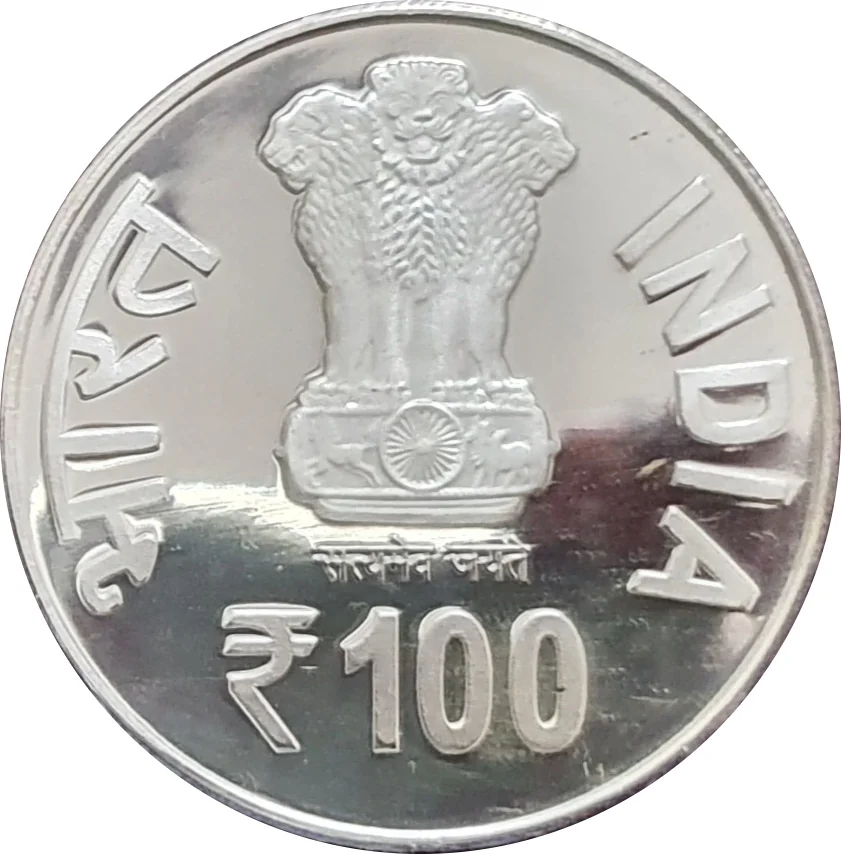
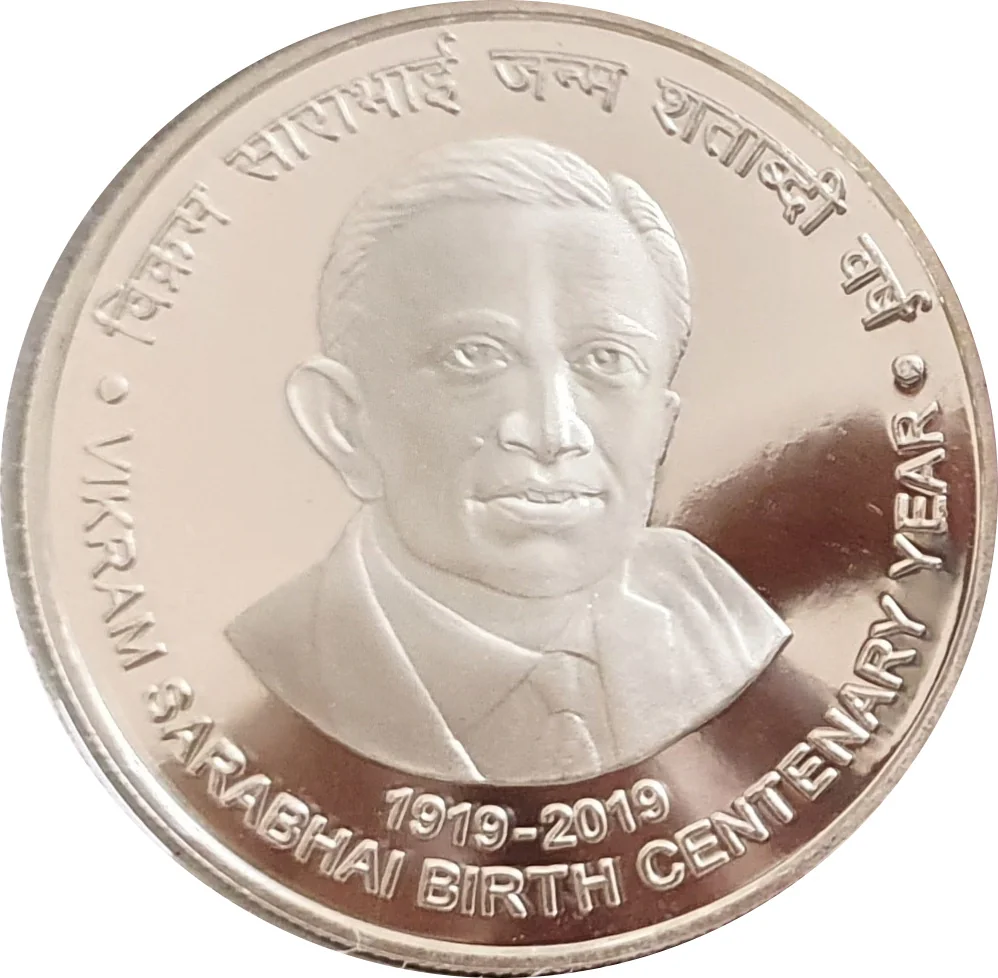
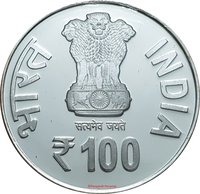
Obverse
Reverse
Description:
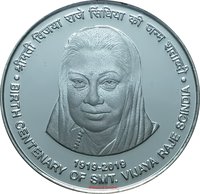
Dr. Vikram Sarabhai bust
Inscription:
Dr Vikram Sarabhai Birth Centenary Year
1919 - 2019
1919 - 2019
Edge
Reeded with 200 Serrations
Categories
| Event> Birth anniversary |
| Person> Scientist |
Mintings
| Year | Mint Mark | Mintage | Quality | Collection |
|---|---|---|---|---|
| 2019 | — | — | ||
| 2019 | — | — | Proof |
Historical background
In 2019, India's currency situation was characterized by relative stability and ongoing efforts to manage liquidity following the significant structural shocks of the previous years, most notably the 2016 demonetization. The Indian Rupee (INR) traded in a managed float, with the Reserve Bank of India (RBI) actively intervening in foreign exchange markets to curb excessive volatility. Throughout the year, the rupee faced moderate depreciation pressure, averaging around 71 against the US dollar, influenced by global factors like rising oil prices and persistent trade deficits, alongside domestic challenges such as a slowdown in economic growth and some stress in the non-banking financial company (NBFC) sector.
A key focus for monetary authorities was addressing the liquidity crunch that had emerged in the financial system. The RBI undertook several measures, including open market operations (OMOs) and a reduction in the repo rate by 135 basis points over the year in a shift to an accommodative stance. This aimed to stimulate credit growth and support the economy. However, the transmission of these rate cuts to end borrowers remained inefficient, limiting their full impact. The government also continued to promote digital payments and financial inclusion as part of a broader strategy to formalize the economy.
Overall, 2019 was a year of cautious management rather than dramatic reform. The currency market was stable but watchful, with the RBI balancing objectives of controlling inflation, supporting growth, and maintaining foreign exchange reserves. The period set the stage for the more profound economic upheaval that would follow in early 2020 with the onset of the COVID-19 pandemic, which would necessitate a new set of emergency monetary and fiscal responses.
A key focus for monetary authorities was addressing the liquidity crunch that had emerged in the financial system. The RBI undertook several measures, including open market operations (OMOs) and a reduction in the repo rate by 135 basis points over the year in a shift to an accommodative stance. This aimed to stimulate credit growth and support the economy. However, the transmission of these rate cuts to end borrowers remained inefficient, limiting their full impact. The government also continued to promote digital payments and financial inclusion as part of a broader strategy to formalize the economy.
Overall, 2019 was a year of cautious management rather than dramatic reform. The currency market was stable but watchful, with the RBI balancing objectives of controlling inflation, supporting growth, and maintaining foreign exchange reserves. The period set the stage for the more profound economic upheaval that would follow in early 2020 with the onset of the COVID-19 pandemic, which would necessitate a new set of emergency monetary and fiscal responses.
💎 Very Rare