

2 manat (Neutrality) – Turkmenistan
Add to wishlist
Non-circulating coins
Commemoration: 15th Anniversary of Neutrality
Turkmenistan
Context
Material
References
KM: #
Numista: #101608
Value
Exchange value: 2 TMT
Bullion value: $1128.77
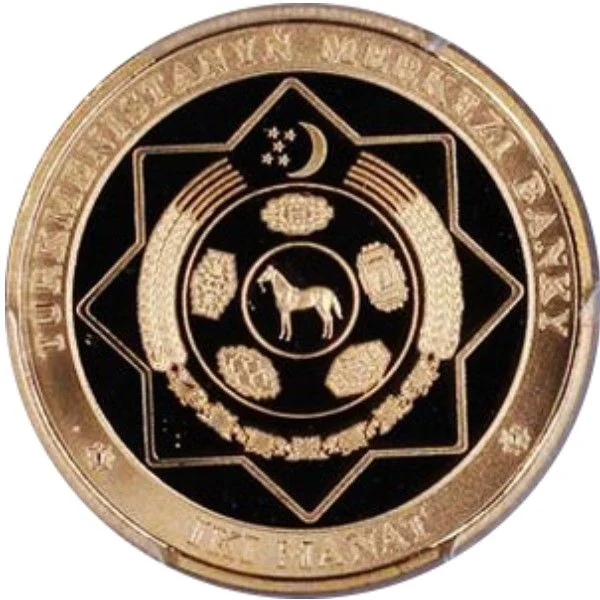
Obverse
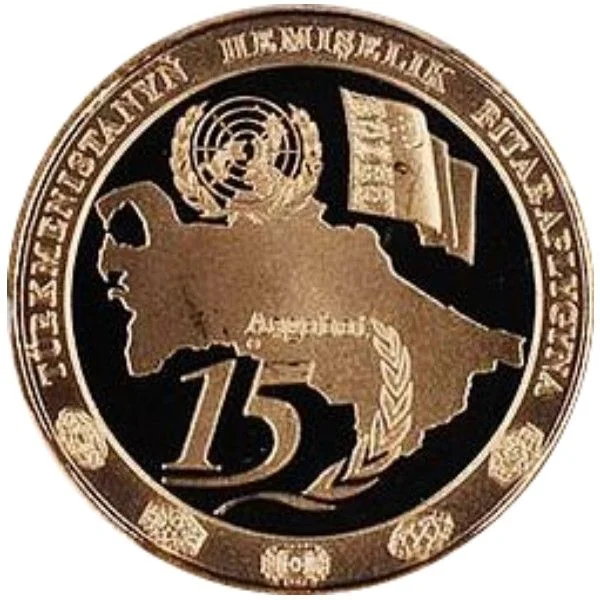
Reverse
Edge
Reeded
Mints
| Name | Mark |
|---|---|
| Royal Mint | — |
Mintings
| Year | Mint Mark | Mintage | Quality | Collection |
|---|---|---|---|---|
| 2010 | — | 100 |
Historical background
In 2010, Turkmenistan operated under a highly controlled and dual-currency system characteristic of a closed, state-managed economy. The official exchange rate of the national currency, the manat (TMT), was fixed by the government at an artificially strong rate of 2.85 TMT to the US dollar. This rate, however, was largely inaccessible to the general population and used primarily for state transactions and reporting. The reality for most citizens and businesses was the pervasive black market, where the US dollar traded at a rate roughly four to five times weaker, around 12-14 TMT per dollar, reflecting the currency's true market value and the country's limited foreign exchange reserves.
This significant disparity created severe economic distortions. It fostered widespread corruption, as access to dollars at the official rate became a privilege for the connected elite. For ordinary Turkmen, the black market rate dictated the real cost of imported goods, contributing to high inflation and reducing purchasing power. The government maintained strict currency controls, limiting the amount of foreign currency citizens could legally obtain for travel or commerce, thereby reinforcing the black market's necessity for basic economic functions.
The situation in 2010 was a legacy of President Saparmurat Niyazov's era and was cautiously maintained under his successor, Gurbanguly Berdimuhamedow. The government avoided a sudden devaluation, fearing social unrest, but the unsustainable gap between the official and black-market rates signaled underlying economic weaknesses, including reliance on gas exports and a non-convertible currency. This rigid system acted as a major barrier to foreign investment and transparent trade, isolating the Turkmen economy and setting the stage for future, painful monetary reforms that would eventually come later in the decade.
This significant disparity created severe economic distortions. It fostered widespread corruption, as access to dollars at the official rate became a privilege for the connected elite. For ordinary Turkmen, the black market rate dictated the real cost of imported goods, contributing to high inflation and reducing purchasing power. The government maintained strict currency controls, limiting the amount of foreign currency citizens could legally obtain for travel or commerce, thereby reinforcing the black market's necessity for basic economic functions.
The situation in 2010 was a legacy of President Saparmurat Niyazov's era and was cautiously maintained under his successor, Gurbanguly Berdimuhamedow. The government avoided a sudden devaluation, fearing social unrest, but the unsustainable gap between the official and black-market rates signaled underlying economic weaknesses, including reliance on gas exports and a non-convertible currency. This rigid system acted as a major barrier to foreign investment and transparent trade, isolating the Turkmen economy and setting the stage for future, painful monetary reforms that would eventually come later in the decade.

✨ Legendary