

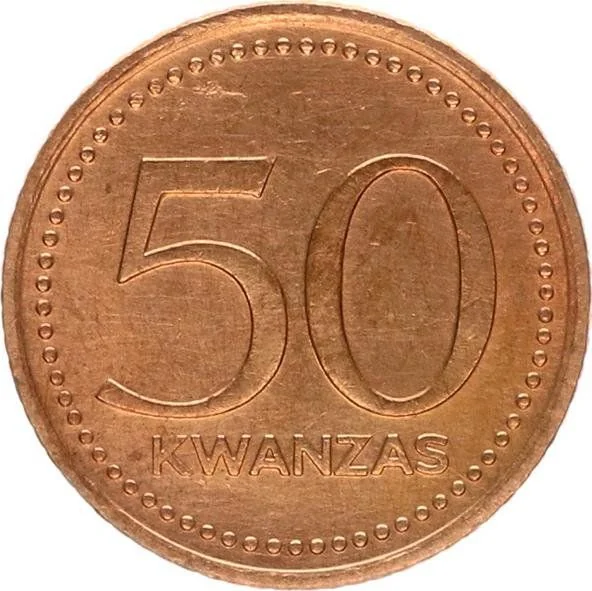
50 kwanzas – Angola
Add to wishlist
Angola
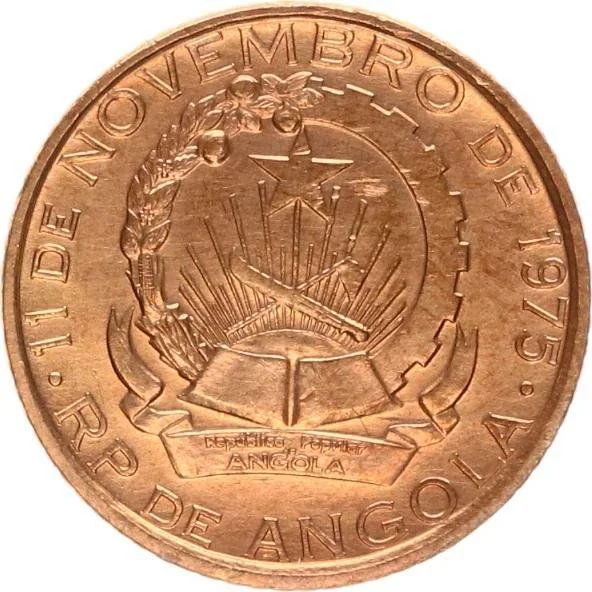
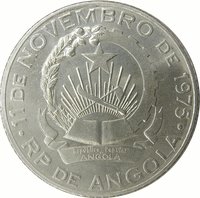
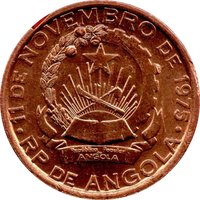
Obverse
Description:
National arms in legend.
Inscription:
11 DE NOVEMBRO 1975
· RP DE ANGOLA ·
Republica Popular
de
ANGOLA
· RP DE ANGOLA ·
Republica Popular
de
ANGOLA
Translation:
NOVEMBER 11, 1975
· PEOPLE'S REPUBLIC OF ANGOLA ·
People's Republic
of
ANGOLA
· PEOPLE'S REPUBLIC OF ANGOLA ·
People's Republic
of
ANGOLA
Script: Latin
Languages: Portuguese, Spanish
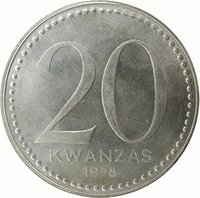
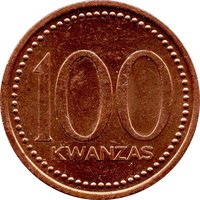
Reverse
Edge
Reeded
Categories
| Object> Cold weapons |
| Symbols> Coat of Arms |
| Symbol> Sun |
Mints
| Name | Mark |
|---|---|
| Kings Norton Metal Company | — |
Mintings
| Year | Mint Mark | Mintage | Quality | Collection |
|---|---|---|---|---|
| — | — | — |
Historical background
In 1978, Angola’s currency situation was fundamentally shaped by the political and economic turmoil following independence from Portugal in 1975. The country was embroiled in a devastating civil war between the Marxist MPLA government, based in Luanda, and UNITA rebels, supported by South Africa and the United States. This conflict severely disrupted agriculture, industry, and infrastructure, crippling the formal economy and leading to widespread scarcity of goods. The national currency, the kwanza (AOK), introduced in 1977 to replace the angolares, operated within a strict, state-controlled socialist framework, but its stability was undermined by the war's economic devastation.
Economically, Angola in 1978 was characterized by a stark duality. The formal, government-controlled sector relied on a fixed exchange rate and centralized planning, with the kwanza's value set administratively rather than by the market. However, this official system was under immense pressure due to collapsing production, reliance on expensive imports for basic goods, and dwindling foreign reserves. Alongside it, a vast parallel black market for currency and goods flourished, where the kwanza traded at a fraction of its official value. This black market became essential for ordinary Angolans to access scarce necessities, effectively creating a two-tier economy.
Despite these severe internal pressures, a crucial factor preventing total monetary collapse was the nascent offshore oil industry. Operated by Western companies like Gulf Oil, petroleum production from the Cabinda exclave provided the MPLA government with vital hard currency earnings. These dollar revenues, which flowed directly to the state, financed essential imports and military expenditures, allowing the government to maintain a semblance of financial functionality. Thus, in 1978, the Angolan kwanza existed in a precarious state: weakened by war and scarcity on the domestic front, but paradoxically propped up by the burgeoning oil wealth that would later come to dominate the national economy.
Economically, Angola in 1978 was characterized by a stark duality. The formal, government-controlled sector relied on a fixed exchange rate and centralized planning, with the kwanza's value set administratively rather than by the market. However, this official system was under immense pressure due to collapsing production, reliance on expensive imports for basic goods, and dwindling foreign reserves. Alongside it, a vast parallel black market for currency and goods flourished, where the kwanza traded at a fraction of its official value. This black market became essential for ordinary Angolans to access scarce necessities, effectively creating a two-tier economy.
Despite these severe internal pressures, a crucial factor preventing total monetary collapse was the nascent offshore oil industry. Operated by Western companies like Gulf Oil, petroleum production from the Cabinda exclave provided the MPLA government with vital hard currency earnings. These dollar revenues, which flowed directly to the state, financed essential imports and military expenditures, allowing the government to maintain a semblance of financial functionality. Thus, in 1978, the Angolan kwanza existed in a precarious state: weakened by war and scarcity on the domestic front, but paradoxically propped up by the burgeoning oil wealth that would later come to dominate the national economy.
🌟 Uncommon