

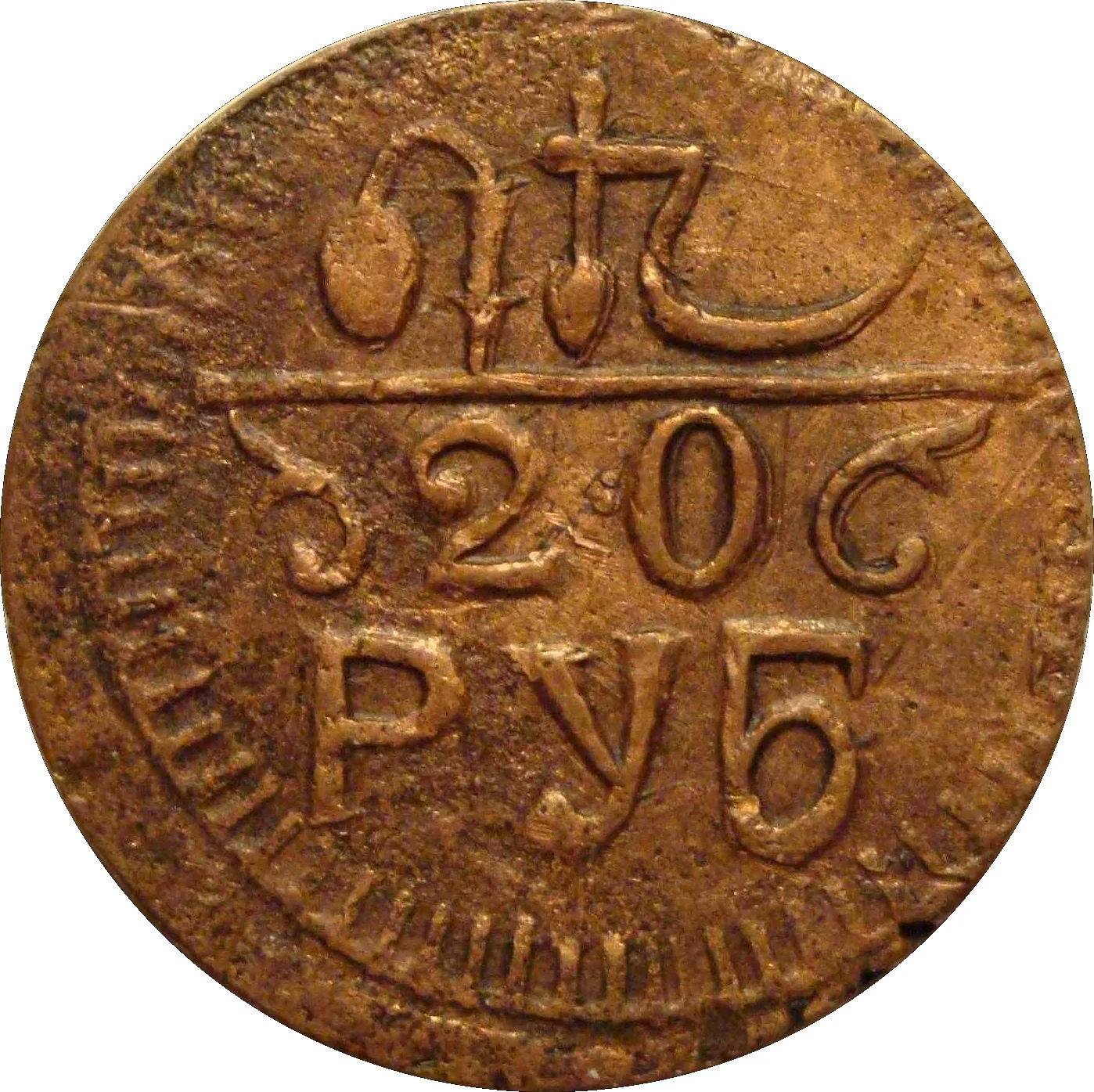
20 Rubles – Khorezm People's Soviet Republic
Context
Years: 1920–1921
Country: Central Asia
Issuer: Khorezm People's Soviet Republic
Period:
(1920—1924)
Currency:
(1920—1925)
Demonetized: Yes
Material
Diameter: 26 mm
Weight: 9.6 g
Thickness: 2 mm
Shape: Irregular round
Composition: Bronze
Magnetic: No
Alignment: Medal alignment
flip
References
Y: #Click to copy to clipboard15.1
Numista: #17985
Obverse
Description:
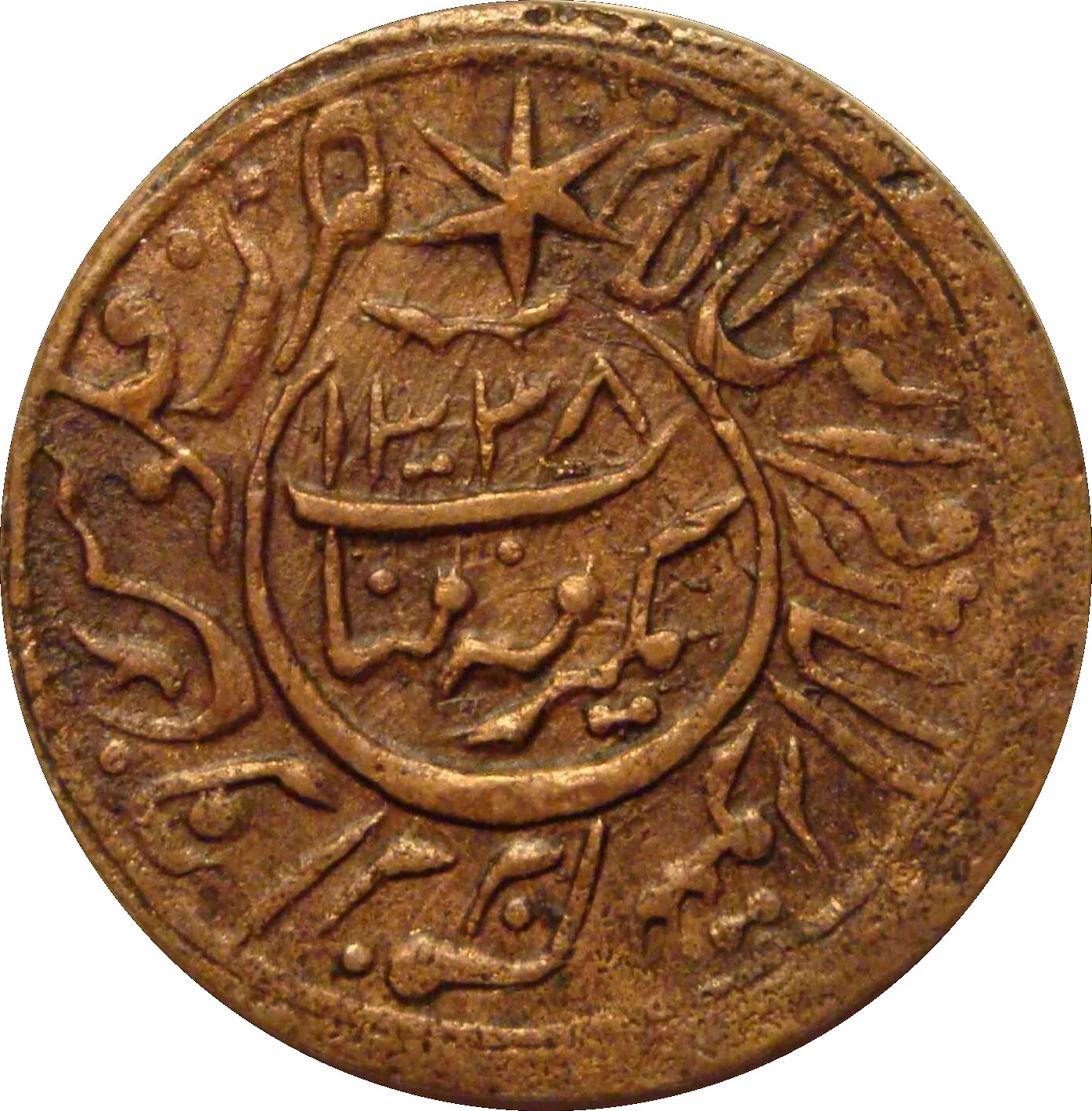
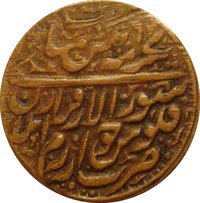
Uzbek inscription in Arabic script. Transcription: "zarb fulus Khwarezm shuralar qarari ilan" and "Twenty Manats".
Inscription:
ضرب فلوس خوارزم شورالار قرارى الان
١٣٣٨
يکرمه منات
١٣٣٨
يکرمه منات
Translation:
Struck at the capital of the Khwarezmian Republic
1338
One Rial Manat
1338
One Rial Manat
Script: Arabic
Reverse
Edge
Categories
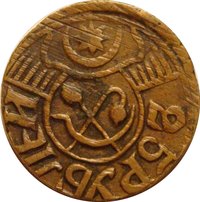
| Symbols> Coat of Arms |
Mintings
| Year | Mint Mark | Mintage | Quality | Collection |
|---|---|---|---|---|
| 1920 | — | — | ||
| 1921 | — | — |
Historical background
The currency situation in the Khorezm People's Soviet Republic (KPSR) in 1920 was one of profound instability, emerging directly from the collapse of its predecessor state. The Khanate of Khiva, which the KPSR replaced in April 1920, had a chronically weak monetary system heavily reliant on the Imperial Russian ruble and a debased silver coinage known as the tenga. The turmoil of World War I, the Russian Civil War, and the Basmachi resistance led to severe inflation and a scarcity of reliable currency, leaving the new Soviet republic with a fractured and mistrusted monetary base as it attempted to establish its authority.
In this vacuum, a chaotic multiplicity of currencies circulated simultaneously. Old Imperial rubles, various issues of "White" Russian rubles (like those from Kolchak or Denikin), and even Tsarist gold coins were used alongside the local tenga. Most significantly, the monetary sphere was dominated by the rapidly depreciating paper rubles issued in vast quantities by the Russian Soviet government (the sovznaki), which flooded into Khorezm as the Red Army consolidated its influence. This created a classic hyperinflationary environment where the value of money eroded daily, crippling trade and ordinary commerce.
The KPSR government, under Soviet guidance, recognized the need for monetary reform but lacked the resources or full sovereignty to implement a stable, independent currency in 1920. Initial efforts focused on attempting to regulate the exchange rates between the myriad of circulating notes and coins, but these were largely ineffective against the tide of inflation from Russia. Therefore, the currency situation remained unresolved throughout the year, serving as a significant obstacle to economic recovery and effectively tying Khorezm's financial fate directly to the turbulent monetary policy of the Russian SFSR.
In this vacuum, a chaotic multiplicity of currencies circulated simultaneously. Old Imperial rubles, various issues of "White" Russian rubles (like those from Kolchak or Denikin), and even Tsarist gold coins were used alongside the local tenga. Most significantly, the monetary sphere was dominated by the rapidly depreciating paper rubles issued in vast quantities by the Russian Soviet government (the sovznaki), which flooded into Khorezm as the Red Army consolidated its influence. This created a classic hyperinflationary environment where the value of money eroded daily, crippling trade and ordinary commerce.
The KPSR government, under Soviet guidance, recognized the need for monetary reform but lacked the resources or full sovereignty to implement a stable, independent currency in 1920. Initial efforts focused on attempting to regulate the exchange rates between the myriad of circulating notes and coins, but these were largely ineffective against the tide of inflation from Russia. Therefore, the currency situation remained unresolved throughout the year, serving as a significant obstacle to economic recovery and effectively tying Khorezm's financial fate directly to the turbulent monetary policy of the Russian SFSR.
💎 Extremely Rare