

20 cents – South Africa
Add to wishlist
Circulating commemorative coins
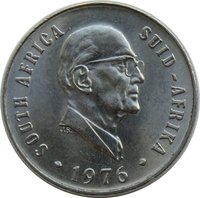
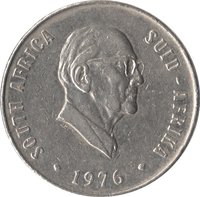
Commemoration: The end of Jacobus Johannes Fouche's presidency
South Africa
Context
Year: 1976
Issuer: South Africa
Period:
(since 1961)
Currency:
(since 1961)
Total mintage: 18,847,000
Material
References
KM: #
Numista: #1793
Value
Exchange value: 0.20 ZAR
Inflation-adjusted value: 11.23 ZAR
Obverse
Description:
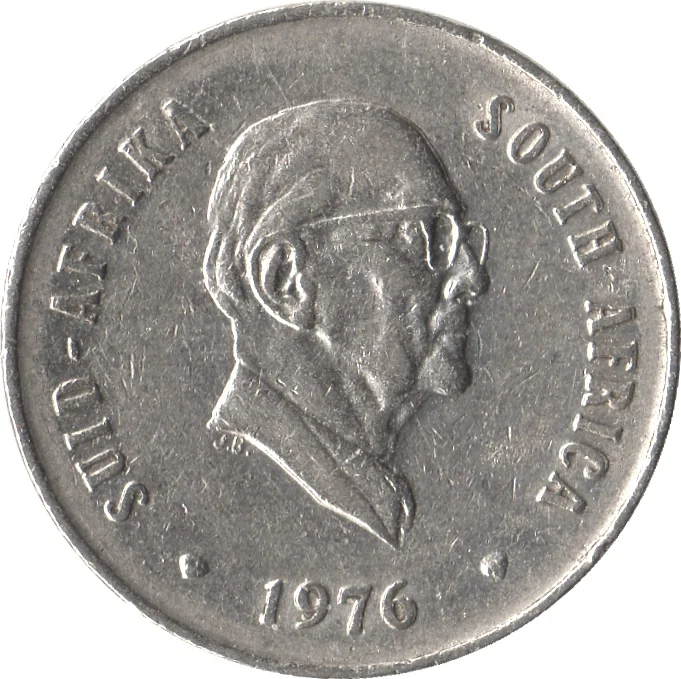
Portrait of Jacobus Johannes "Jimmy" Fouché (1898–1980), President of South Africa from 1968 to 1975.
Inscription:
SUID-AFRIKA
SOUTH AFRICA
1976 J.B.
SOUTH AFRICA
1976 J.B.
Script: Latin
Engraver: Jean Baptiste Buisset
Reverse
Description:
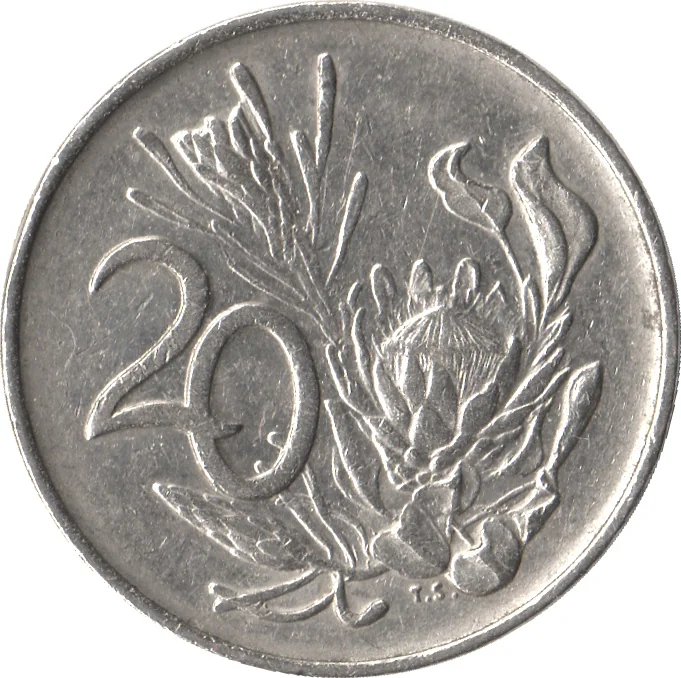
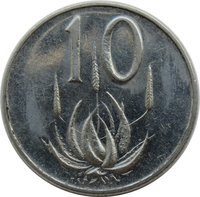
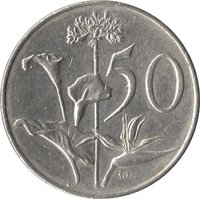
South Africa's national flower, the King Protea.
Inscription:
20 T.S.
Script: Latin
Engraver: Tommy Sasseen
Edge
Plain
Categories
| Person> Politician |
| Plants> Flower |
Mintings
| Year | Mint Mark | Mintage | Quality | Collection |
|---|---|---|---|---|
| 1976 | — | 18,826,000 | ||
| 1976 | — | 21,000 | Proof |
Historical background
In 1976, South Africa's currency situation was fundamentally shaped by the political and economic pressures of the apartheid regime. The country operated under a system of financial sanctions and isolation, which limited foreign investment and access to international capital markets. Domestically, the economy was strained by the enormous cost of maintaining the apartheid state—funding the security apparatus, the bureaucracy of racial separation, and the inefficient, state-owned enterprises. Despite these challenges, the South African Rand (ZAR) was still considered relatively strong for a developing economy, partly due to the country's vast mineral wealth, particularly gold, which provided a crucial export revenue stream and a psychological link to a stable store of value.
However, this apparent stability was fragile and faced a severe external shock in 1976. The price of gold, a critical determinant of South Africa's economic health, experienced significant volatility after reaching a peak in late 1974. A declining gold price throughout much of 1975 and 1976 put substantial pressure on the country's balance of payments and reduced the inflow of foreign exchange. This economic vulnerability coincided with the political explosion of the Soweto Uprising in June 1976, when nationwide protests against the apartheid government led to a violent crackdown. The international outrage that followed further eroded investor confidence, triggering capital flight and increasing the strain on the Rand.
Consequently, the South African Reserve Bank was forced to take decisive action to defend the currency. In September 1976, it implemented a two-tier exchange rate system: a commercial Rand for current account transactions and a financial Rand (or "blocked Rand") for capital movements. This mechanism was designed to control the outflow of capital by separating investment flows from trade, effectively devaluing the financial Rand to discourage the flight of funds while attempting to shield the trade balance. Thus, by the end of 1976, the currency landscape was defined by this new, complex system—a direct response to the twin crises of a falling gold price and the profound political unrest that signaled the deepening instability of the apartheid economy.
However, this apparent stability was fragile and faced a severe external shock in 1976. The price of gold, a critical determinant of South Africa's economic health, experienced significant volatility after reaching a peak in late 1974. A declining gold price throughout much of 1975 and 1976 put substantial pressure on the country's balance of payments and reduced the inflow of foreign exchange. This economic vulnerability coincided with the political explosion of the Soweto Uprising in June 1976, when nationwide protests against the apartheid government led to a violent crackdown. The international outrage that followed further eroded investor confidence, triggering capital flight and increasing the strain on the Rand.
Consequently, the South African Reserve Bank was forced to take decisive action to defend the currency. In September 1976, it implemented a two-tier exchange rate system: a commercial Rand for current account transactions and a financial Rand (or "blocked Rand") for capital movements. This mechanism was designed to control the outflow of capital by separating investment flows from trade, effectively devaluing the financial Rand to discourage the flight of funds while attempting to shield the trade balance. Thus, by the end of 1976, the currency landscape was defined by this new, complex system—a direct response to the twin crises of a falling gold price and the profound political unrest that signaled the deepening instability of the apartheid economy.
🌱 Very Common