

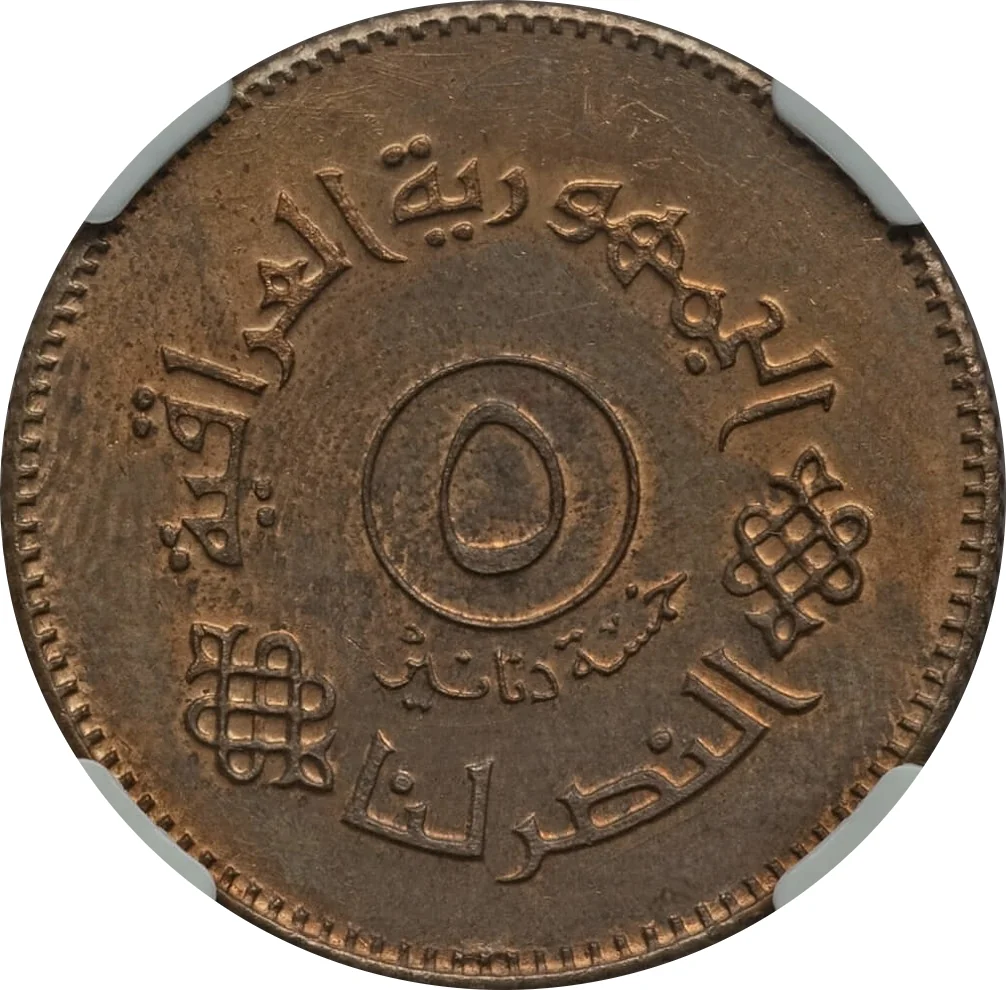
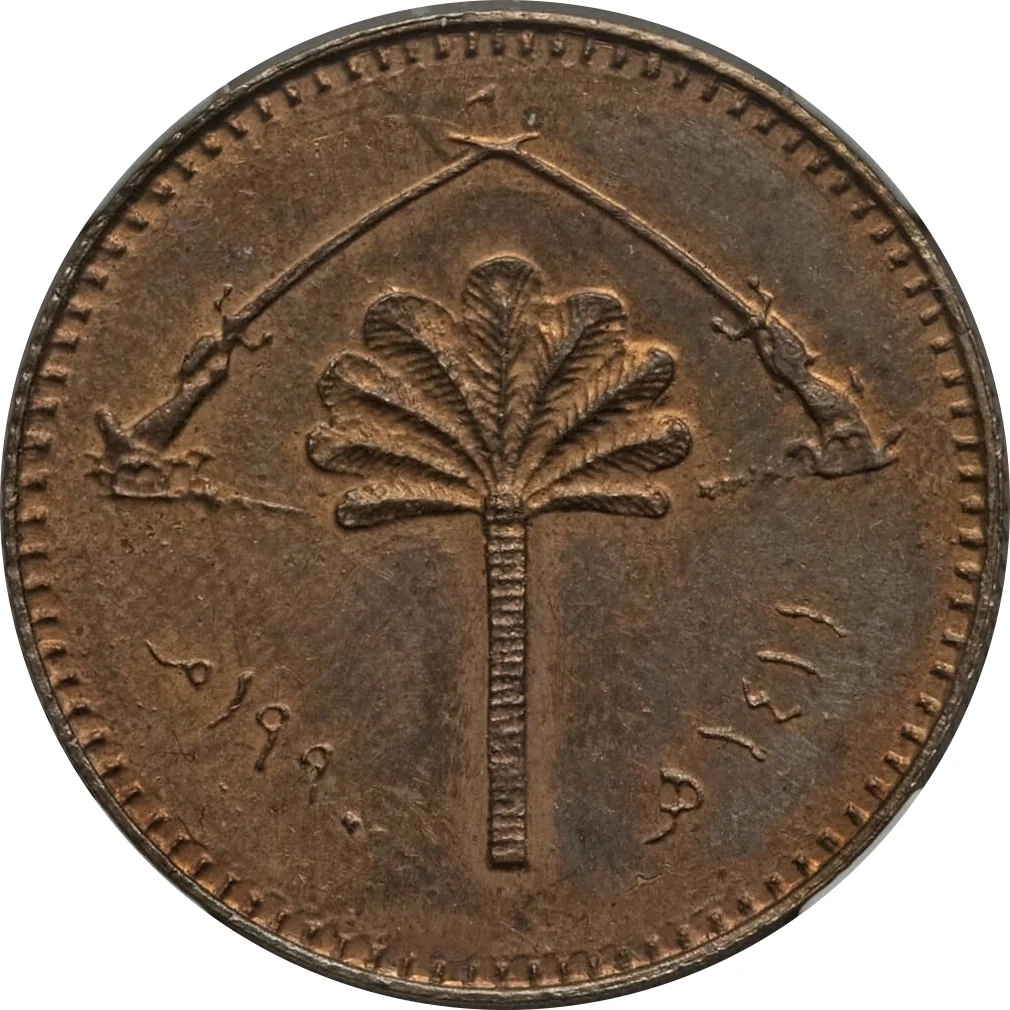
5 dinars – Iraq
Add to wishlist
Iraq
Context
Year: 1990
Islamic (Hijri) Year:: 1411
Issuer: Iraq
Period:
(since 1958)
Currency:
(since 1931)
Demonetized: Yes
Material
References
KM: #
Numista: #107047
Value
Exchange value: 5 IQD
Obverse
Reverse
Edge
Mints
| Name | Mark |
|---|---|
| Sudan Mint | — |
Mintings
| Year | Mint Mark | Mintage | Quality | Collection |
|---|---|---|---|---|
| 1990 | — | — |
Historical background
In 1990, Iraq's currency situation was a direct consequence of its disastrous war with Iran (1980-1988). To finance the protracted conflict, Saddam Hussein's regime abandoned fiscal prudence, resorting to massive borrowing from foreign creditors and Gulf Arab states, and dramatically increasing domestic money supply. This led to severe inflation, a depletion of foreign currency reserves, and a crushing debt burden estimated at over $80 billion. By the war's end, the Iraqi dinar, once a strong currency, was significantly weakened, and the economy was entirely geared toward military output, leaving civilian sectors neglected and dependent on imports.
The situation deteriorated catastrophically following Iraq's invasion of Kuwait in August 1990. The United Nations Security Council responded with comprehensive Resolution 661, imposing strict economic sanctions that included a full financial and trade embargo. This action severed Iraq from the global financial system, froze its foreign assets, and made the Iraqi dinar virtually inconvertible internationally. Overnight, the country lost its primary source of revenue—oil exports—plunging from a relatively wealthy state into economic isolation. The dinar began a rapid devaluation on black markets as goods became scarce.
Internally, the sanctions created a dual-currency reality. While the old, pre-1990 "Swiss print" dinar notes remained in circulation and retained some value due to their quality, the government was forced to print vast quantities of new, inferior-quality banknotes to finance its operations amid a budget crisis. This unchecked printing, combined with a collapsed import economy and hyperinflation, led to a dramatic loss of public confidence in the currency. Thus, by the close of 1990, Iraq's monetary system was crippled: isolated internationally, unstable domestically, and foreshadowing a deeper humanitarian and economic crisis in the years to come.
The situation deteriorated catastrophically following Iraq's invasion of Kuwait in August 1990. The United Nations Security Council responded with comprehensive Resolution 661, imposing strict economic sanctions that included a full financial and trade embargo. This action severed Iraq from the global financial system, froze its foreign assets, and made the Iraqi dinar virtually inconvertible internationally. Overnight, the country lost its primary source of revenue—oil exports—plunging from a relatively wealthy state into economic isolation. The dinar began a rapid devaluation on black markets as goods became scarce.
Internally, the sanctions created a dual-currency reality. While the old, pre-1990 "Swiss print" dinar notes remained in circulation and retained some value due to their quality, the government was forced to print vast quantities of new, inferior-quality banknotes to finance its operations amid a budget crisis. This unchecked printing, combined with a collapsed import economy and hyperinflation, led to a dramatic loss of public confidence in the currency. Thus, by the close of 1990, Iraq's monetary system was crippled: isolated internationally, unstable domestically, and foreshadowing a deeper humanitarian and economic crisis in the years to come.
✨ Legendary