

20 Fen – Kwangtung Province
China
Context
Years: 1909–1911
Country: China 
Issuer: Kwangtung Province
Ruler: Xuantong
Currency:
(1900—1949)
Demonetized: Yes
Material
References
Y: #Click to copy to clipboard205
Numista: #17772
Value
Bullion value: $12.45
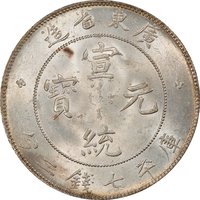
Obverse
Description:
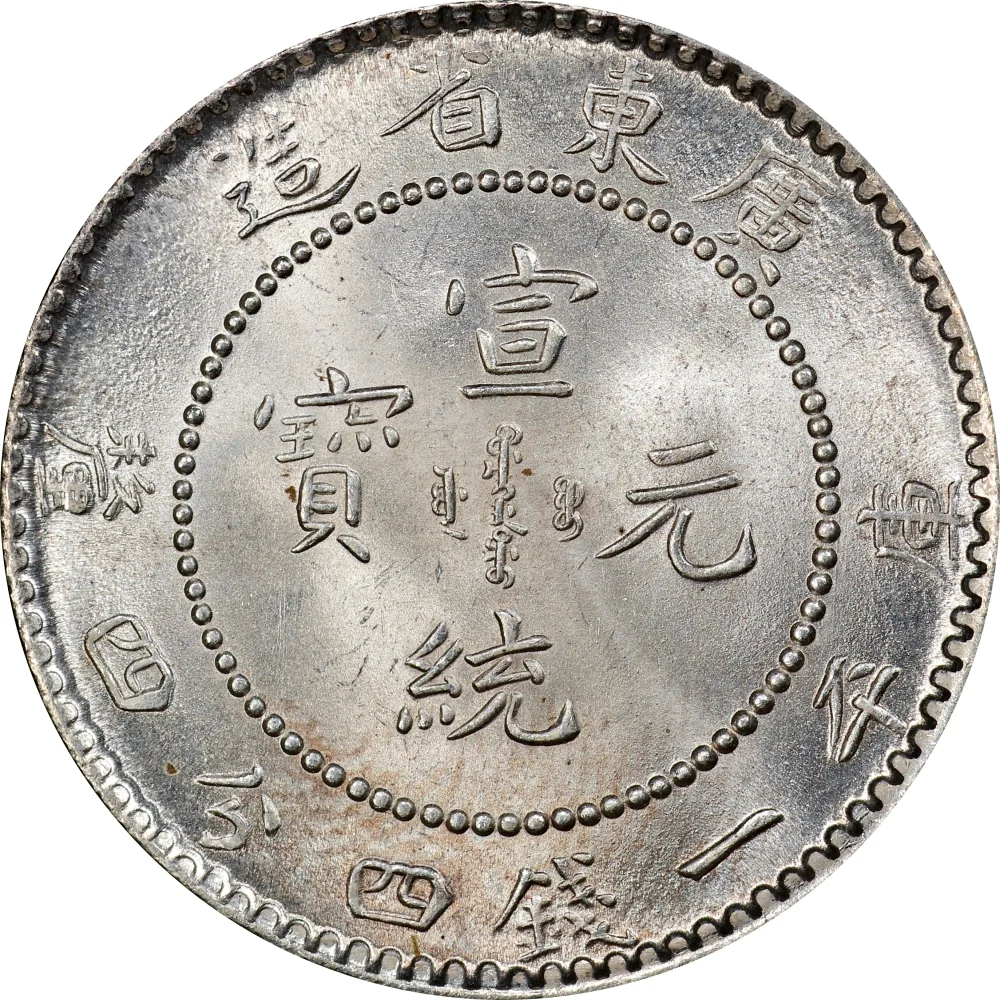
Chinese ideograms top to bottom, right to left, with central Manchu text, all encircled by more Chinese characters.
Inscription:
造省東廣
宣
ᠪᠠᡩᠠᠷᠠᠩᡤᠠ
寳 ᠶᡠᠸᠠᠨ ᠪᠣᠣ 元
ᡩᠣᠷᠣ
統
釐四分四錢一平庫
宣
ᠪᠠᡩᠠᠷᠠᠩᡤᠠ
寳 ᠶᡠᠸᠠᠨ ᠪᠣᠣ 元
ᡩᠣᠷᠣ
統
釐四分四錢一平庫
Translation:
Made at the Guangdong Provincial Mint
Xuan
Badarngga
Yuanbao Coin
Doro
Standard
One Coin, Four Mace, Four Candareens, Treasury Standard
Xuan
Badarngga
Yuanbao Coin
Doro
Standard
One Coin, Four Mace, Four Candareens, Treasury Standard
Scripts: Chinese, Mongolian / Manchu
Languages: Manchu, Classical Chinese
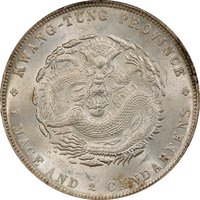
Reverse
Description:
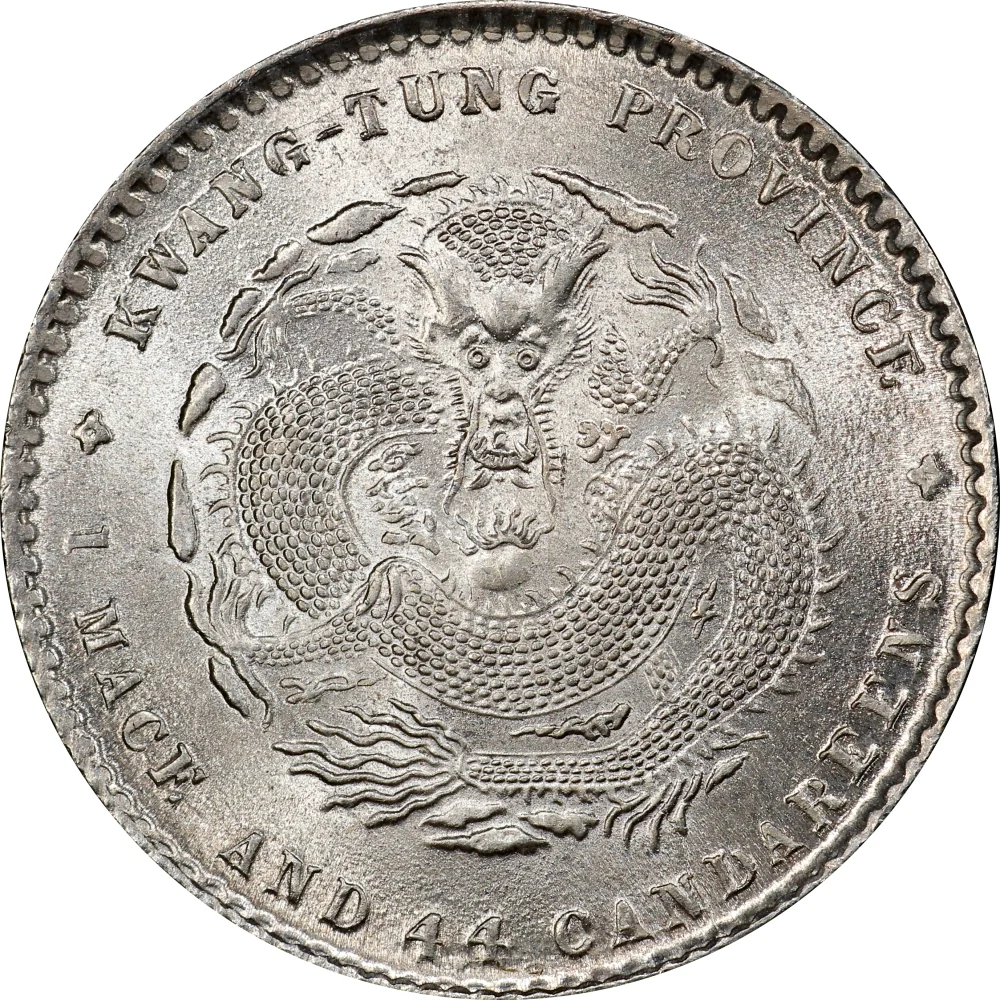
Dragon encircling a pearl, surrounded by English text.
Inscription:
KWANG-TUNG PROVINCE
1 MACE AND 4.4 CANDAREENS
1 MACE AND 4.4 CANDAREENS
Script: Latin
Edge
Reeded.
Categories
| Mythology> Fantastic animal |
Mintings
| Year | Mint Mark | Mintage | Quality | Collection |
|---|---|---|---|---|
| — | — | — |
Historical background
In 1909, Kwangtung (modern Guangdong) Province exemplified the complex and chaotic monetary situation of the late Qing Dynasty. The province operated under a multi-currency system where various forms of money circulated simultaneously, often with no fixed exchange rate. The primary currencies included silver sycee (bulk silver by weight), Mexican silver dollars (and their local imitations known as "Guangdong dollars"), copper cash coins for small transactions, and a growing volume of banknotes issued by both traditional native banks (qianzhuang) and newly established modern banks. This fragmentation created significant obstacles for trade and taxation, as constant conversion and fluctuating values introduced uncertainty and transaction costs.
The situation was further strained by a severe shortage of standard, reliable coinage. The official imperial currency, the silver tael, was a unit of weight, not a coin, leading to countless local standards. Meanwhile, the debasement of copper cash and the circulation of privately minted, often inferior, silver coins eroded public trust. Crucially, the province was deeply influenced by foreign currency due to its role as a major hub for overseas trade and remittances from the vast Cantonese diaspora. Mexican dollars and later British Hong Kong dollars served as the de facto standard for large commercial transactions in cities like Canton (Guangzhou), undermining Qing monetary sovereignty.
This monetary disorder directly reflected and contributed to the weakening central authority of the Qing state. While the imperial government had announced currency reforms and planned for a national silver yuan, implementation in Kwangtung in 1909 remained limited. The provincial economy was effectively managed through a patchwork of merchant guilds and financial institutions that navigated the chaos. Consequently, the currency situation in Kwangtung was not merely an economic issue but a symptom of the dynasty's administrative fragmentation, highlighting the pressing need for unified monetary reform that would only be partially realized after the dynasty's fall.
The situation was further strained by a severe shortage of standard, reliable coinage. The official imperial currency, the silver tael, was a unit of weight, not a coin, leading to countless local standards. Meanwhile, the debasement of copper cash and the circulation of privately minted, often inferior, silver coins eroded public trust. Crucially, the province was deeply influenced by foreign currency due to its role as a major hub for overseas trade and remittances from the vast Cantonese diaspora. Mexican dollars and later British Hong Kong dollars served as the de facto standard for large commercial transactions in cities like Canton (Guangzhou), undermining Qing monetary sovereignty.
This monetary disorder directly reflected and contributed to the weakening central authority of the Qing state. While the imperial government had announced currency reforms and planned for a national silver yuan, implementation in Kwangtung in 1909 remained limited. The provincial economy was effectively managed through a patchwork of merchant guilds and financial institutions that navigated the chaos. Consequently, the currency situation in Kwangtung was not merely an economic issue but a symptom of the dynasty's administrative fragmentation, highlighting the pressing need for unified monetary reform that would only be partially realized after the dynasty's fall.
🌟 Uncommon