


10 Dollars (Decriminalization of Homosexuality in Canada) – Canada
Non-circulating coins
Commemoration: 50th Anniversary of the Decriminalization of Homosexuality in Canada
Canada
Context

Material


References
KM: #Click to copy to clipboard2807
Numista: #176680
Value
Exchange value: 10 CAD = $7.30
Bullion value: $44.48
Inflation-adjusted value: 12.13 CAD
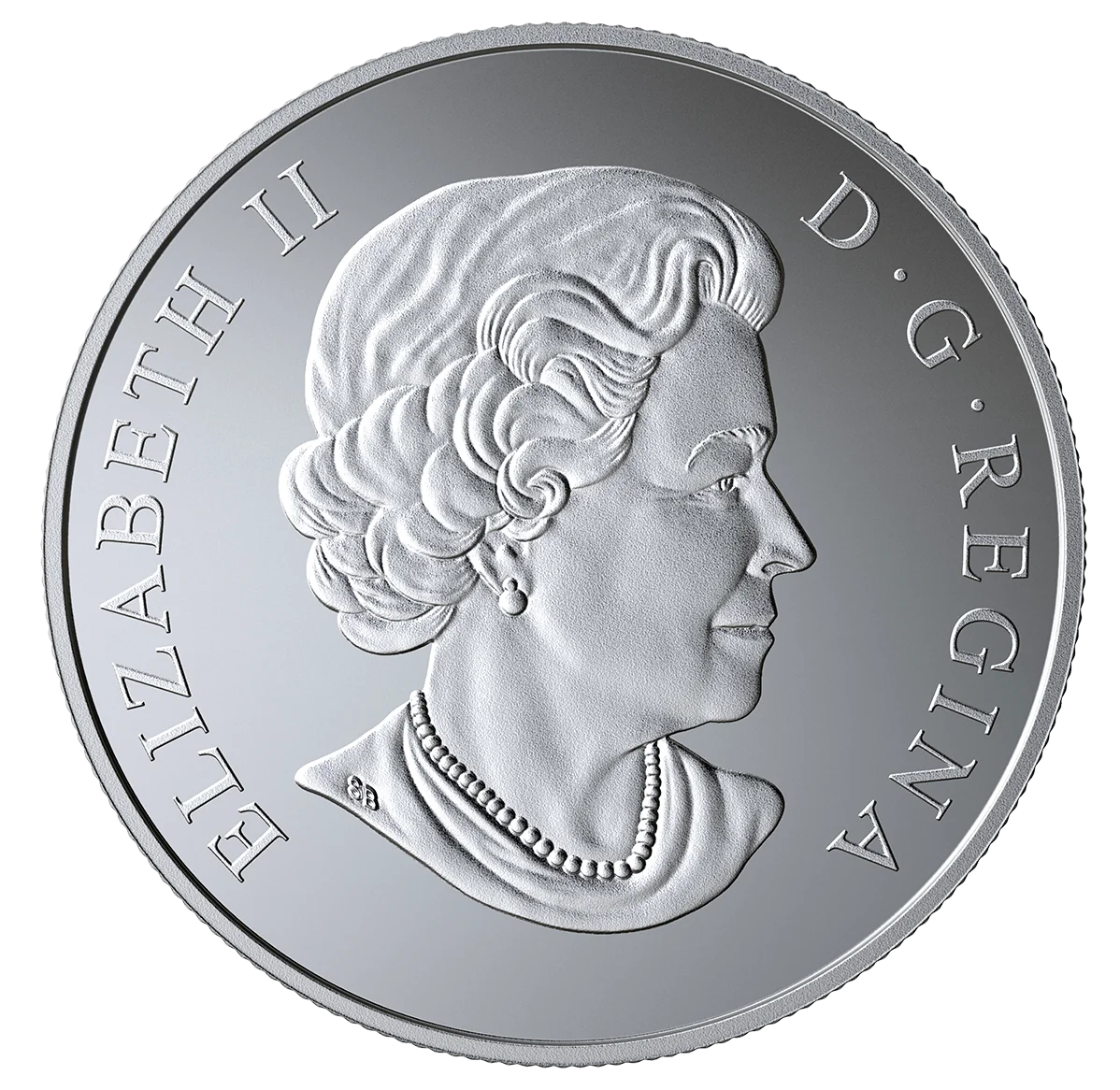
Obverse
Description:
Queen Elizabeth II at 77, facing right, wearing a necklace and earrings.
Inscription:
ELIZABETH II D·G·REGINA
SB
SB
Translation:
Elizabeth II, by the Grace of God, Queen
Solomon Islands
Solomon Islands
Script: Latin
Engraver: Susan Taylor
Designer: Susanna Blunt
Reverse
Description:
Dual faces.
Inscription:
1969 CANADA 2019
EQUALITY ÉGALITÉ
JA
10 DOLLARS
EQUALITY ÉGALITÉ
JA
10 DOLLARS
Translation:
1969 CANADA 2019
EQUALITY EQUALITY
JA
10 DOLLARS
EQUALITY EQUALITY
JA
10 DOLLARS
Script: Latin
Designer: Joe Average
Edge
Reeded
Categories
| Human rights |
Mints
| Name | Mark |
|---|---|
| Royal Canadian Mint of Ottawa | — |
Mintings
| Year | Mint Mark | Mintage | Quality | Collection |
|---|---|---|---|---|
| 2019 | — | 15,000 | Matte | |
| 2019 | — | 15,000 | Proof |
Historical background
In 2019, the Canadian dollar (CAD) navigated a year of moderate pressure and range-bound trading, largely influenced by external forces and domestic policy. The currency, often called the "loonie," spent much of the year trading between 75 and 76 US cents, reflecting a cautious market sentiment. The primary downward pressure stemmed from a broadly stronger US dollar, fueled by divergent monetary policy as the US Federal Reserve had been raising rates, while the Bank of Canada (BoC) had paused its tightening cycle. Furthermore, persistent global trade tensions, particularly between the US and China, created risk aversion that typically benefits the US dollar at the expense of commodity-linked currencies like Canada's.
Domestically, the economy sent mixed signals that kept the BoC on hold. While employment data remained strong for much of the year, growth slowed noticeably, and inflation hovered close to the bank's 2% target without consistently exceeding it. This economic softening, coupled with concerns about high household debt, justified the central bank's patient stance. However, the CAD found underlying support from relatively high domestic interest rates compared to other major economies and stable oil prices. As a key export, crude oil's price avoided the severe volatility seen in late 2018, providing a floor for the currency.
By year's end, the loonie had weathered these crosscurrents with relative stability. The Bank of Canada maintained its key interest rate at 1.75% throughout 2019, marking a clear pause after several hikes in 2017 and 2018. This stance, seen as appropriate for the economic conditions, helped prevent a more pronounced decline. Ultimately, the 2019 currency situation was one of resilience amid uncertainty, with the CAD managing a slight depreciation against the US dollar but avoiding a crisis, as it balanced domestic economic moderation against supportive commodity prices and a steady central bank.
Domestically, the economy sent mixed signals that kept the BoC on hold. While employment data remained strong for much of the year, growth slowed noticeably, and inflation hovered close to the bank's 2% target without consistently exceeding it. This economic softening, coupled with concerns about high household debt, justified the central bank's patient stance. However, the CAD found underlying support from relatively high domestic interest rates compared to other major economies and stable oil prices. As a key export, crude oil's price avoided the severe volatility seen in late 2018, providing a floor for the currency.
By year's end, the loonie had weathered these crosscurrents with relative stability. The Bank of Canada maintained its key interest rate at 1.75% throughout 2019, marking a clear pause after several hikes in 2017 and 2018. This stance, seen as appropriate for the economic conditions, helped prevent a more pronounced decline. Ultimately, the 2019 currency situation was one of resilience amid uncertainty, with the CAD managing a slight depreciation against the US dollar but avoiding a crisis, as it balanced domestic economic moderation against supportive commodity prices and a steady central bank.



💎 Extremely Rare