

10 cash – South Xinjiang
Add to wishlist
China
Context
Years: 1880–1889
Country: China
Issuer: South Xinjiang
Ruler: Guangxu
Currency:
(1759—1909)
Demonetized: Yes
Material
Diameter: 26 mm
Weight: 3.93 g
Thickness: 1.5 mm
Shape: Round with a square hole
Composition: Copper
Magnetic: No
Technique: Cast
Alignment: Medal alignment
flip
References
Numista: #175633
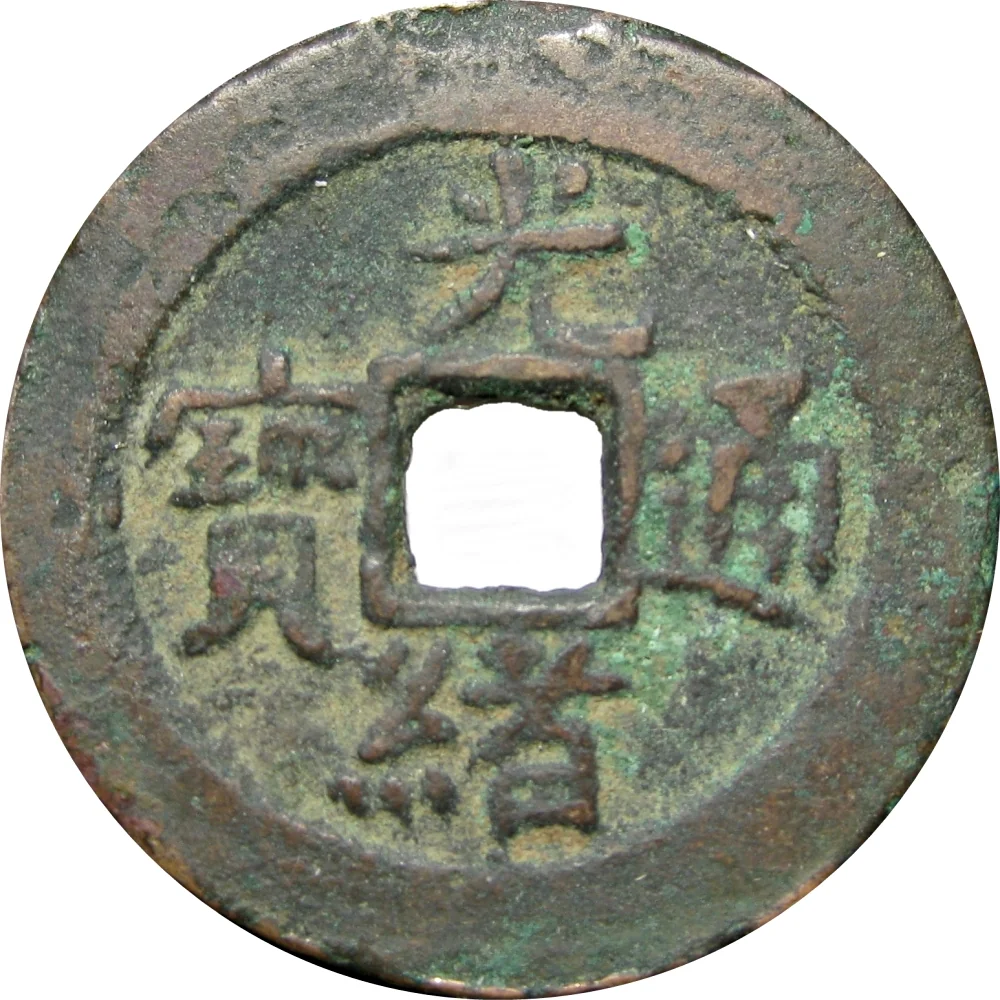
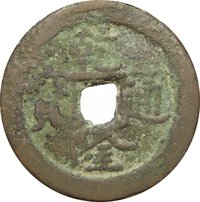
Obverse
Description:
Four Chinese characters read vertically, right to left.
Inscription:
光
寶 通
緒
寶 通
緒
Translation:
Guangxu
Tong Bao
Tong Bao
Scripts: Chinese (traditional, regular script)
Language: Chinese
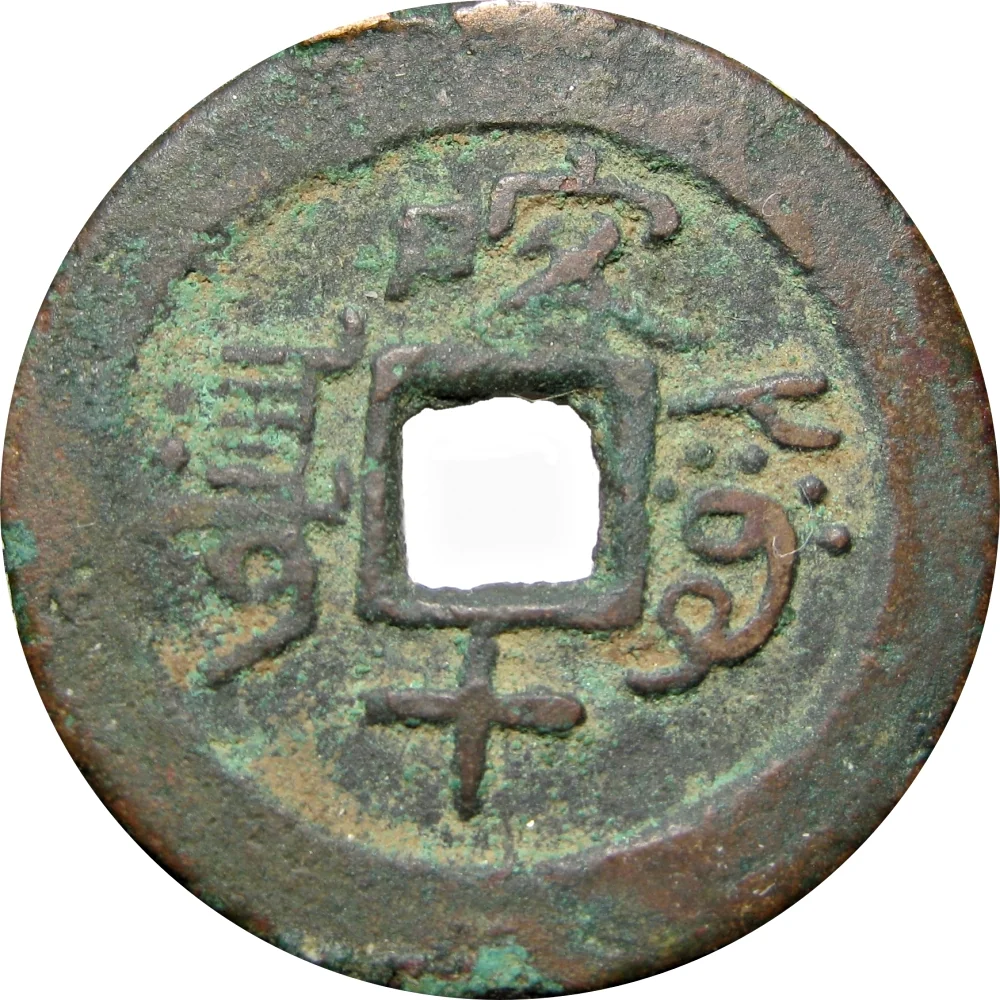
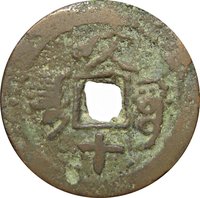
Reverse
Description:
One Chinese character above and below, with Uyghur to the right and Manchu to the left.
Inscription:
喀
ᠠᡴᠰᡠ ئاقسۇ
十
ᠠᡴᠰᡠ ئاقسۇ
十
Translation:
Aksu Ten
Edge
Plain
Mints
| Name | Mark |
|---|---|
| Aksu Mint | — |
Mintings
| Year | Mint Mark | Mintage | Quality | Collection |
|---|---|---|---|---|
| — | — | — |
Historical background
In 1880, the currency situation in South Xinjiang (the Tarim Basin region) was characterized by profound complexity and instability, a direct legacy of its recent political history. The area had only been fully reconquered by the Qing dynasty in 1878 following the suppression of the Yakub Beg-led Kashgaria state (1865-1877). This created a monetary landscape with multiple, competing currencies in circulation. The primary units were the pul (copper coin) and the tanga (silver coin), but their weight, purity, and value were not standardized, varying significantly from one oasis city to another like Kashgar, Yarkand, and Khotan.
The Qing authorities, under the new Xinjiang Province established in 1884, were in the early stages of imposing monetary integration with the Chinese system. Official Qing coinage, such as cash coins (with square holes) and silver sycees (ingots), circulated alongside the vast quantities of local Kashgaria-era coins and older Qing coins from prior to the rebellion. Furthermore, foreign trade coins, particularly Russian tsarist rubles and gold tillas (from the Khanate of Khiva), held significant influence due to robust cross-border trade, adding another layer of exchange rate confusion.
This multi-currency environment led to chronic problems for both daily commerce and administration. Exchange rates between pul, tanga, sycee, and rubles fluctuated wildly, often manipulated by money-changers (sarraf) and merchants. The Qing's challenge was to assert its sovereignty by standardizing the currency, a process that involved suppressing inferior or counterfeit local coins and gradually introducing a unified, Beijing-backed system. However, in 1880, this transition was still nascent, leaving South Xinjiang's economy in a state of monetary fragmentation and uncertainty.
The Qing authorities, under the new Xinjiang Province established in 1884, were in the early stages of imposing monetary integration with the Chinese system. Official Qing coinage, such as cash coins (with square holes) and silver sycees (ingots), circulated alongside the vast quantities of local Kashgaria-era coins and older Qing coins from prior to the rebellion. Furthermore, foreign trade coins, particularly Russian tsarist rubles and gold tillas (from the Khanate of Khiva), held significant influence due to robust cross-border trade, adding another layer of exchange rate confusion.
This multi-currency environment led to chronic problems for both daily commerce and administration. Exchange rates between pul, tanga, sycee, and rubles fluctuated wildly, often manipulated by money-changers (sarraf) and merchants. The Qing's challenge was to assert its sovereignty by standardizing the currency, a process that involved suppressing inferior or counterfeit local coins and gradually introducing a unified, Beijing-backed system. However, in 1880, this transition was still nascent, leaving South Xinjiang's economy in a state of monetary fragmentation and uncertainty.

✨ Legendary