

50 Cents – Australia
Non-circulating coins
Commemoration: 2008 Olympic Games Beijing
Australia
Context

Material
Weight: 15.55 g
Silver weight: 15.53 g
Thickness: 2.5 mm
Shape: Irregular rectangular
Composition: 99.9% Silver
Standard: Silver half ounce
Magnetic: No
Alignment: Medal alignment
flip
References
Numista: #175340
Value
Exchange value: 0.50 AUD = $0.36
Bullion value: $45.13
Inflation-adjusted value: 0.79 AUD
Obverse
Description:
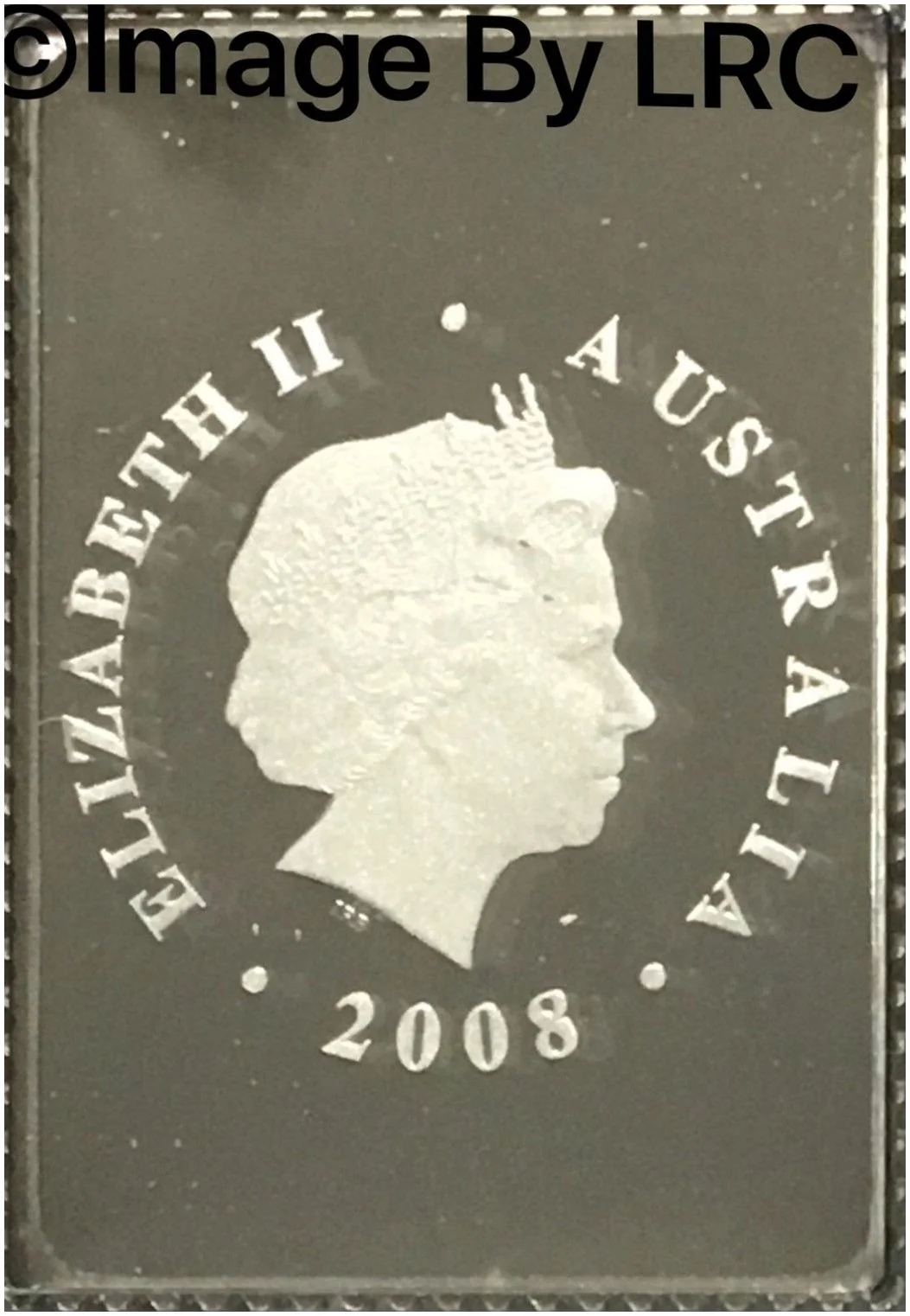
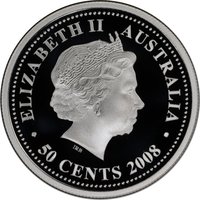
Queen Elizabeth IV, facing right, wearing the Girls of Great Britain and Ireland Tiara.
Inscription:
ELIZABETH II
AUSTRALIA 2008
IRB
AUSTRALIA 2008
IRB
Script: Latin
Designer: Ian Rank-Broadley
Reverse
Description:
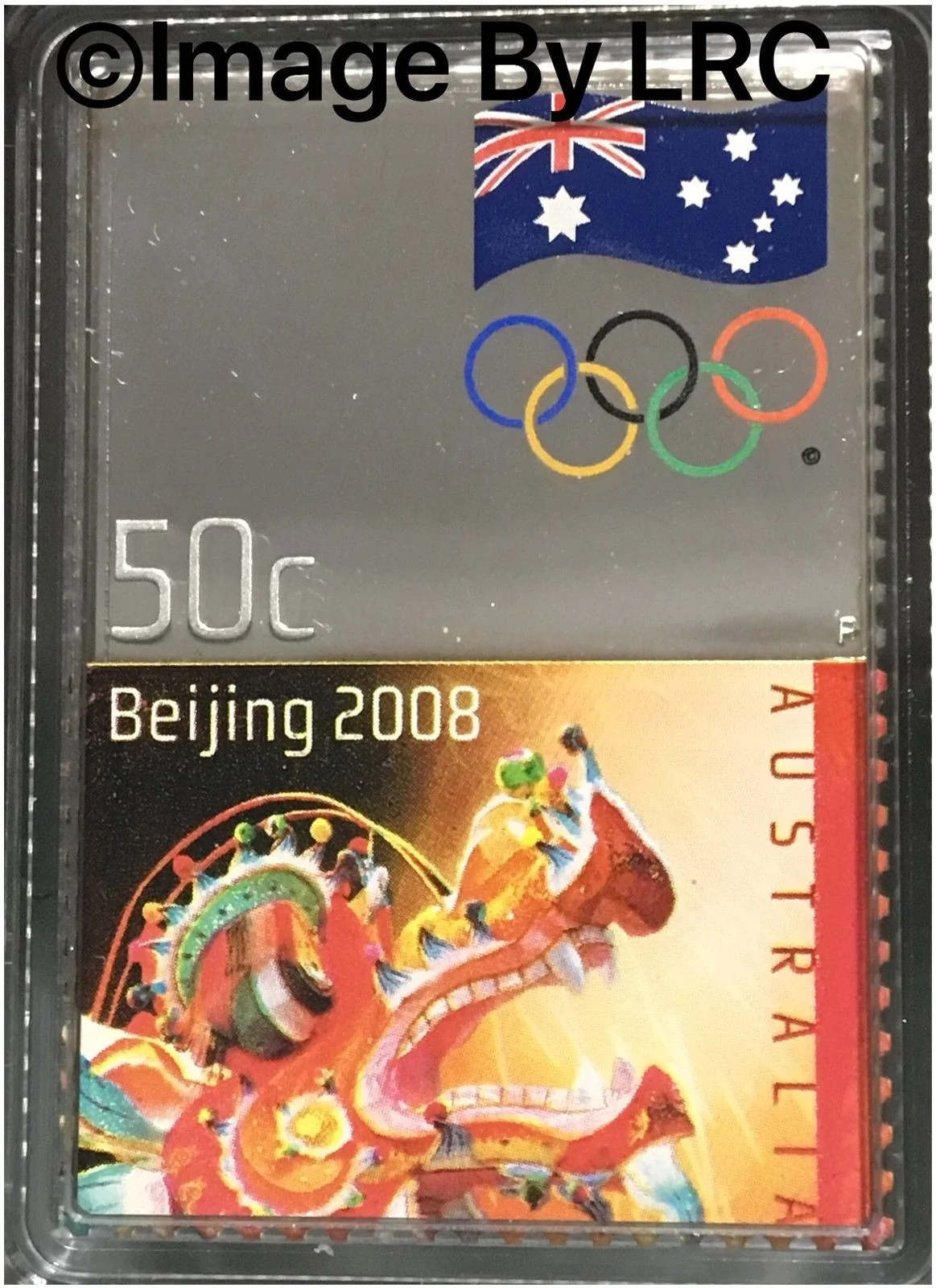
Stamp-shaped coin. Silver top half features a colored Australian Flag above Olympic Rings, with 50c at lower left. Colored bottom half has a Chinese Dragon, "AUSTRALIA" vertically along a red strip, and "Beijing 2008" above the dragon.
Inscription:
50c Beijing 2008 AUSTRALIA
Script: Latin
Edge
Perforation teeth (to mimic a Stamp)
Categories
| Mythology> Fantastic animal |
| Symbol> Flag |
| Sport> Summer Olympic Games |
Mints
| Name | Mark |
|---|---|
| Perth Mint | P |
Mintings
| Year | Mint Mark | Mintage | Quality | Collection |
|---|---|---|---|---|
| 2008 | P | 8,000 | BU |
Historical background
In 2008, Australia entered the year with its currency, the Australian dollar (AUD), trading near historic highs, briefly reaching parity with the US dollar in late 2007 for the first time since the early 1980s. This strength was driven by the ongoing global commodities boom, with high demand from China and other emerging economies for Australia's iron ore, coal, and other natural resources. The Reserve Bank of Australia (RBA) had also maintained a relatively high interest rate environment to combat domestic inflation, which attracted foreign capital and further buoyed the currency.
The situation changed dramatically following the collapse of Lehman Brothers in September 2008, which triggered a full-blown global financial crisis. As risk aversion spiked, investors fled to safe-haven assets like the US dollar and Japanese yen, leading to a massive sell-off of commodity and growth-linked currencies. The AUD experienced a precipitous fall, depreciating by over 30% against the US dollar in just three months, plummeting to a low near US$0.60 by October 2008. This was one of the most severe currency declines in Australia's modern economic history, reflecting both the global flight to safety and a sudden collapse in commodity prices.
In response, the RBA took aggressive action, slashing its official cash rate by a cumulative 425 basis points between September 2008 and April 2009. This dramatic monetary easing aimed to stimulate the domestic economy, which, while initially shielded from the worst of the crisis, faced a sharp downturn in confidence and slowing global trade. The rapid depreciation of the AUD, while a shock, subsequently provided a crucial economic cushion by making Australian exports more competitive, helping to soften the impact of the global recession and positioning the economy for a relatively swift recovery.
The situation changed dramatically following the collapse of Lehman Brothers in September 2008, which triggered a full-blown global financial crisis. As risk aversion spiked, investors fled to safe-haven assets like the US dollar and Japanese yen, leading to a massive sell-off of commodity and growth-linked currencies. The AUD experienced a precipitous fall, depreciating by over 30% against the US dollar in just three months, plummeting to a low near US$0.60 by October 2008. This was one of the most severe currency declines in Australia's modern economic history, reflecting both the global flight to safety and a sudden collapse in commodity prices.
In response, the RBA took aggressive action, slashing its official cash rate by a cumulative 425 basis points between September 2008 and April 2009. This dramatic monetary easing aimed to stimulate the domestic economy, which, while initially shielded from the worst of the crisis, faced a sharp downturn in confidence and slowing global trade. The rapid depreciation of the AUD, while a shock, subsequently provided a crucial economic cushion by making Australian exports more competitive, helping to soften the impact of the global recession and positioning the economy for a relatively swift recovery.
✨ Legendary