

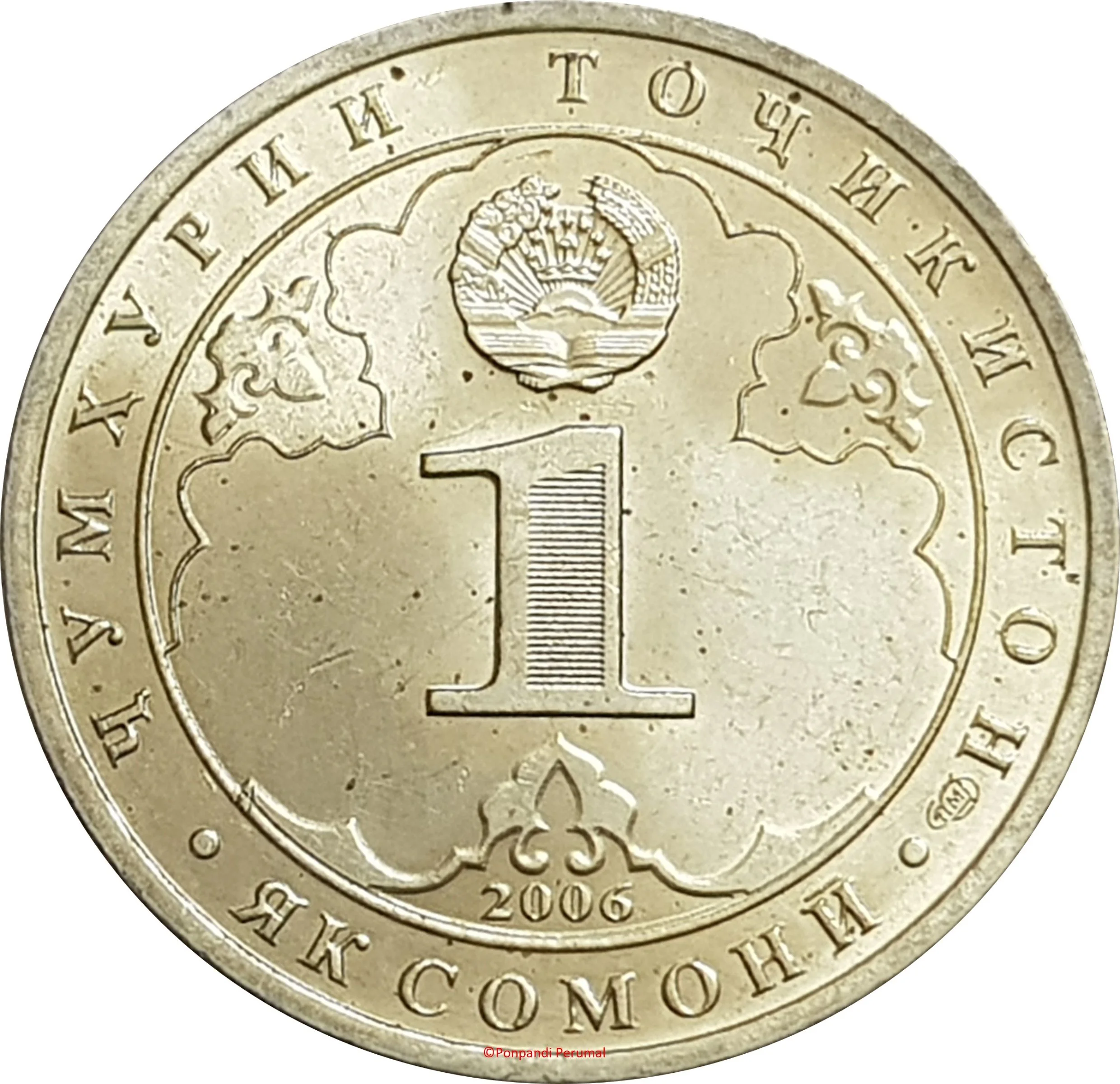
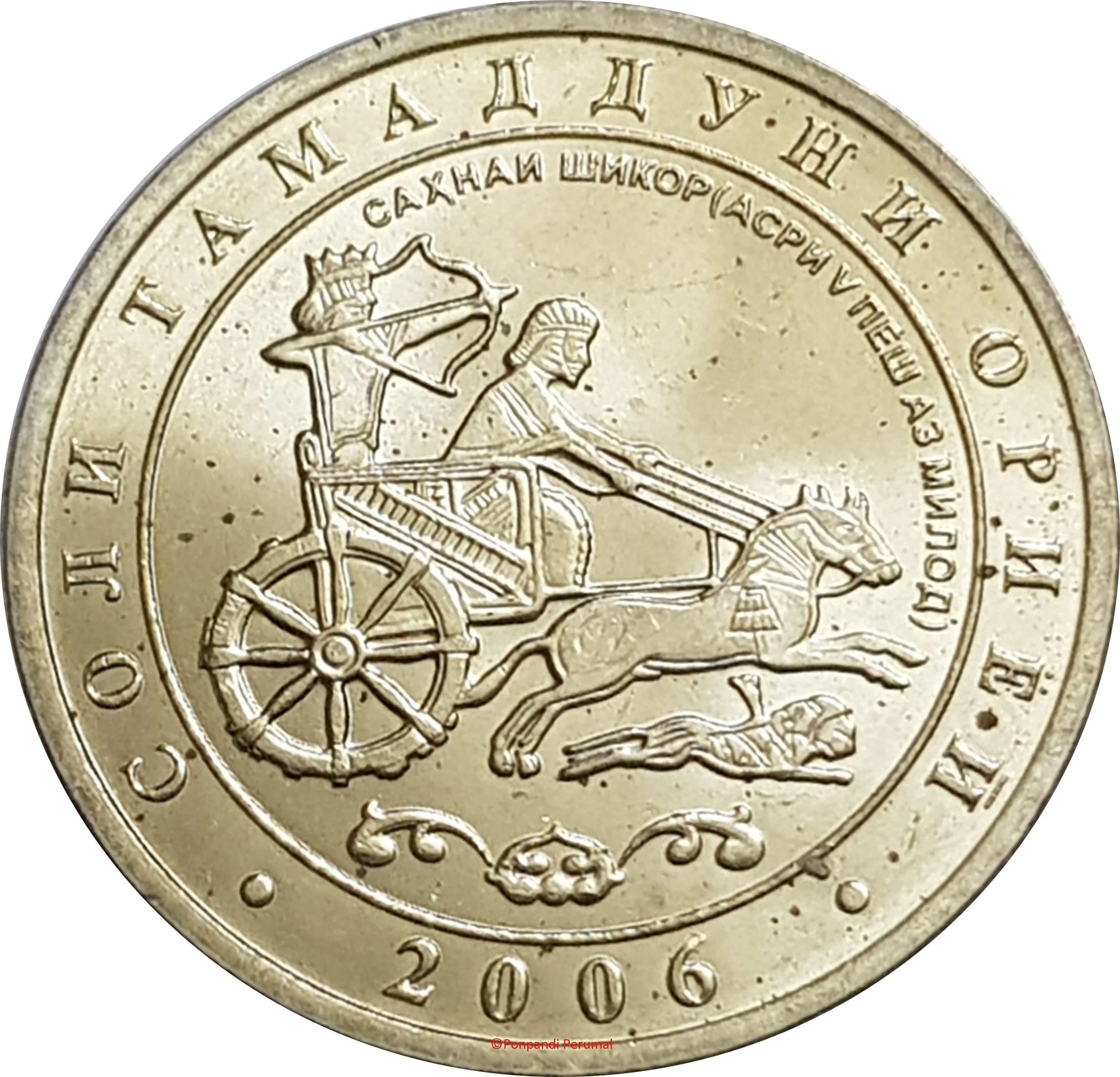
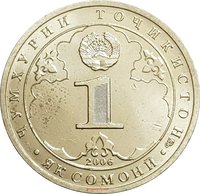
1 somoni – Tajikistan
Add to wishlist
Circulating commemorative coins
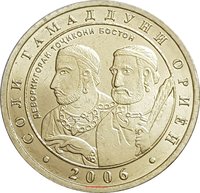
Commemoration: Year of Aryan Civilization Series - Archer
Tajikistan
Context
Material
Diameter: 24 mm
Weight: 5.21 g
Shape: Round
Composition: Nickel brass
Magnetic: No
Technique: Milled
Alignment: Medal alignment
flip
References
KM: #
Numista: #17500
Value
Exchange value: 1 TJS
Obverse
Reverse
Edge
Segmented reeding
Mints
| Name | Mark |
|---|---|
| Saint Petersburg | — |
Mintings
| Year | Mint Mark | Mintage | Quality | Collection |
|---|---|---|---|---|
| 2006 | СПМД | 100,000 |
Historical background
In 2006, Tajikistan's currency situation was characterized by a period of relative stability and gradual appreciation, marking a positive shift from the volatility of previous years. The national currency, the somoni (introduced in 2000 to replace the Tajik ruble), strengthened against the US dollar, appreciating by approximately 10% over the course of the year. This stability was largely driven by two key inflows: a significant increase in remittances from Tajik migrant workers abroad (primarily in Russia) and sustained foreign aid. These sources provided a steady stream of hard currency, bolstering the country's foreign exchange reserves and supporting the somoni's value.
The National Bank of Tajikistan (NBT) played an active role in managing this stability. To prevent excessive appreciation that could harm the competitiveness of Tajik exports, the NBT regularly intervened in the foreign exchange market by purchasing excess US dollars. This intervention helped to smooth out fluctuations and build reserves, which were crucial for the heavily import-dependent economy. The official exchange rate was largely unified with the market rate, reducing the distortions of a parallel black market that had been more prominent in earlier years.
However, underlying vulnerabilities persisted. The economy remained fragile and overly reliant on remittances and cotton and aluminum exports, making it susceptible to external shocks. While inflation had moderated from hyperinflationary levels of the 1990s, it remained a concern, averaging around 10% in 2006, partly eroding the real gains from currency appreciation. Furthermore, the stability was not yet deeply institutionalized, with the banking sector remaining weak and dollarization still widespread, indicating lingering public preference for holding foreign currency as a store of value. Thus, 2006 represented a year of cautious optimism and consolidation rather than a fundamental resolution of structural economic weaknesses.
The National Bank of Tajikistan (NBT) played an active role in managing this stability. To prevent excessive appreciation that could harm the competitiveness of Tajik exports, the NBT regularly intervened in the foreign exchange market by purchasing excess US dollars. This intervention helped to smooth out fluctuations and build reserves, which were crucial for the heavily import-dependent economy. The official exchange rate was largely unified with the market rate, reducing the distortions of a parallel black market that had been more prominent in earlier years.
However, underlying vulnerabilities persisted. The economy remained fragile and overly reliant on remittances and cotton and aluminum exports, making it susceptible to external shocks. While inflation had moderated from hyperinflationary levels of the 1990s, it remained a concern, averaging around 10% in 2006, partly eroding the real gains from currency appreciation. Furthermore, the stability was not yet deeply institutionalized, with the banking sector remaining weak and dollarization still widespread, indicating lingering public preference for holding foreign currency as a store of value. Thus, 2006 represented a year of cautious optimism and consolidation rather than a fundamental resolution of structural economic weaknesses.
🌱 Fairly Common