

1 dinar (Independence) – Algeria
Add to wishlist
Circulating commemorative coins
Commemoration: 20th Anniversary of Independence
Algeria
Context
Material
Diameter: 25 mm
Weight: 7 g
Thickness: 1.9 mm
Shape: Round
Composition: Copper-nickel
Technique: Milled
Alignment: Coin alignment
flip
References
KM: #
Numista: #1750
Value
Exchange value: 1 DZD
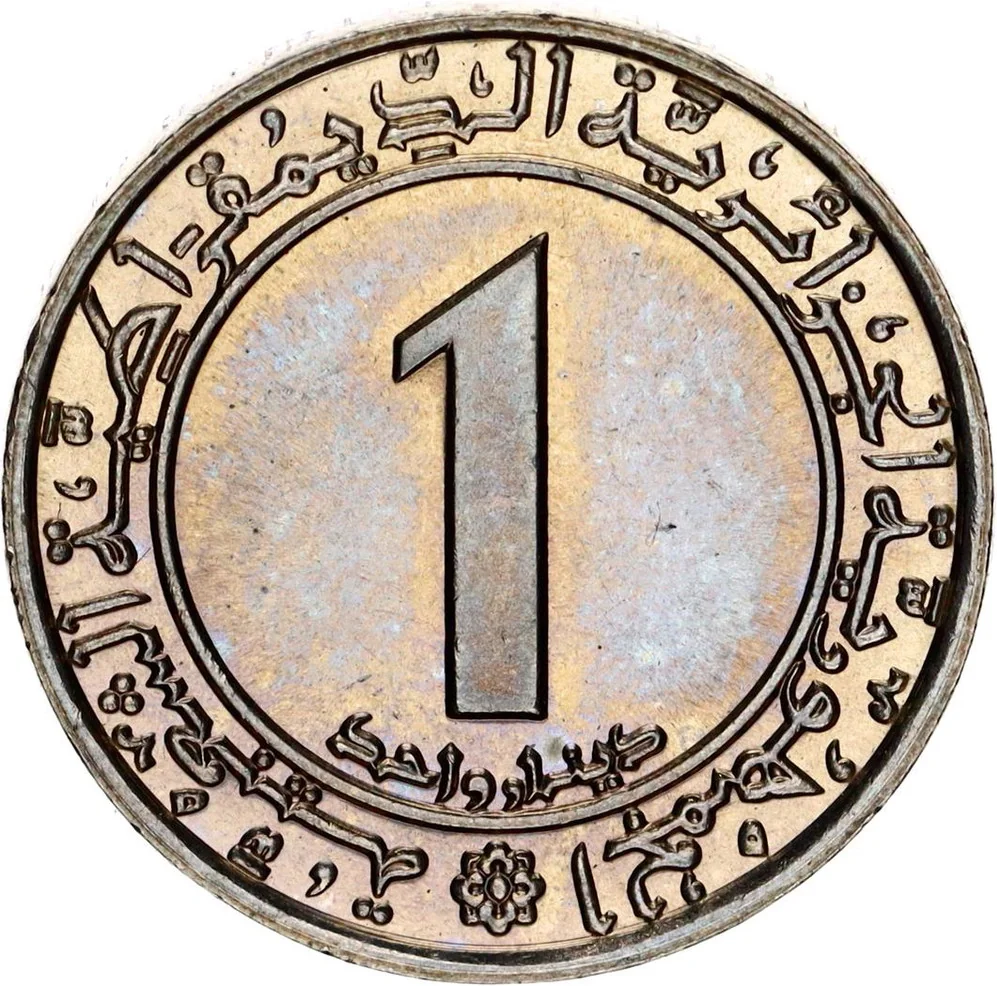
Obverse
Description:
Circle's worth
Inscription:
الجمهورية الجزائرية الديمقراطية الشعبية
1
دينار واحد
1
دينار واحد
Translation:
People's Democratic Republic of Algeria
1
One Dinar
1
One Dinar
Language: Arabic
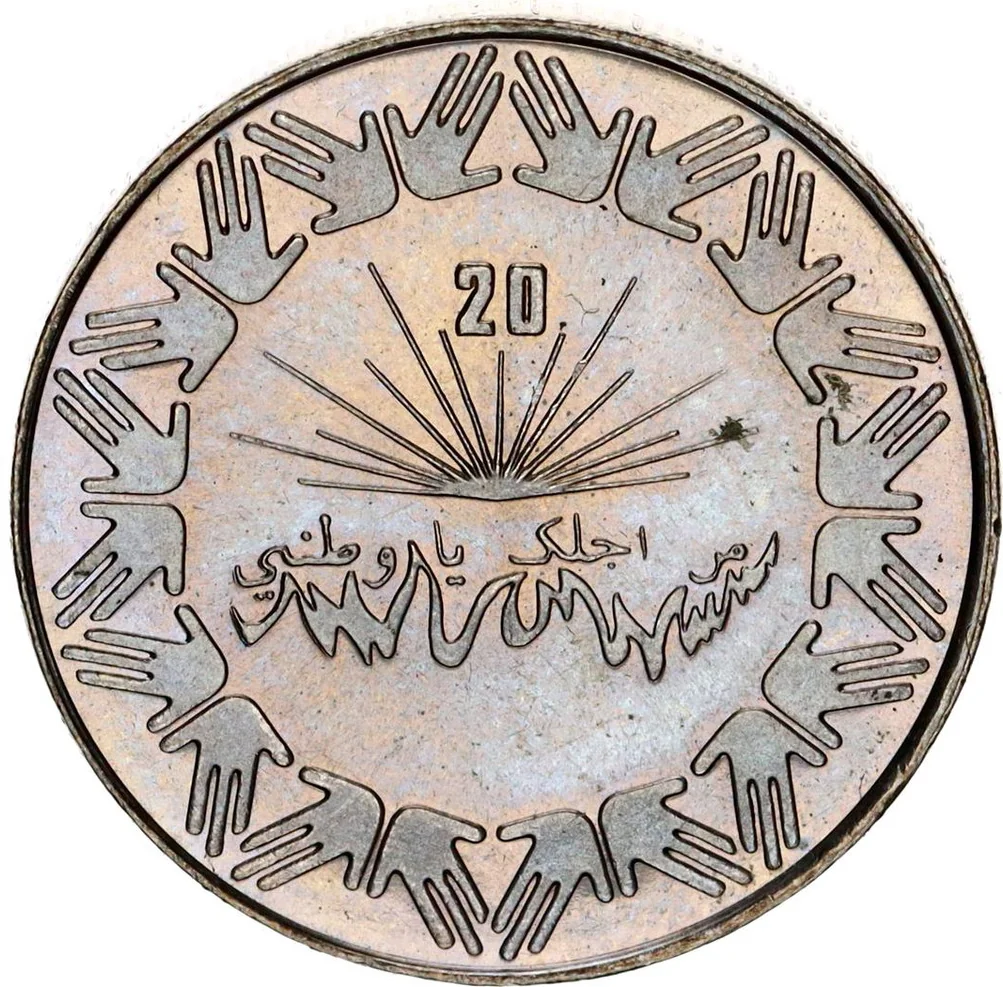
Reverse
Description:
10 handprints; sunrise text
Inscription:
20
من أجلك يا وطني
من أجلك يا وطني
Translation:
For you, my homeland.
Language: Arabic
Edge
Reeded
Mintings
| Year | Mint Mark | Mintage | Quality | Collection |
|---|---|---|---|---|
| 1983 | — | — |
Historical background
In 1983, Algeria's currency situation was characterized by a tightly controlled and overvalued dinar, operating within a complex multi-tiered exchange rate system. The official rate, set by the Banque d'Algérie, was artificially strong but applied only to a narrow range of prioritized imports, such as essential foodstuffs and capital goods for state-led industrialization. Alongside this, a secondary "financial" or "parallel" rate existed for other transactions, creating a significant disparity that reflected the dinar's true market weakness and fostered a burgeoning black market for foreign exchange.
This rigid system was under severe strain due to external economic shocks. The global oil price collapse of the mid-1980s was beginning to impact Algeria, which depended heavily on hydrocarbon exports (over 95% of foreign earnings). As oil revenues faltered, the country's foreign exchange reserves dwindled, making it increasingly difficult to sustain imports and service external debt. The overvalued official rate discouraged non-energy exports and encouraged capital flight, while the scarcity of hard currency led to import bottlenecks and shortages of consumer goods.
Consequently, 1983 represented a precarious calm before a deeper crisis. The government, adhering to its socialist-oriented economic model, resisted devaluation and major liberalization, preferring administrative controls. However, the underlying imbalances were mounting, setting the stage for the severe foreign exchange crisis, mounting debt, and painful structural adjustments that would define the latter half of the 1980s, culminating in an International Monetary Fund agreement in 1989.
This rigid system was under severe strain due to external economic shocks. The global oil price collapse of the mid-1980s was beginning to impact Algeria, which depended heavily on hydrocarbon exports (over 95% of foreign earnings). As oil revenues faltered, the country's foreign exchange reserves dwindled, making it increasingly difficult to sustain imports and service external debt. The overvalued official rate discouraged non-energy exports and encouraged capital flight, while the scarcity of hard currency led to import bottlenecks and shortages of consumer goods.
Consequently, 1983 represented a precarious calm before a deeper crisis. The government, adhering to its socialist-oriented economic model, resisted devaluation and major liberalization, preferring administrative controls. However, the underlying imbalances were mounting, setting the stage for the severe foreign exchange crisis, mounting debt, and painful structural adjustments that would define the latter half of the 1980s, culminating in an International Monetary Fund agreement in 1989.
🌱 Very Common