

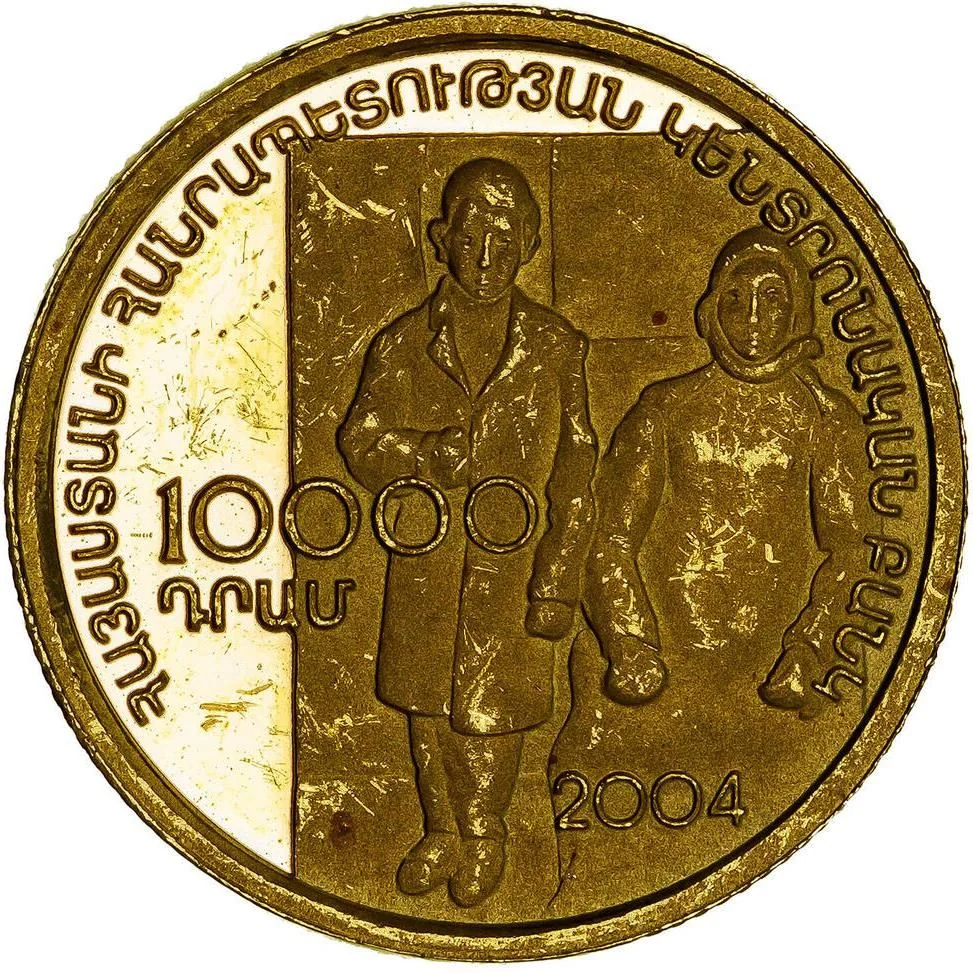
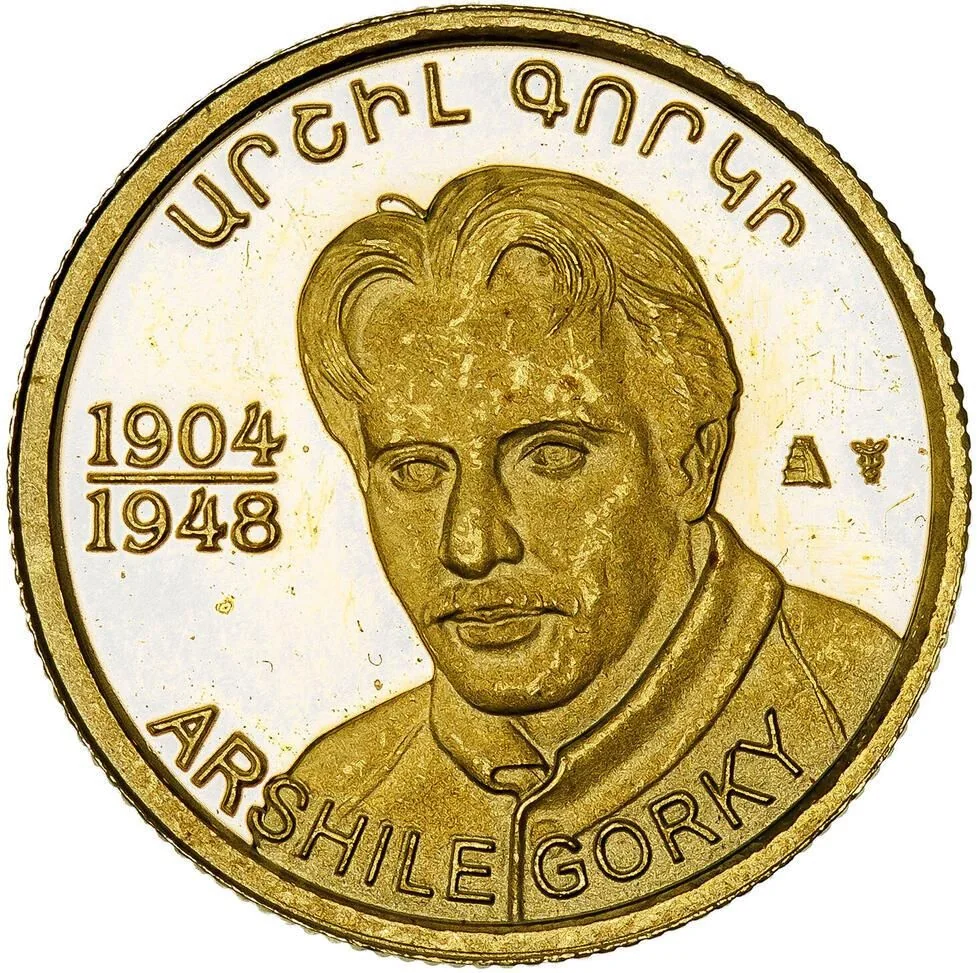
10000 dram (Arshile Gorky) – Armenia
Add to wishlist
Non-circulating coins
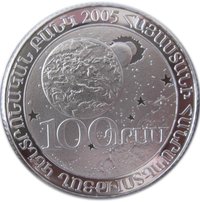
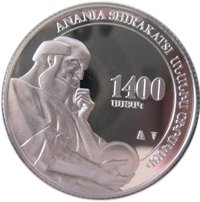
Commemoration: 100th Birth anniversary painter Arshile Gorky
Armenia
Context
Year: 2004
Issuer: Armenia
Issuing organization: Central Bank of Armenia
Period:
(since 1991)
Currency:
(since 1993)
Total mintage: 1,000
Material
References
KM: #
Numista: #174626
Value
Exchange value: 10000 AMD
Bullion value: $1319.89
Obverse
Reverse
Edge
Reeded
Categories
| Event> Birth anniversary |
Mints
| Name | Mark |
|---|---|
| Royal Dutch Mint | — |
Mintings
| Year | Mint Mark | Mintage | Quality | Collection |
|---|---|---|---|---|
| 2004 | — | 1,000 |
Historical background
In 2004, Armenia's currency, the dram (AMD), was in a period of notable appreciation and stability, marking a significant shift from the hyperinflation and volatility of the post-Soviet 1990s. This strength was primarily driven by substantial inflows of foreign currency from two key sources: large-scale remittances from the Armenian diaspora and growing foreign direct investment (FDI), particularly in sectors like construction and telecommunications. Furthermore, a period of robust economic growth, averaging double-digit GDP increases, bolstered confidence in the national economy.
The Central Bank of Armenia (CBA) faced a complex policy challenge as a result. The dram's appreciation, while curbing inflation and making imports cheaper, threatened the competitiveness of Armenian exports by making them more expensive on the international market. In response, the CBA actively intervened in the foreign exchange market throughout the year, purchasing excess foreign currency to temper the dram's rise and build up international reserves, which saw significant growth. This managed float regime aimed to balance stability with the needs of the export sector.
Overall, the 2004 currency situation reflected Armenia's successful macroeconomic stabilization and deepening integration into the global economy. The strong dram was a symbol of recovering confidence and increased financial inflows, yet it also presented the emerging challenges of managing growth, controlling inflation (which remained in the low single digits), and maintaining external balance—a sign of the country's transition to a more mature and complex market economy.
The Central Bank of Armenia (CBA) faced a complex policy challenge as a result. The dram's appreciation, while curbing inflation and making imports cheaper, threatened the competitiveness of Armenian exports by making them more expensive on the international market. In response, the CBA actively intervened in the foreign exchange market throughout the year, purchasing excess foreign currency to temper the dram's rise and build up international reserves, which saw significant growth. This managed float regime aimed to balance stability with the needs of the export sector.
Overall, the 2004 currency situation reflected Armenia's successful macroeconomic stabilization and deepening integration into the global economy. The strong dram was a symbol of recovering confidence and increased financial inflows, yet it also presented the emerging challenges of managing growth, controlling inflation (which remained in the low single digits), and maintaining external balance—a sign of the country's transition to a more mature and complex market economy.
✨ Legendary