

20 dinars (Đorđe Vajfert) – Serbia
Add to wishlist
Circulating commemorative coins
Commemoration: 160th Anniversary of Birth of Đorđe Vajfert
Serbia
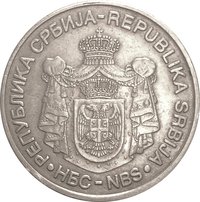
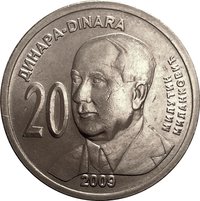
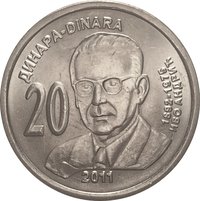
Obverse
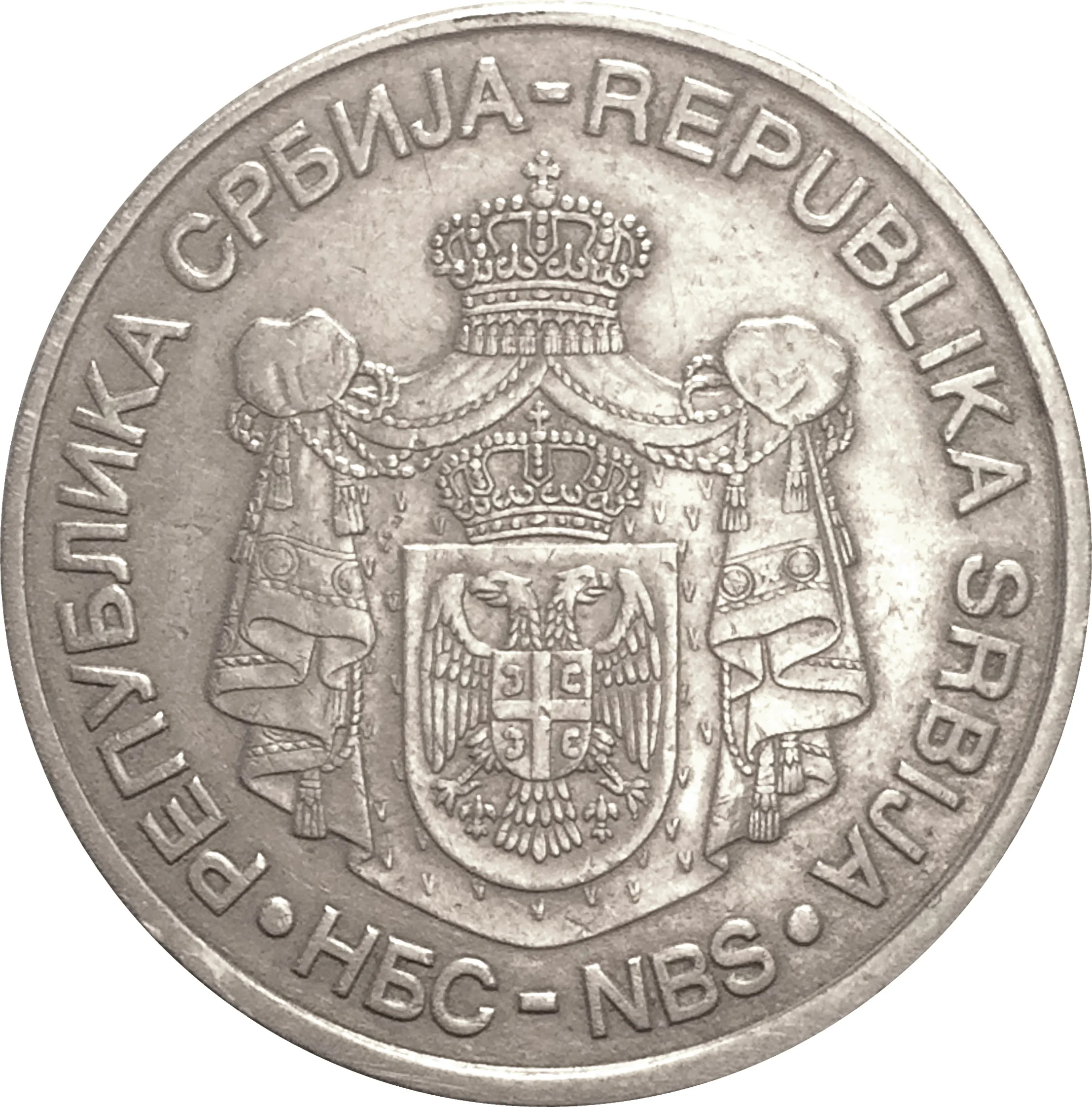
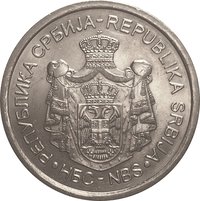
Reverse
Description:
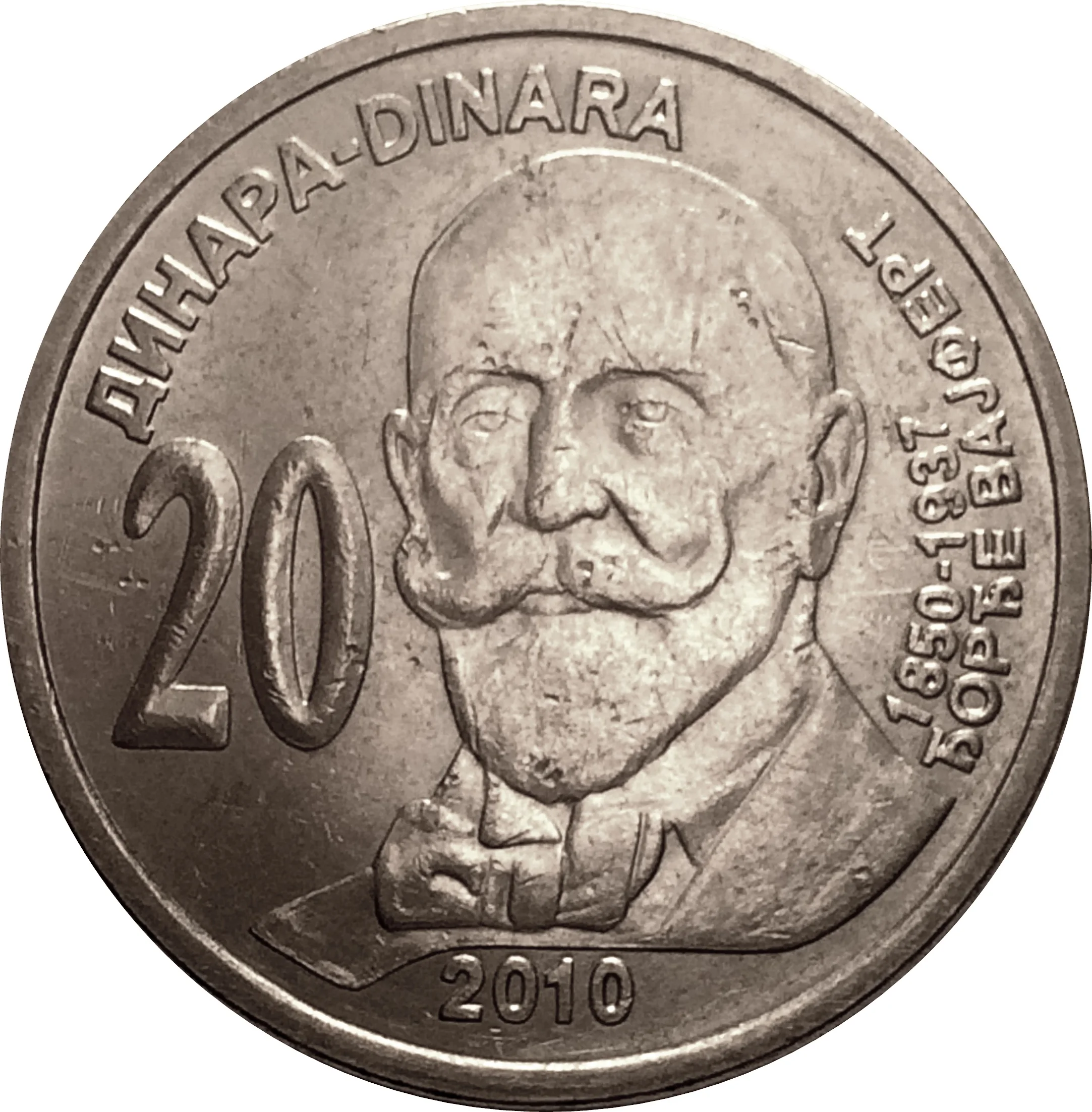
Front: 20 Dinars with Georg Weifert's bust. A Serbian industrialist of German origin, he was a central bank governor and the founder of modern Serbian mining.
Inscription:
ДИНАРА-DINARA
20
2010
1850-1937
ЂОРЂЕ ВАЈФЕРТ
20
2010
1850-1937
ЂОРЂЕ ВАЈФЕРТ
Translation:
DINARA-DINARA
20
2010
1850-1937
ĐORĐE VAJFERT
20
2010
1850-1937
ĐORĐE VAJFERT
Edge
5 reeded segments with 19 reeds each
Categories
| Animal> Bird |
| Event> Birth anniversary |
| Mustache/Beard |
| Symbol> Crown |
| Symbols> Coat of Arms |
| Symbol> Double-headed eagle |
Mints
| Name | Mark |
|---|---|
| Belgrade | — |
Mintings
| Year | Mint Mark | Mintage | Quality | Collection |
|---|---|---|---|---|
| 2010 | — | 500,000 |
Historical background
In 2010, Serbia was navigating a fragile economic recovery following the severe global financial crisis of 2008-2009. The country's currency, the Serbian dinar (RSD), faced significant pressure during the crisis, leading the National Bank of Serbia (NBS) to intervene heavily in the foreign exchange market to prevent a sharp depreciation and curb inflation. By 2010, the situation had stabilized somewhat, with the NBS maintaining a managed float regime, allowing the dinar to fluctuate within a controlled band while using foreign currency reserves to smooth out excessive volatility.
The key challenge for monetary policy in 2010 was balancing competing objectives: maintaining price stability, supporting economic growth, and preserving financial stability. Inflation had been brought down to single digits, but remained a concern, influenced by volatile global food and energy prices. The NBS primarily used its key policy rate and forex interventions as tools. The dinar's value was particularly sensitive to changes in investor sentiment, capital flows, and the country's substantial current account deficit, which was largely financed by foreign direct investment and external borrowing.
Overall, 2010 was a year of cautious stabilization for the Serbian dinar. The currency did not experience the dramatic swings of the previous crisis years, but it remained vulnerable to external shocks and dependent on the central bank's vigilant management. The economic backdrop was one of modest GDP growth and ongoing negotiations with the International Monetary Fund (IMF) under a standby arrangement, which provided a financial buffer and policy framework that helped bolster confidence in the national currency.
The key challenge for monetary policy in 2010 was balancing competing objectives: maintaining price stability, supporting economic growth, and preserving financial stability. Inflation had been brought down to single digits, but remained a concern, influenced by volatile global food and energy prices. The NBS primarily used its key policy rate and forex interventions as tools. The dinar's value was particularly sensitive to changes in investor sentiment, capital flows, and the country's substantial current account deficit, which was largely financed by foreign direct investment and external borrowing.
Overall, 2010 was a year of cautious stabilization for the Serbian dinar. The currency did not experience the dramatic swings of the previous crisis years, but it remained vulnerable to external shocks and dependent on the central bank's vigilant management. The economic backdrop was one of modest GDP growth and ongoing negotiations with the International Monetary Fund (IMF) under a standby arrangement, which provided a financial buffer and policy framework that helped bolster confidence in the national currency.
🌱 Common