

20 Centavos – Puerto Rico
United States
Context
Year: 1895
Country: United States 
Issuer: Puerto Rico
Ruler: Alfonso XIII
Currency:
(1890—1900)
Demonetization: 12 April 1900
Total mintage: 3,350,000
Material
References
KM: #Click to copy to clipboard22
Numista: #17451
Value
Bullion value: $11.57
Obverse
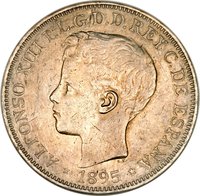
Description:
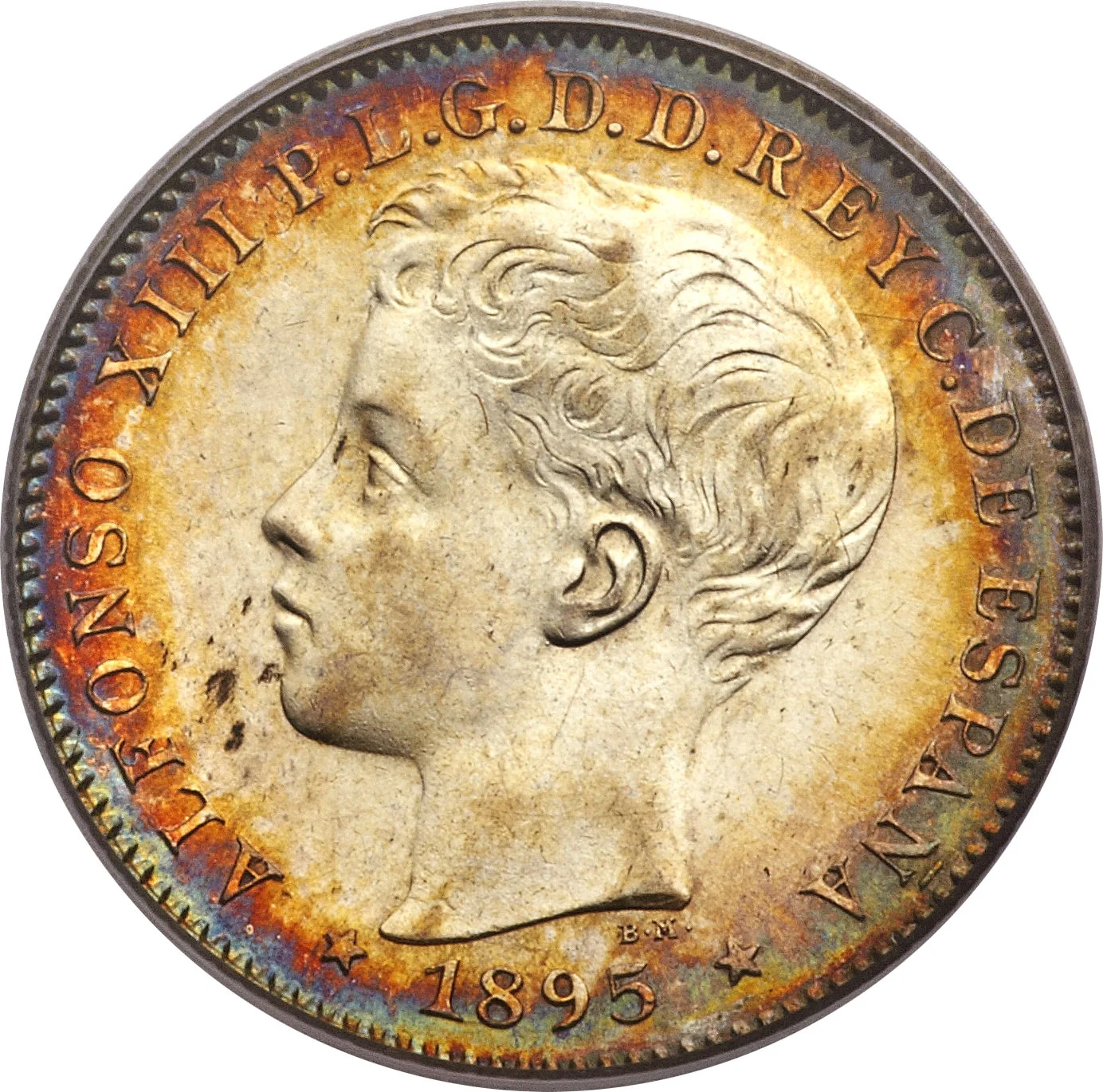
Alfonso XIII left bust. Legend: "ALFONSO XIII REY CONSTITUCIONAL DE ESPAÑA" (Alfonso XIII, constitutional king of Spain).
Inscription:
ALFONSO XIII P.I.G.D.D. REY C. DE ESPAÑA
1895
1895
Translation:
Alfonso XIII, by the Grace of God and the Constitution, King of Spain
1895
1895
Script: Latin
Engraver: Bartolomé Maura Montaner
Reverse
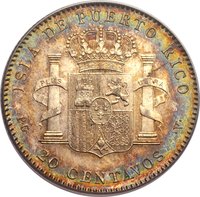
Description:
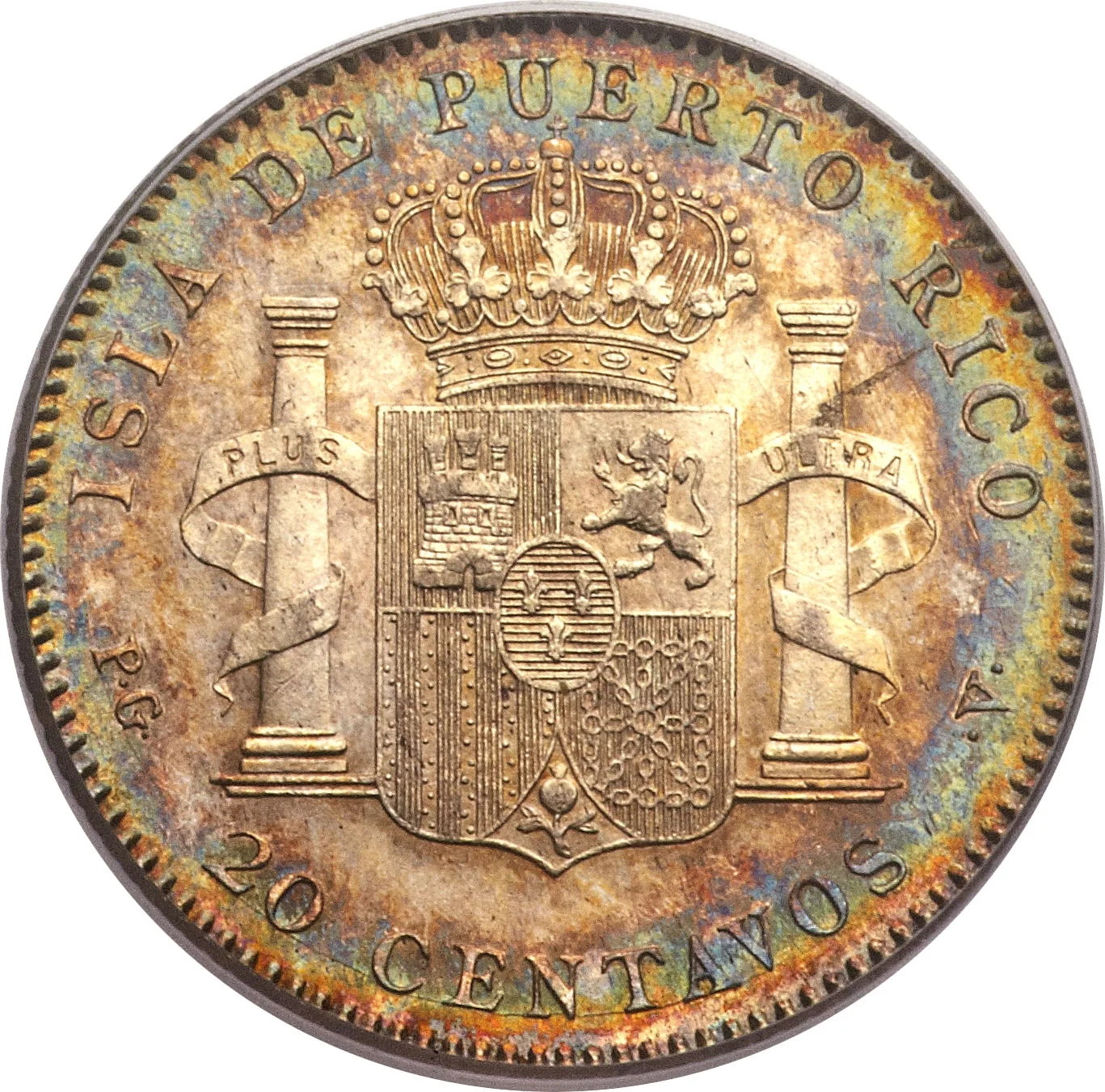
Arms between columns. Mint initials: P, G, V.
Inscription:
ISLA DE PUERTO RICO
PLUS ULTRA
P·G· 20 CENTAVOS ·V·
PLUS ULTRA
P·G· 20 CENTAVOS ·V·
Script: Latin
Engraver: Bartolomé Maura Montaner
Edge
Reeded
Mints
| Name | Mark |
|---|---|
| Royal Mint of Madrid | — |
Mintings
| Year | Mint Mark | Mintage | Quality | Collection |
|---|---|---|---|---|
| 1895 | PGV | 3,350,000 |
Historical background
In 1895, Puerto Rico operated under a complex and strained monetary system as a colony of Spain. The official currency was the Spanish peso, divided into 100 centavos, and issued by the Banco Español de Puerto Rico. However, the island's economy suffered from a severe scarcity of hard currency, a problem exacerbated by Spain's own frequent financial crises and the high costs of colonial administration. This scarcity stifled local commerce and created a reliance on credit and barter in many sectors, particularly among rural agricultural workers.
The currency landscape was further complicated by the widespread circulation of foreign coins, a common practice in Caribbean ports. American gold dollars, British sovereigns, French francs, and Mexican pesos all circulated alongside the official Spanish coinage, their value determined by fluctuating exchange rates and their metallic content. This multiplicity of currencies created confusion in everyday transactions and made the economy vulnerable to external monetary shocks. Furthermore, the limited issuance of banknotes by the Banco Español de Puerto Rico was often insufficient to meet the needs of the growing sugar and coffee export economies.
This unstable financial environment reflected Puerto Rico's broader colonial predicament. The currency scarcity hindered economic development and fueled discontent among local criollo elites and businessmen who sought more autonomy and economic modernization. The system was inherently fragile, propped up by Spanish authority but increasingly out of step with the island's commercial realities. Within three years, the entire colonial framework would be shattered by the Spanish-American War, after which Puerto Rico would transition to the United States dollar, abruptly ending the era of Spanish monetary control and its attendant problems.
The currency landscape was further complicated by the widespread circulation of foreign coins, a common practice in Caribbean ports. American gold dollars, British sovereigns, French francs, and Mexican pesos all circulated alongside the official Spanish coinage, their value determined by fluctuating exchange rates and their metallic content. This multiplicity of currencies created confusion in everyday transactions and made the economy vulnerable to external monetary shocks. Furthermore, the limited issuance of banknotes by the Banco Español de Puerto Rico was often insufficient to meet the needs of the growing sugar and coffee export economies.
This unstable financial environment reflected Puerto Rico's broader colonial predicament. The currency scarcity hindered economic development and fueled discontent among local criollo elites and businessmen who sought more autonomy and economic modernization. The system was inherently fragile, propped up by Spanish authority but increasingly out of step with the island's commercial realities. Within three years, the entire colonial framework would be shattered by the Spanish-American War, after which Puerto Rico would transition to the United States dollar, abruptly ending the era of Spanish monetary control and its attendant problems.
🌟 Limited