

25 pesos – Argentina
Add to wishlist
Non-circulating coins
Commemoration: The Nautical
Argentina
Obverse
Description:
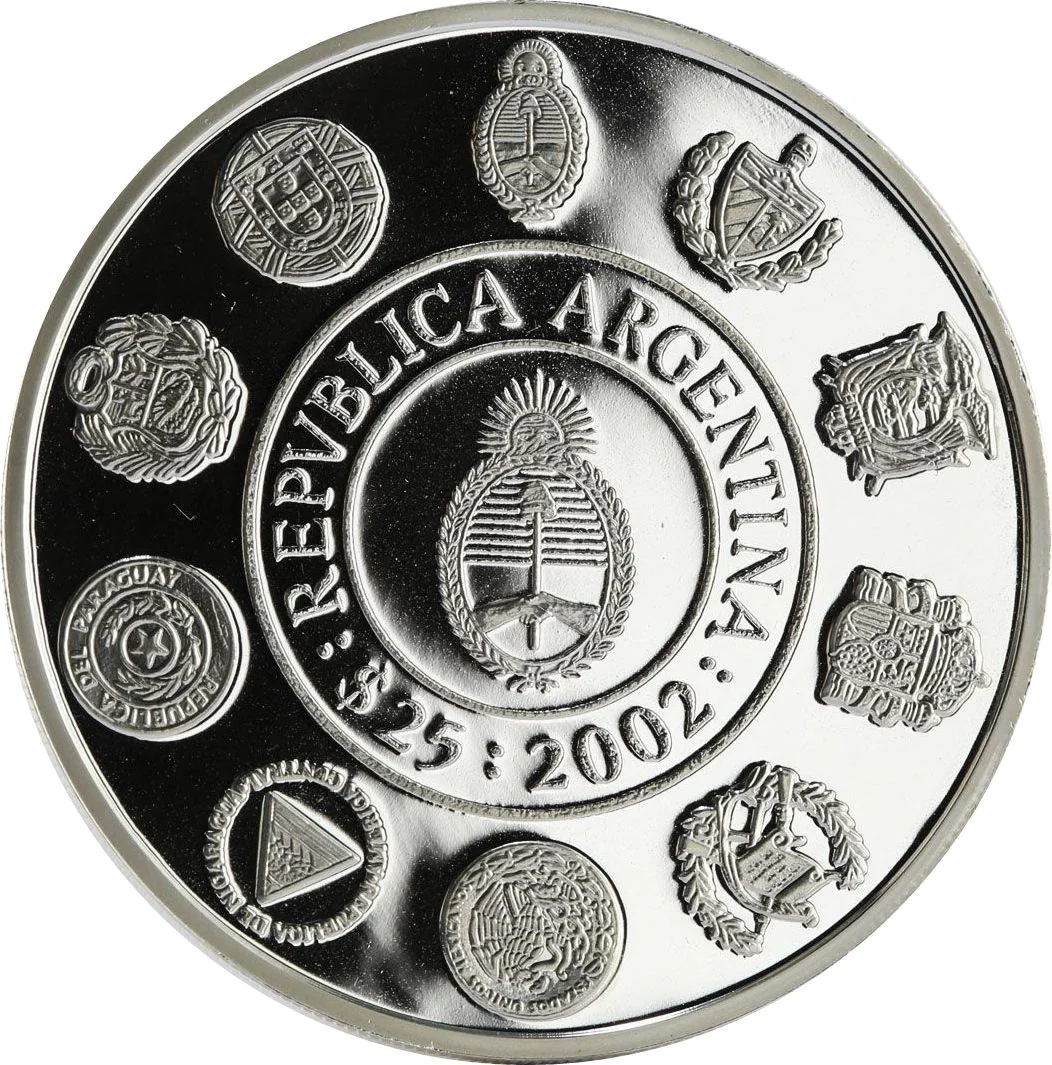
Argentine shield flanked by participant country shields of the V Iberoamerican Coin Series.
Inscription:
REPVBLICA ARGENTINA
: $25 : 2002 :
: $25 : 2002 :
Translation:
Republic Argentina
: $25 : 2002 :
: $25 : 2002 :
Script: Latin
Engraver: Carlos Pedro Rodríguez Dufour
Reverse
Description:
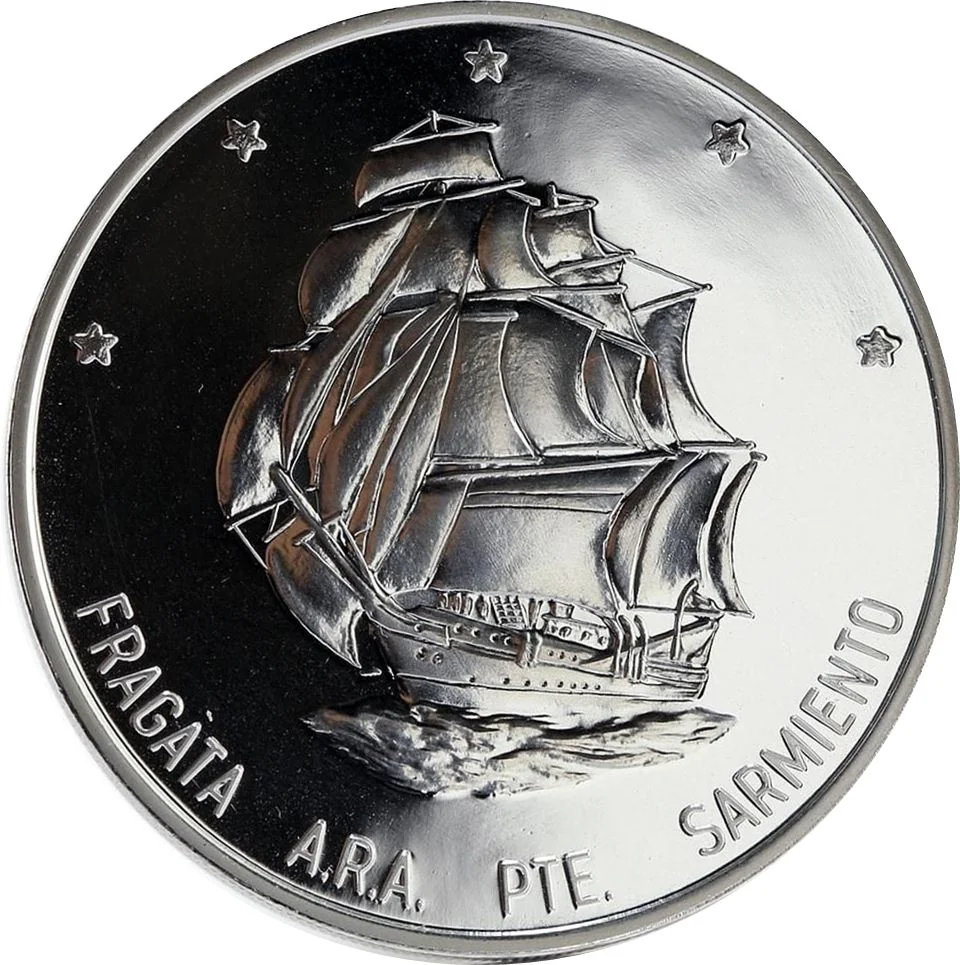
The figure of President Domingo Faustino Sarmiento. Edge legend: "FRAGATA A. R. A. PTE. SARMIENTO". Above, a five-star perimeter signifies the ship's annual cadet graduation voyages to five continents.
Inscription:
FRAGATA A.R.A. PTE. SARMIENTO
Translation:
Frigate A.R.A. Pte. Sarmiento
Script: Latin
Language: Spanish
Engraver: Carlos Pedro Rodríguez Dufour
Edge
Reeded
Categories
| Symbols> Coat of Arms |
| Transportation> Watercraft |
Mints
| Name | Mark |
|---|---|
| Buenos Aires | — |
| Royal Mint of Madrid | — |
Mintings
| Year | Mint Mark | Mintage | Quality | Collection |
|---|---|---|---|---|
| 2002 | — | 1,780 | Proof |
Historical background
Argentina's currency crisis of 2002 was the explosive culmination of a decade-long economic experiment that ended in catastrophic failure. In 1991, seeking to end hyperinflation, the government established a currency board system under the Convertibility Law, which pegged the Argentine peso at a strict one-to-one parity with the U.S. dollar. This initially brought stability and growth, but the rigid peg became a straitjacket. As the U.S. dollar strengthened in the late 1990s, Argentina's exports became prohibitively expensive, leading to a deep recession. The government, unable to devalue its currency or print money to stimulate the economy, amassed massive public debt while tax revenues collapsed.
By late 2001, the situation was untenable. A loss of confidence triggered a massive bank run, leading the government to impose the "corralito," a freezing of bank accounts that prohibited withdrawals and ignited widespread social unrest. This sparked a rapid succession of presidents and, in December 2001, a historic sovereign debt default on over $100 billion. In early January 2002, the government was forced to abandon the decade-long peg, leading to an immediate and dramatic devaluation of the peso.
The aftermath was severe economic chaos. The peso lost nearly 75% of its value against the dollar within months, wiping out savings and causing inflation to soar. Poverty rates spiked as the real value of wages and pensions collapsed. However, the drastic devaluation also made Argentine exports cheap and imports expensive, which eventually laid the groundwork for a powerful export-led recovery in the years that followed, albeit at a tremendous social cost borne by the population.
By late 2001, the situation was untenable. A loss of confidence triggered a massive bank run, leading the government to impose the "corralito," a freezing of bank accounts that prohibited withdrawals and ignited widespread social unrest. This sparked a rapid succession of presidents and, in December 2001, a historic sovereign debt default on over $100 billion. In early January 2002, the government was forced to abandon the decade-long peg, leading to an immediate and dramatic devaluation of the peso.
The aftermath was severe economic chaos. The peso lost nearly 75% of its value against the dollar within months, wiping out savings and causing inflation to soar. Poverty rates spiked as the real value of wages and pensions collapsed. However, the drastic devaluation also made Argentine exports cheap and imports expensive, which eventually laid the groundwork for a powerful export-led recovery in the years that followed, albeit at a tremendous social cost borne by the population.
⭐ Somewhat Rare