

10 Pence – Gibraltar
United Kingdom
Context
Material
Diameter: 24.5 mm
Weight: 6.5 g
Thickness: 1.85 mm
Shape: Round
Composition: Copper-nickel
Technique: Milled
Alignment: Medal alignment
flip
References
Numista: #173816
Value
Exchange value: 0.10 GIP
Inflation-adjusted value: 0.15 GIP
Obverse
Description:
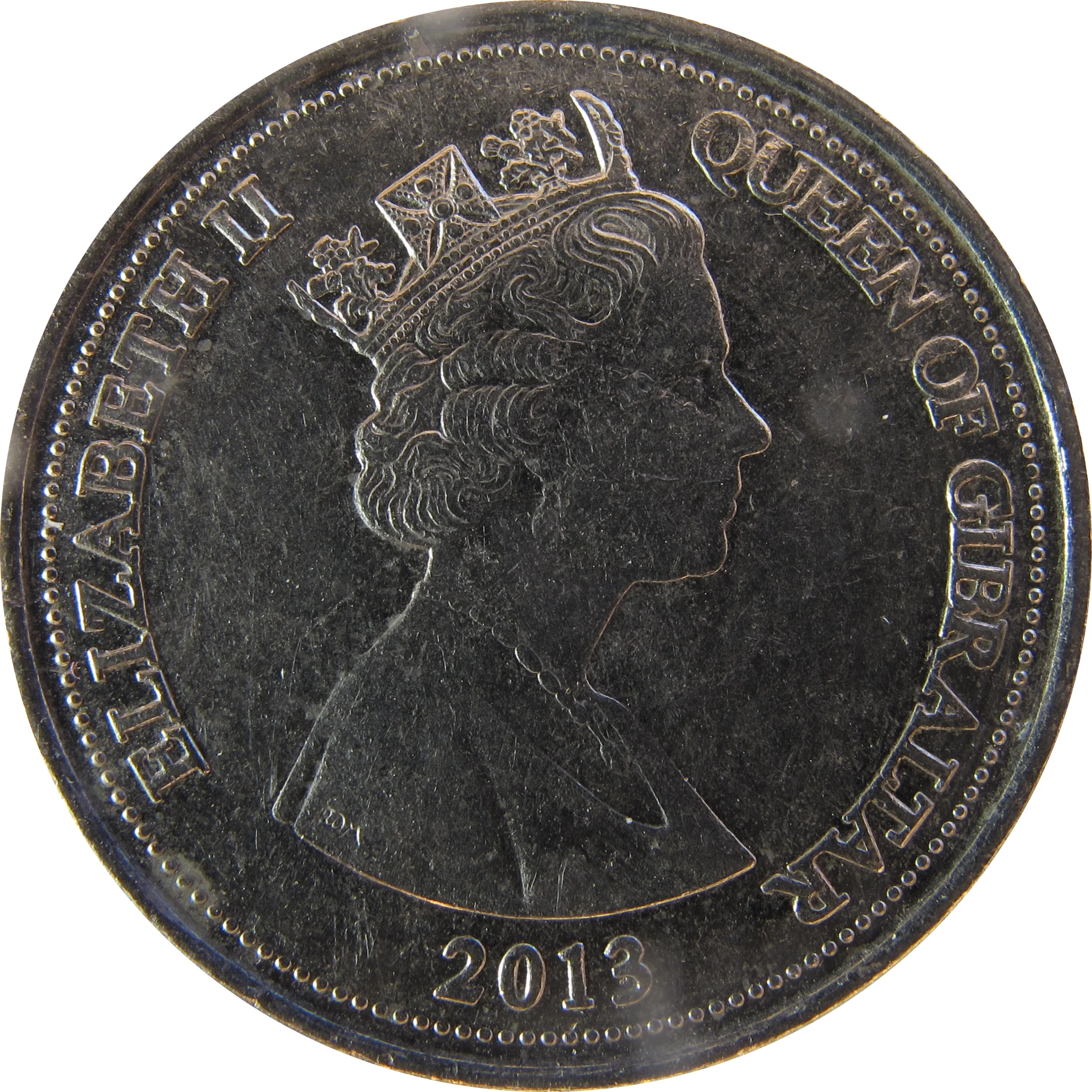
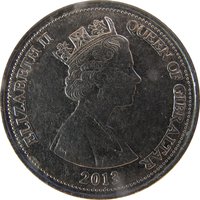
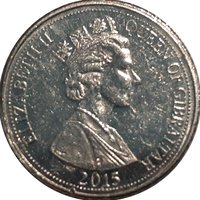
Queen Elizabeth II right-facing bust in George IV State Diadem, with legend and date.
Inscription:
ELIZABETH II QUEEN OF GIBRALTAR
RDM
2013
RDM
2013
Script: Latin
Engraver: Raphael David Maklouf
Reverse
Description:
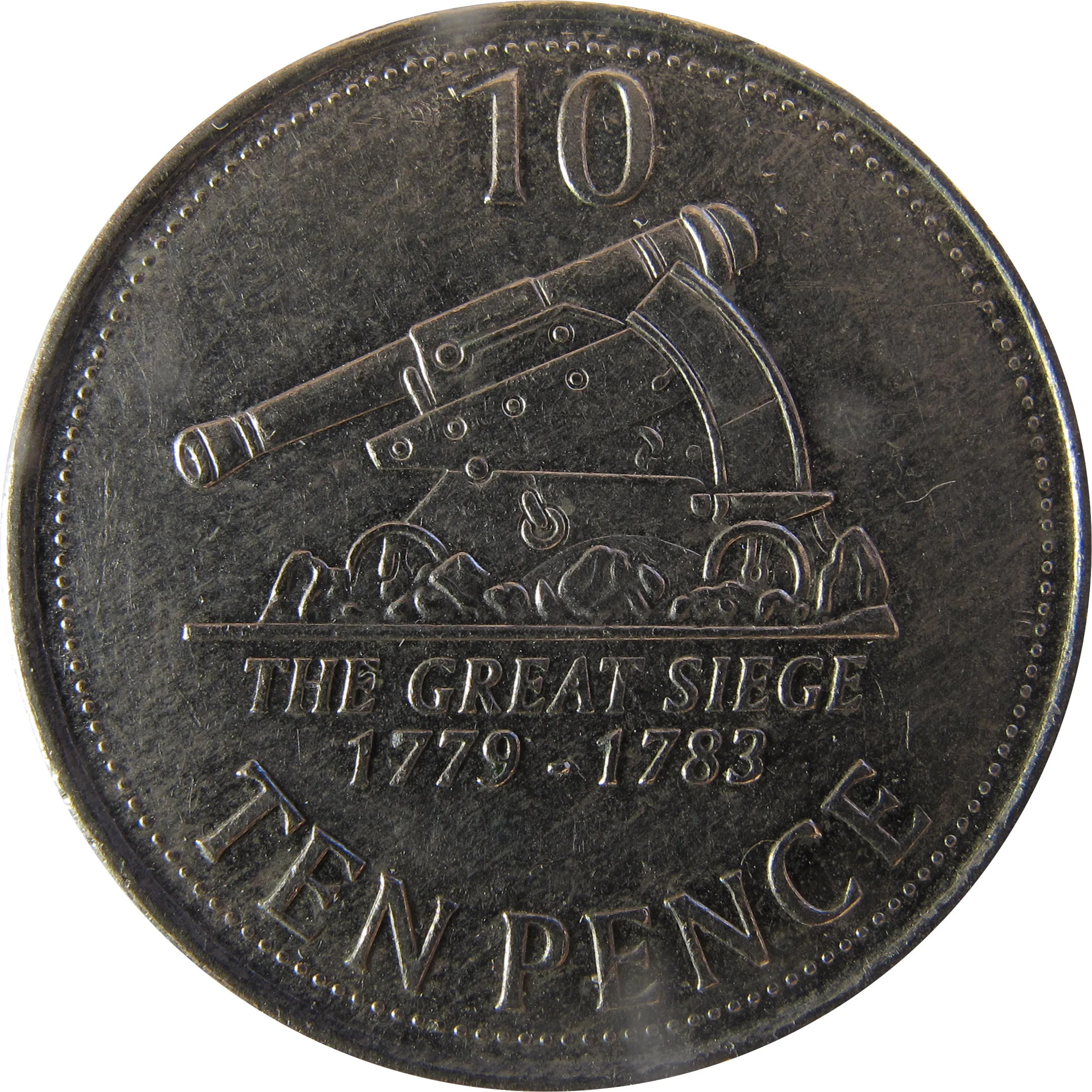
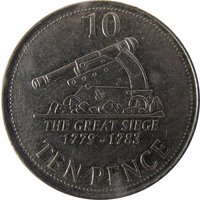
A cannon aimed down from a rocky platform.
Inscription:
10
THE GREAT SIEGE
1779 - 1783
TEN PENCE
THE GREAT SIEGE
1779 - 1783
TEN PENCE
Script: Latin
Edge
Reeded
Mints
| Name | Mark |
|---|---|
| Tower Mint | — |
Mintings
| Year | Mint Mark | Mintage | Quality | Collection |
|---|---|---|---|---|
| 2013 | — | — |
Historical background
In 2013, Gibraltar's currency situation was defined by its long-standing and exclusive use of sterling, a status solidified by the 1988 Currency Notes Act. As a British Overseas Territory, it issued its own distinctive banknotes and coins, which were legal tender only within Gibraltar and circulated alongside Bank of England notes. These Gibraltar pound notes were pegged at par with the pound sterling, ensuring monetary stability and seamless economic integration with the United Kingdom, its main trading partner.
The year saw no significant change to this stable regime, but it occurred against a notable political backdrop. A minor diplomatic tension arose in August 2013 when Gibraltar's government issued a commemorative coin to mark its National Day, which featured a design of the Rock that included a depiction of the disputed isthmus with Spain. While economically insignificant, this incident highlighted how currency could become a symbolic point of contention in the wider, ongoing sovereignty dispute with Spain.
Economically, the reliance on sterling in 2013 provided Gibraltar with stability, shielding it from the direct volatility of the Eurozone crisis which was affecting its neighbour, Spain. This stability was crucial for Gibraltar's key sectors of finance, online gaming, and tourism. The fixed parity ensured no exchange risk with the UK, facilitating trade and investment, and underpinned the territory's reputation as a secure financial centre during a period of regional economic uncertainty.
The year saw no significant change to this stable regime, but it occurred against a notable political backdrop. A minor diplomatic tension arose in August 2013 when Gibraltar's government issued a commemorative coin to mark its National Day, which featured a design of the Rock that included a depiction of the disputed isthmus with Spain. While economically insignificant, this incident highlighted how currency could become a symbolic point of contention in the wider, ongoing sovereignty dispute with Spain.
Economically, the reliance on sterling in 2013 provided Gibraltar with stability, shielding it from the direct volatility of the Eurozone crisis which was affecting its neighbour, Spain. This stability was crucial for Gibraltar's key sectors of finance, online gaming, and tourism. The fixed parity ensured no exchange risk with the UK, facilitating trade and investment, and underpinned the territory's reputation as a secure financial centre during a period of regional economic uncertainty.
🌱 Fairly Common