

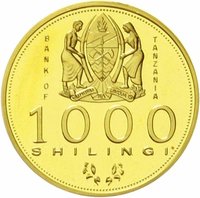
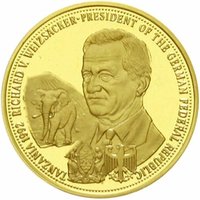
2000 Shilingi – Tanzania
Non-circulating coins
Commemoration: 1961-Today - Numismatic Products
Tanzania
Context

Material
References
KM: #Click to copy to clipboard46
Numista: #173727
Value
Exchange value: 2000 TZS
Bullion value: $1667.72
Mintings
| Year | Mint Mark | Mintage | Quality | Collection |
|---|---|---|---|---|
| 1992 | — | 5,000 |
Historical background
In 1992, Tanzania's currency situation was defined by the ongoing use of the Tanzanian shilling (TZS) under a period of significant economic liberalization and structural adjustment. The country was emerging from decades of socialist-oriented Ujamaa policies, which had included strict currency controls, a fixed exchange rate, and chronic foreign exchange shortages. By the late 1980s, these policies had led to a vastly overvalued shilling, a thriving black market for hard currency, and severe economic distortions that stifled trade and investment.
The pivotal reform came in June 1992, when the government, under pressure from the International Monetary Fund (IMF) and World Bank, initiated a critical shift by legalizing bureaux de change. This move effectively created a dual-exchange rate system: an official rate maintained by the Bank of Tanzania and a more market-driven "parallel" rate offered by the newly authorized private forex bureaus. While not a full float, this was a major step toward unifying the exchange rate and absorbing the black market into the formal economy. The shilling depreciated significantly as a result, moving closer to its real market value.
This currency liberalization was a cornerstone of the broader Economic Recovery Programme (ERP) aimed at transitioning to a market economy. The reforms of 1992, while causing short-term inflationary pressures from the devaluation, were intended to boost exports (particularly of coffee, cotton, and cashews), attract foreign investment, and alleviate the crippling shortage of foreign exchange. Thus, the currency situation in 1992 represented a fragile and contested turning point, marking Tanzania's decisive break from financial repression toward a more liberalized, albeit challenging, economic future.
The pivotal reform came in June 1992, when the government, under pressure from the International Monetary Fund (IMF) and World Bank, initiated a critical shift by legalizing bureaux de change. This move effectively created a dual-exchange rate system: an official rate maintained by the Bank of Tanzania and a more market-driven "parallel" rate offered by the newly authorized private forex bureaus. While not a full float, this was a major step toward unifying the exchange rate and absorbing the black market into the formal economy. The shilling depreciated significantly as a result, moving closer to its real market value.
This currency liberalization was a cornerstone of the broader Economic Recovery Programme (ERP) aimed at transitioning to a market economy. The reforms of 1992, while causing short-term inflationary pressures from the devaluation, were intended to boost exports (particularly of coffee, cotton, and cashews), attract foreign investment, and alleviate the crippling shortage of foreign exchange. Thus, the currency situation in 1992 represented a fragile and contested turning point, marking Tanzania's decisive break from financial repression toward a more liberalized, albeit challenging, economic future.

✨ Legendary